

Table of Contents
- Water Filter Systems Under Sink: What Actually Matters in 2026
- How to Find the Best Under Sink Water Filter for Your Kitchen
- Reverse Osmosis Under Sink System: How It Works and Who It Suits
- Under Sink Water Filter Installation: A Step-by-Step Guide
- Under Sink Water Filter Replacement Cartridges: Costs and Timing
- Common Mistakes to Avoid When Choosing a System
- Frequently Asked Questions
Last Updated: October 7, 2026
Water Filter Systems Under Sink: What Actually Matters in 2026
Water filter systems under sink are compact filtration units installed inside the kitchen cabinet, delivering purified water straight from a dedicated tap. They remove sediment, chlorine, heavy metals and, depending on the model, fluoride and PFAS. For families tired of buying bottled water, they cut long-term costs and plastic waste.

At Awesome Water®, we have supplied filtration and purification systems to households and workplaces since 2011, so we have watched this category shift from a niche upgrade to a kitchen staple. Below, we break down what genuinely separates a good system from an expensive mistake, and how to choose one that fits your bench, your budget and your water.
The Real Cost of Bottled Water vs a Filter
Bottled water looks cheap per bottle. It is not cheap per year.
A household drinking two litres of bottled water a day spends well over a thousand dollars annually once you add up the supermarket trips. An under-sink system carries a higher upfront cost, then drops to a much smaller monthly figure once you spread the purchase and replacement cartridges across the year.
After that, you are paying a fraction of the bottled price for water you no longer have to carry home.
How to Find the Best Under Sink Water Filter for Your Kitchen
The best under sink water filter is the one that matches your contaminants, your cabinet space and your maintenance tolerance, not the one with the longest feature list.
Start with what is actually in your water. A simple water quality report from your supplier tells you whether you are dealing with hard water, chlorine, or something more specific. That report decides everything else.
Then match the system type to that answer:
- Carbon block systems handle chlorine, taste, odour and sediment well, and cost less upfront
- Reverse osmosis systems push further, reducing dissolved solids, heavy metals and fluoride
- Tankless designs suit tight cabinets; tank models store water for higher immediate flow
Measure your cabinet before you buy anything. Height matters most, because the unit plus tubing needs clearance.

Fluoride, PFAS and Heavy Metals: What Each System Targets
Not every filter removes everything, and the marketing rarely says so plainly. Standard carbon filters are excellent at chlorine and taste but generally leave fluoride and dissolved metals largely untouched. If those are your concern, you need reverse osmosis or a system specifically rated for them.
Awesome Water® supplies specialised fluoride removal filters, and our Paragon CP-4 is designed to target PFAS compounds including PFOA and PFOS, along with heavy metals such as lead, mercury and copper. That matters because PFAS has become one of the most common questions we field from health-conscious households.
If you want a single system covering fluoride, PFAS and heavy metals, reverse osmosis is usually the practical answer.
Reverse Osmosis Under Sink System: How It Works and Who It Suits
A reverse osmosis under sink system forces water through a semi-permeable membrane that traps dissolved contaminants, then stores the purified water in a pressure tank or delivers it on demand.
It suits households with specific contamination concerns, larger families, and anyone who wants one system to cover the widest range of contaminants. It is less suited to buyers who want the lowest possible upfront cost.
Our 5 Stage Reverse Osmosis System, at $494.99, produces up to roughly 378 litres per day and includes a dedicated tap and storage tank. For tight cabinets, the Ultra Tankless Reverse Osmosis System at $899.99 removes the tank entirely and filters in two modes: one for rinsing produce, one for drinking.

| System | Price | Best For | Key Strength |
|---|---|---|---|
| 3 Stage Under Sink Water Kit | $189.99 | Budget-conscious kitchens | Chlorine, sediment, rust |
| Paragon CP-4 | $499.00 | PFAS and heavy metal concerns | Tankless, 12-month cartridge |
| 5 Stage Reverse Osmosis | $494.99 | Families wanting broad coverage | 5-stage, dedicated tap |
| Ultra Tankless RO | $899.99 | Large households, tight cabinets | 800 GPD, dual modes |
Under Sink Water Filter Installation: A Step-by-Step Guide
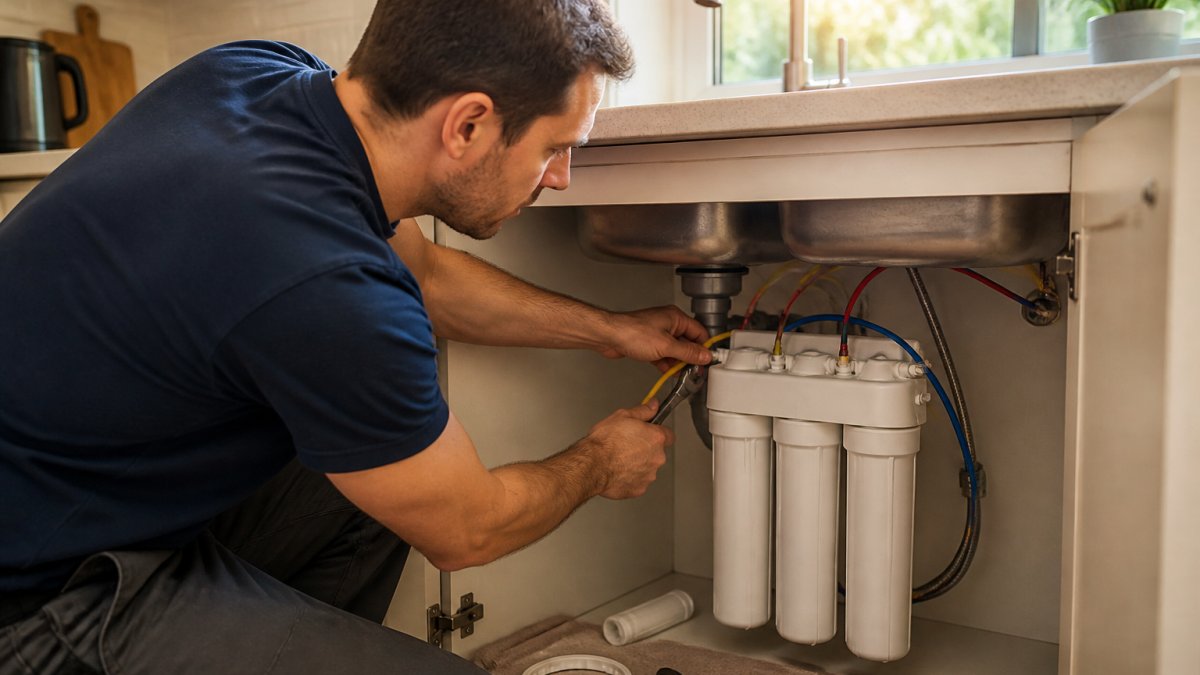
Under sink water filter installation is a straightforward job for most DIYers, taking roughly one to two hours with basic tools.
What You'll Need Before You Start
- Adjustable spanner and Phillips screwdriver
- Towel and small bucket for drips
- Drill with a hole saw if your bench has no existing tap hole
- PTFE thread tape
Step 1: Isolate the water supply. Turn off the valve under the sink and open the tap to release pressure.
Awesome Water 5 Stage Reverse Osmosis System →
Step 2: Mount the system. Position the unit where it will not obstruct cabinet contents, leaving room for tubing bends.
Step 3: Connect the feed. Attach the supply line to the cold water pipe using the included fittings, wrapping threads with tape.
Step 4: Install the tap. Drill the bench hole if needed, then seat the dedicated tap and tighten from below.
Step 5: Run the tubing. Connect colour-coded lines between supply, system and tap, keeping bends gentle.
Step 6: Flush and test. Turn the water back on and flush for five minutes before drinking. Check every joint for weeping.
Under Sink Water Filter Replacement Cartridges: Costs and Timing
Under sink water filter replacement cartridges are the ongoing cost that decides whether a system is genuinely economical. Budget for them from day one.
Timing varies by cartridge type and water quality:
- Sediment cartridges: every 3 to 5 months, or roughly 2,500 litres
- Carbon block cartridges: every 6 to 12 months
- RO membranes: every 24 months in most home settings
The Paragon CP-4 cartridge runs up to 12 months or 3,600 litres. The Ultra Tankless RO ships with a PCT filter rated for 12 months and an RO membrane rated for 24 months, and replacements are tool-free.
Common Mistakes to Avoid When Choosing a System
The most expensive mistake is buying on price alone and discovering the system does not target your actual contaminant.
Other traps we see regularly:
- Ignoring cabinet measurements. A system that does not fit becomes a return.
- Assuming all filters remove fluoride. Most carbon-only units do not.
- Forgetting cartridge costs. A cheap unit with expensive cartridges costs more over three years.
- Skipping the water report. You cannot match a filter to a problem you have not identified.
- Choosing tankless for the wrong reason. Tankless saves space, but tank models can deliver higher immediate flow.
A common mistake is treating every under-sink system as interchangeable. They are not, and the differences show up in what ends up in your glass.
Choosing the right system comes down to matching filtration to your water, your space and your budget, and that is harder than it should be when every listing claims to do everything. Awesome Water® stocks a full range of under-sink filtration, including specialised fluoride removal filters and PFAS-targeting systems, backed by an Australian family-owned team that has been supplying homes and workplaces since 2011. Visit our Sydney showroom to test water quality in person, or explore the range online and get started with cleaner, better-tasting water from your own tap.
Frequently Asked Questions
How do under sink water filter systems work?
Water is diverted from your cold water line into a filtration unit mounted inside the cabinet. Depending on the model, water passes through sediment, carbon block and sometimes reverse osmosis membrane stages before reaching a dedicated tap. A 5-stage reverse osmosis system, for example, pushes water through a membrane that reduces up to 99% of many contaminants, then stores it in a tank or delivers it on demand. Your existing tap stays connected for washing up.
How often should you replace under sink water filter replacement cartridges?
It depends on the system and your water quality. A basic 3-stage kit typically needs a cartridge change every 3 to 5 months, or roughly every 2,500 litres, depending on water quality and level of contaminants. Carbon block systems like the Paragon CP-4 last up to 12 months or 3,600 litres. Reverse osmosis membranes usually last 24 months. Check your manual and set a calendar reminder, because a clogged cartridge lets contaminants through and slows your flow rate.
Can you install an under sink water filter yourself?
Yes, most under-sink systems are designed for DIY installation. Some pre-assembled units with colour-coded tubing and quick-connect fittings are designed for straightforward installation. You will need a drill, an adjustable spanner, a towel and a bucket. If your system requires a new tap hole in a stone benchtop, or if you are not comfortable working with water lines, book a plumber. Always flush the system for at least 5 minutes after installation before drinking the water.
Do under sink water filters reduce water pressure?
They can, but the drop is usually minor. Sediment and carbon cartridges create some resistance, and reverse osmosis systems rely on tank pressure or a pump. If your mains pressure is already low, choose a high-flow tankless model. The Awesome Ultra Tankless Reverse Osmosis System delivers 800 gallons per day and fills a glass in about 3 seconds, so pressure loss is not noticeable in most kitchens. Flushing or replacing a clogged cartridge restores flow.