

A whole-house water filter system in Australia is your ultimate solution for clean, purified water from every single tap. It works by treating all the water right at the point it enters your home. This means your kitchen tap, your shower, and even your washing machine get the benefit of water free from common nasties like chlorine and sediment. It’s one powerful upgrade for healthier water across your entire property.
Why Your Entire Home Deserves Filtered Water
Think of it like a gatekeeper for your home's water supply. A whole-house filter is installed on your main water line, meticulously cleaning every last drop before it even gets a chance to travel through your pipes. This is a massive leap from single-tap filters that only handle the water at one specific point.
This comprehensive approach is fast becoming a must-have for Aussie households, and for good reason. In cities, our water is treated with chlorine to keep it safe, but this often leaves behind a strong chemical taste and smell. A whole-house system gets rid of that, completely transforming the water you drink and bathe in.
Beyond the Kitchen Sink
The benefits go so much further than just a better-tasting glass of water. When you start using filtered water everywhere, the positive effects really start to add up.
- Softer Skin and Hair: With harsh chlorine gone, your showers and baths become much kinder to your body. Chlorine is known to strip away the natural oils that keep your skin and hair healthy, often leading to dryness and irritation.
- Appliance Protection: That chalky build-up you see? That’s scale and sediment, and it’s doing a number on your expensive appliances. Filtered water prevents this from clogging up your hot water heater, dishwasher, and washing machine, helping them last longer and run more efficiently.
- Brighter Laundry: Clothes washed in chlorine-free water often feel softer and, better yet, their vibrant colours won't fade as quickly.
To get a better sense of how different comprehensive home water treatment systems work to purify your entire supply, it's worth exploring the options available.
A whole house system doesn't just improve your drinking water; it elevates your entire relationship with water. It's a foundational investment in your family’s health, the longevity of your home, and your daily comfort.
Ultimately, installing a whole-house water filter system in Australia is about taking back control over your water quality. Whether you're tired of the chemical taste of city water or dealing with sediment issues in a regional area, a single, central system gives you complete peace of mind.
To dive deeper into the tangible benefits, check out our guide on how a home water filtration system can improve your living standard. It's a proactive step towards a healthier, happier home.
How a Whole House Filter Actually Cleans Your Water
Ever wondered what’s really going on inside that big canister hooked up to your main water line? It’s not magic. A whole house water filter is a clever, multi-stage process designed to catch contaminants before they even get a chance to enter your home's plumbing. Think of it as a dedicated security checkpoint for every drop of water you use.
The whole journey kicks off the moment water from the town supply or your rainwater tank hits your property line. This is what we call the Point of Entry (POE), and it's precisely where your filtration system stands guard.
The diagram below breaks down this simple but powerful concept, showing how one central filter treats all the water before it branches out to your taps and appliances.
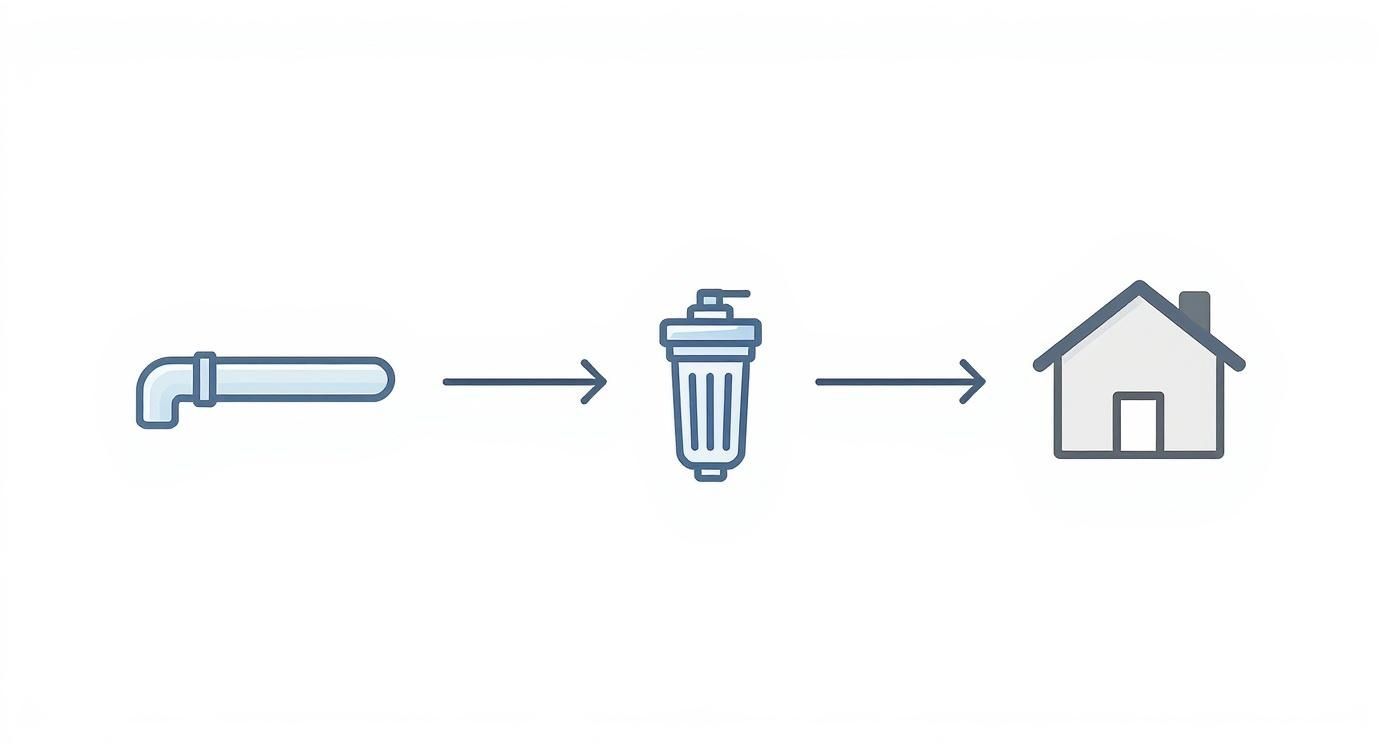
As you can see, placing a single filter at the start means every single outlet—from the kitchen sink to the shower—gets purified water.
Stage One: The Sediment Pre-Filter
The first line of defence is always the sediment pre-filter. You can picture it like a gold miner’s sieve. Its one job is to catch all the bigger, visible gunk you definitely don’t want flowing through your pipes or building up in your appliances.
This critical first step physically blocks things like:
- Sand and Silt: Fine bits of dirt that can make your water look cloudy and unappealing.
- Rust Flakes: Tiny particles that often break loose from older town water mains.
- Organic Debris: Little flecks of leaves and other natural matter.
By trapping these larger particles right away, the sediment filter acts as a bodyguard for the more specialised filters that follow, stopping them from clogging up too quickly and making them last much longer.
Stage Two: The Activated Carbon Core
Once the big stuff is gone, the water flows into the system's main event. For most systems tackling Australian town water, this is a high-grade activated carbon block. This is where the real water chemistry magic happens.
An activated carbon filter is like a super-powered magnetic sponge for chemical contaminants. Its surface is covered in millions of microscopic pores, creating a massive surface area for a process called adsorption. This is where unwanted chemicals literally stick to the carbon's surface instead of just being strained out.
Adsorption is the key difference maker. It's not just trapping particles; it's chemically binding dissolved impurities to the filter media, effectively pulling them right out of the water.
This stage is fantastic at getting rid of the things that make water taste and smell off, especially chlorine. It also does a great job of tackling a whole host of other nasties, including pesticides, herbicides, and volatile organic compounds (VOCs). If you want to dive deeper into the science, our detailed guide explains exactly what a carbon water filter is and how it works.
Optional Advanced Stages
Depending on what's in your local water, a whole house water filter system in Australia can be beefed up with extra stages. Think of these as specialist add-ons for targeting very specific problems.
For instance, you might add an ultraviolet (UV) sterilisation lamp to kill 99.9% of bacteria, viruses, and cysts. This is an absolute must for anyone using tank or bore water. Others might include a scale reduction system to fight hard water minerals that cause that crusty limescale build-up on shower screens and kettles.
This move towards more sophisticated setups is part of a bigger picture. The Australian water purifier market, valued at USD 245.34 million, is expected to grow to USD 338.75 million by 2030. It's all driven by Aussies becoming more aware of what's in their water and wanting these advanced solutions. By the time the water finally flows from your tap, it's been through a comprehensive clean-up, ensuring it's not just safe, but tastes great too.
The Real Benefits of Upgrading Your Water System
When you install a whole house water filter system in Australia, you're doing much more than just improving the taste of your drinking water. You’re making a fundamental upgrade to your home and lifestyle. It creates a ripple effect of positive changes you'll notice every day, touching everything from your family's health and your home's upkeep to your daily comfort.
It's no surprise that Aussie homeowners are the biggest adopters of these systems, making up over 70% of the total market demand. This isn't just a fleeting trend; it’s a reflection of growing health awareness and a simple desire for water that tastes and smells fresh and clean. The movement is especially strong in states like New South Wales, Victoria, and Queensland.
To give you a clearer picture, let's break down the advantages.
Benefits of a Whole House Water Filter System at a Glance
This quick table sums up the incredible value a whole house filter brings to different parts of your daily life.
| Area of Impact | Benefit |
|---|---|
| Family Health | Provides safe, clean water from every tap for drinking, cooking, and bathing. |
| Appliance Longevity | Protects hot water heaters, dishwashers, and washing machines from scale and sediment. |
| Plumbing Protection | Prevents corrosion and blockages in your pipes, saving you from costly repairs. |
| Personal Care | Results in softer skin and healthier, more vibrant hair by removing harsh chlorine. |
| Laundry Quality | Keeps clothes brighter, softer, and longer-lasting. |
| Taste & Flavour | Enhances the natural taste of coffee, tea, and food cooked with water. |
As you can see, the benefits extend far beyond a single tap, transforming the water quality throughout your entire home.
Protecting Your Family's Health
The biggest win, without a doubt, is the peace of mind knowing every drop of water in your home is clean. While municipal water is treated to be safe, it still carries disinfectants like chlorine that can be harsh and give off an unpleasant chemical smell. A whole house system acts as your home's final, reliable gatekeeper.
By filtering water right where it enters your home, you guarantee that the water you drink, cook with, bathe in, and use to brush your teeth is free from unwanted chemicals and sediment. It’s a foundational step towards creating a healthier home environment.
This comprehensive approach catches contaminants that a simple jug or tap filter just can't handle. It protects your family from exposure through skin absorption in the shower or from inhaling chemical vapours. If you’re worried about specific modern contaminants, our guide explains how to remove PFAS, microplastics, and fluoride with whole house water filtration.
Extending the Life of Your Home and Appliances
Think of unfiltered water as a slow, silent threat to your home's plumbing and expensive appliances. Over time, minerals, sediment, and scale-forming compounds build up, causing serious—and seriously expensive—damage.
Filtered water is the ultimate preventative measure. By stripping out these harmful particles at the source, a whole house system acts like a bodyguard for your entire plumbing network, shielding it from corrosion and blockages.
You'll see the difference most clearly in your appliances:
- Hot Water Heaters: These are prime targets for scale buildup, which tanks their efficiency and can lead to them failing years too soon. Filtered water keeps the heating elements clean, saving you energy and money.
- Dishwashers and Washing Machines: Say goodbye to gritty residue or mineral spots on your dishes and glasses. Clean water also protects the internal pumps and pipes from getting clogged up.
- Coffee Machines and Kettles: You’ll immediately notice that the constant battle against scale buildup inside these little appliances is a thing of the past. That means better performance and a longer life.
Noticeable Lifestyle Improvements Every Day
Beyond the big-ticket items of health and home protection, it’s the small, daily upgrades that make a whole house system feel so worthwhile. The improvements are immediate and tangible, making your daily routines just that little bit better.
Softer Skin and Healthier Hair
Chlorine is a notorious culprit for stripping the natural oils from your skin and hair, leaving you feeling dry, irritated, and dull. When you start showering in filtered, chlorine-free water, your skin feels softer and less itchy, and your hair becomes more manageable and vibrant.
Brighter, Softer Laundry
Your clothes get a boost from cleaner water, too. Without chlorine fading colours or hard minerals making fabrics feel stiff and scratchy, your laundry comes out brighter, feels softer, and lasts longer. You might even find you can use less detergent to get the same fantastic results.
Better-Tasting Food and Drinks
Finally, the quality of your water has a direct impact on the flavour of everything you make in the kitchen. Coffee and tea taste richer and more authentic. Soups and stocks have a cleaner, purer flavour. Even simple things like pasta and steamed veggies taste better when they aren't absorbing chlorine as they cook.
How to Choose the Right System for Your Home
Picking the perfect whole house water filter system in Australia can feel like a massive decision, but it doesn't have to be. Let's break it down into a few simple steps. The real goal here is to find a system that not only suits your budget but also goes head-to-head with the specific water issues in your area and keeps up with your family’s daily needs.
Think of it like choosing the right tool for a job. You wouldn't use a tiny screwdriver to fix a major engine problem, would you? It's the same with water filtration. You need to match the filter's capabilities to the nasties you want to remove, ensuring the whole setup is powerful enough for your household.
Start with Your Water Quality
Before you can fix a problem, you have to know exactly what you’re dealing with. The very first step is getting a clear picture of what’s actually in your tap water.
- Check Your Local Water Report: Most local councils in Australia publish yearly water quality reports. These documents are a goldmine of information, detailing the levels of chlorine, sediment, and other substances floating around in your local supply.
- Get a Professional Test: This is non-negotiable for homes on bore or tank water. A professional water test will pinpoint specific contaminants like bacteria, heavy metals, or high iron levels that need a targeted filtration solution.
Knowing your water is the foundation for making a smart choice. It moves you from guesswork to having a clear battle plan for the contaminants you need to eliminate. For homes that depend on rainwater harvesting, choosing the right system often means looking at the whole picture, including the types of vertical water storage tanks being used.
Match the Technology to Your Needs
Once you know what’s in your water, you can pick the right filtration media to kick it out. Different technologies are superstars at tackling different problems.
A common mistake is grabbing a generic system off the shelf without checking if it actually solves your specific issues. A multi-stage system is almost always the best bet, combining different filter types to create a bulletproof solution.
To help you get started, we've put together a quick guide comparing the most common filtration methods found in a whole house water filter system in Australia.
Comparing Whole House Filtration Technologies
Every home's water is different, so it's important to understand what each type of filter does best. This table breaks down the main players to help you decide which combination is right for your Aussie home.
| Filtration Type | Primarily Removes | Average Cost (AUD) | Maintenance Needs |
|---|---|---|---|
| Sediment Filter | Sand, silt, rust, and debris | $50 - $150 | Replace every 6-12 months |
| Activated Carbon | Chlorine, taste, odour, pesticides, VOCs | $100 - $300 | Replace every 12 months |
| Scale Reduction | Hardness minerals (calcium, magnesium) | $300 - $800+ | Media replacement every 3-5 years |
| UV Sterilisation | Bacteria, viruses, and microorganisms | $400 - $1,000+ | Replace UV lamp annually |
This multi-stage approach is your best defence, ensuring you’re covered from every angle. For a deeper dive into this, check out our guide on choosing the right water filtration system for your home or business for some extra pointers.
Understand the Technical Specifications
Technical jargon can be a real headache, but there are two numbers you absolutely need to know: flow rate and micron rating. These directly affect your day-to-day water experience.
What is Flow Rate?
Flow rate is all about how much water can move through the filter at once, measured in Litres Per Minute (LPM). If the flow rate is too low, you create a bottleneck. The result? A frustrating drop in water pressure when you try to run the shower and the washing machine at the same time.
- Average Household: A typical Aussie family home needs a flow rate of 20-40 LPM to keep the pressure strong and steady.
- Larger Homes: Got multiple bathrooms or water-hungry appliances? You’ll probably want a system rated for 40+ LPM.
Always pick a system with a flow rate that can handle your home’s busiest moments. You won't regret it.
What is Micron Rating?
The micron rating tells you how small a particle the filter can trap. To put it in perspective, a single human hair is about 50 microns thick.
- 5 Micron: This is a great standard for sediment filters. It’s small enough to catch all the visible gunk like sand and rust.
- 1 Micron or Less: To stop finer particles and nasty microorganisms like Giardia cysts, you'll need a filter with a much lower rating, like a carbon block filter.
A lower micron rating means finer filtration, but it also means the filter can clog up more quickly. This is precisely why multi-stage systems are so brilliant—they use a larger micron filter first to catch the big stuff, protecting the finer, more expensive filters downstream and making them last longer.
Getting Set Up: Installation and Long-Term Care
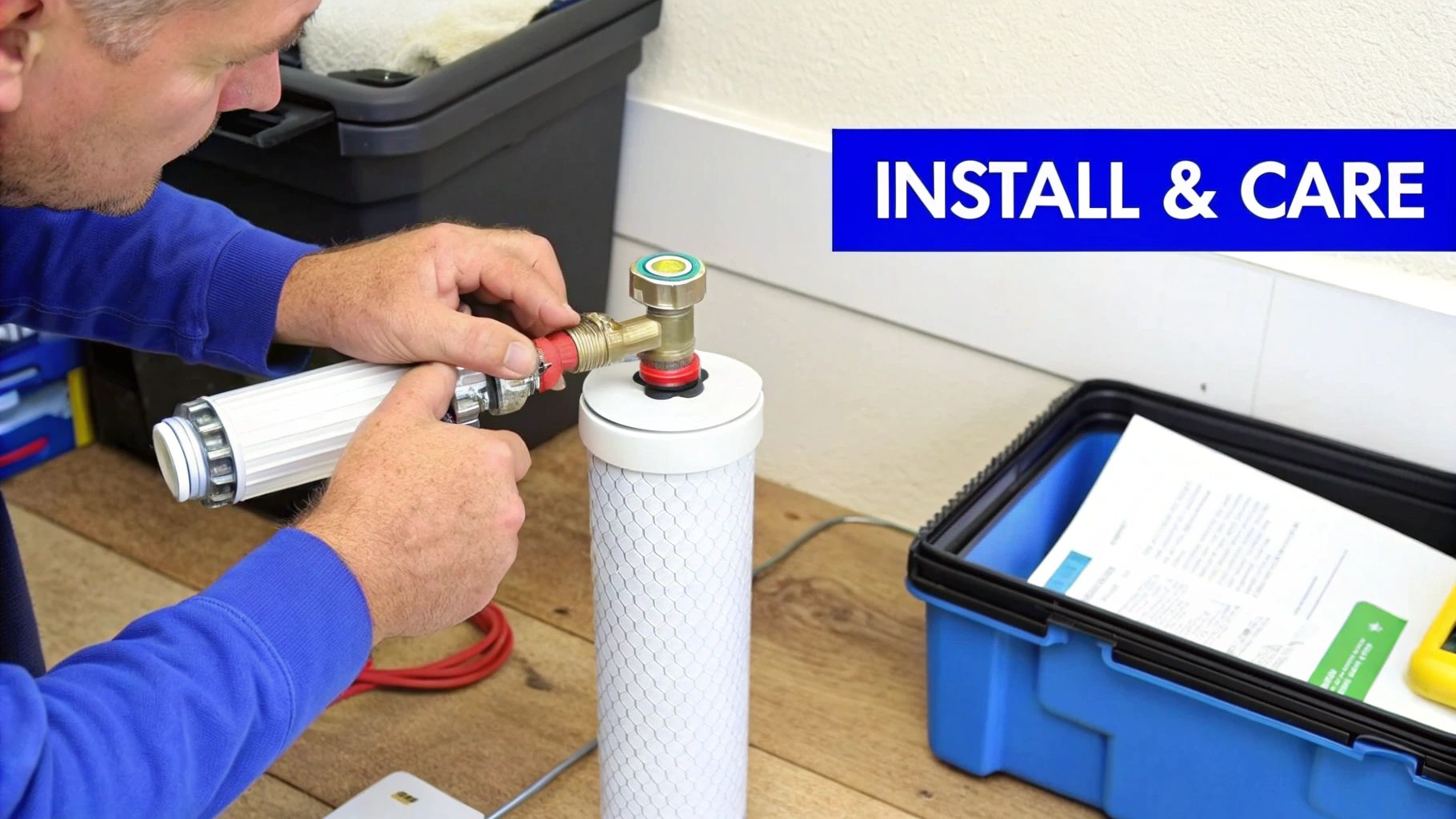
So, you’ve picked the perfect whole house water filter system for your Australian home. What’s next? Getting it installed and ready to start delivering pure, clean water to every tap. While a DIY project might sound tempting, this is one job you’ll want to leave to the professionals. A proper setup is the only way to guarantee peak performance and protect your investment for the long haul.
Think of it like laying the foundation for a house—if you don't get it right from the start, you're just asking for trouble down the track. In Australia, we strongly recommend hiring a licensed plumber for a few crucial reasons.
For starters, a pro will make sure the system is installed in line with all local plumbing codes and regulations. On top of that, most manufacturer warranties (including ours!) require installation by a licensed professional to be valid. This is your safety net against any problems that might pop up from an incorrect setup.
The Installation Process Explained
Knowing what to expect on installation day helps everything run smoothly. While every home has its own quirks, a standard professional installation usually follows a few key steps.
- Finding the Right Spot: Your plumber will first scout out the best location for the system. This is almost always on the main water line, right after your water meter but before the pipe splits off to feed your hot water heater or other parts of the house.
- Turning Off the Water: To work on the pipes safely, they’ll shut off your home's main water supply.
- Cutting and Fitting: Next, the plumber will cut into a section of the main water line to install the necessary fittings. This usually includes a bypass valve, a fantastic feature that lets you direct water around the filter during maintenance without cutting off the water to your whole house.
- Connecting the System: The filter unit is then mounted and securely connected to the new fittings, with the plumber making sure every connection is watertight and free of leaks.
- Testing and Flushing: Finally, the water comes back on! The system is flushed for a few minutes to clear out any leftover carbon fines or air bubbles. The plumber will do a final check for leaks and test your water pressure to make sure everything is working exactly as it should.
Keeping Your System in Top Shape: A Simple Maintenance Schedule
Your whole house system isn't a "set and forget" appliance. Just like your car, it needs regular tune-ups to keep running at its best. The good news is that the upkeep is incredibly straightforward.
The most important task is simply swapping out the filter cartridges on a regular schedule. Honestly, forgetting to do this is the number one reason people see a drop in performance.
A clogged filter is like a blocked artery for your home’s water supply. It not only stops filtering effectively but can also drastically reduce your water pressure, putting unnecessary strain on your entire plumbing system.
Marking your calendar or setting a reminder on your phone is the easiest way to stay on top of it. Different filters have different lifespans, which can also depend on your water quality and how much you use.
- Sediment Pre-Filters: These are your system's first line of defence. They typically need replacing every 3-6 months.
- Carbon Block Filters: These are the workhorses that remove chlorine and other chemicals, and they generally last 6-12 months.
A sudden drop in water pressure is the most obvious red flag that a filter is clogged and needs changing ASAP. For more pointers, check out our detailed guide on how to maintain a water filter to prolong its life. Sticking to this simple schedule will keep your water pure and your system running efficiently, protecting your investment for years to come.
Got Questions About Whole House Water Filters?
Jumping into a whole house water filter system in Australia is a big move, and it’s smart to have questions. You’re not just buying a product; you’re investing in your home’s health and infrastructure. Let’s tackle some of the most common questions we hear from homeowners, getting you the straight answers you need to decide with total confidence.
Think of this as your final checklist. We'll cover everything from the real-world costs to whether it’ll mess with your shower pressure, so you know exactly what you’re getting into.
How Much Does a Whole House System Cost in Australia?
This is usually the first thing on everyone’s mind, and rightly so. The total cost breaks down into three key parts: the system itself, the installation, and the ongoing filter replacements.
- Upfront System Cost: For a quality system with sediment and carbon filters, you’re typically looking at a range between $800 and $2,000. If you need something more specialised, like a UV filter for tank water or a scale reduction system for hard water, the price can climb to between $2,500 and $5,000+.
- Professional Installation: Getting a licensed plumber to install your system is non-negotiable in Australia—it protects your warranty and ensures everything is up to code. This usually adds another $400 to $800 to the bill, depending on how complex your plumbing setup is.
- Ongoing Maintenance: Don't forget to budget for the future! Replacement filters will need to be swapped out annually, and this typically costs between $150 and $400, depending on your specific model and local water quality.
While it’s a significant upfront cost, think of it as a long-term asset. It’s an investment in your family’s health and a protective measure for your plumbing and expensive appliances, saving you from costly repairs down the track.
Will a Whole House Filter Reduce My Water Pressure?
A drop in water pressure is a huge worry for many, but it's completely avoidable. When a system is sized correctly for your home and installed by a professional, you should see no noticeable impact on your water pressure. The secret is all in the flow rate.
Flow rate, measured in Litres Per Minute (LPM), tells you how much water can move through the filter at any given time. If you install a system that’s too small for your household’s needs, it creates a bottleneck. That's when you get that frustrating trickle when the shower and the dishwasher are running at the same time.
For a standard Australian family home, a system with a flow rate between 20-40 LPM is more than enough to keep things flowing smoothly. If you do notice a sudden drop in pressure, it's almost always a tell-tale sign that your filter cartridges are clogged and screaming for a replacement.
Is It Necessary If My Tap Water Is Already "Safe"?
It’s true, Australian tap water meets strict safety standards. So why bother filtering it? The answer comes down to the big difference between "safe" and "optimal." Just because your water is safe to drink doesn't mean it's pleasant.
Town water is treated with chlorine, which does a great job of disinfecting but can leave a harsh chemical taste and smell. That chlorine funk can ruin everything from your morning coffee to a pot of pasta. Plus, on its journey from the treatment plant, water can pick up rust, dirt, and other gunk from old pipes.
A whole house water filter system in Australia is your home’s final gatekeeper. It polishes your water, stripping out all those unpleasant tastes and odours, and provides a last line of defence. It goes way beyond what a simple tap filter can do by protecting your entire plumbing network and every water-using appliance from the silent damage caused by sediment and scale.
What Is the Difference Between Point of Entry and Point of Use?
Getting this straight is key to picking the right solution for your home. It all boils down to how much coverage you want.
- Point-of-Entry (POE): This is the industry term for a whole house filter. It’s installed right where the main water line enters your property, treating every single drop of water before it flows to your taps, showers, and appliances.
- Point-of-Use (POU): These are your smaller, localised filters. Think under-sink systems, countertop units, filter jugs, or those filters you attach to your showerhead. They treat water at one specific outlet.
Here's an easy way to think about it: a POU filter is like having a bouncer at one door, while a POE system is like having a full security checkpoint for the entire building. A POU filter is great for ensuring the water from your kitchen tap is perfect for drinking, but a POE system delivers a complete, home-wide solution. That means the water you bathe in, wash your clothes with, and run through your coffee machine is just as pure as the water in your glass. It’s the ultimate upgrade for total water confidence.
Ready to experience the difference clean, filtered water can make in your home? Explore the range of whole house water filter systems from Awesome Water® and find the perfect solution for your family's needs. Shop Now to enjoy pure water from every tap.