

Reverse osmosis systems are your ticket to truly pure, great-tasting water straight from the tap. This is a seriously powerful technology that uses a special membrane to filter out all sorts of nasties that other methods can leave behind, making it a go-to choice for health-conscious Aussie families.
Why Pure Water at Home Is Simpler Than You Think
We all turn on the tap without much thought, but that nagging question about what's really in our water is becoming more common. You can often taste the chlorine used for disinfection, but what about the things you can't see? Concerns are growing around contaminants like heavy metals, sneaky microplastics, and those stubborn 'forever chemicals' known as PFAS.
This is where a reverse osmosis water filter system steps in. It's a surprisingly straightforward and incredibly effective way to get peace of mind.
Think of the RO membrane at the heart of the system as a microscopic bouncer at the door of an exclusive club. Its pores are unbelievably tiny—around 0.0001 microns—meaning only pure water molecules get on the guest list.
Anything bigger, from dissolved salts and lead to bacteria and chemical compounds, is flat-out denied entry and simply flushed away. This simple but powerful principle is the secret to its amazing purification power.
A Trusted Solution for Australian Homes
The search for cleaner, safer drinking water is leading more and more Aussies to install these systems at home. It’s not just a hunch; the market is growing steadily, with experts forecasting an annual growth rate of about 4.22% through 2033. This isn't just a trend; it's a clear sign that people are becoming more aware of water quality and that RO systems are proven to work.
This level of filtration doesn't just make your water safer; it makes life better. The applications are surprisingly broad, from the obvious (amazing drinking water) to more specialised uses, like the streak-free finish professional window cleaners get thanks to the benefits of pure water systems.
The Fundamental Promise of RO
At the end of the day, a reverse osmosis system delivers on a simple promise: giving your family exceptionally clean, healthy, and delicious water right from your own kitchen. It cuts through the uncertainty of tap water by putting a reliable final barrier between your glass and unwanted impurities.
When you look at the fundamental reasons to filter your water, it’s clear that RO technology offers one of the most complete solutions out there. It’s not just about taking out the bad stuff; it's about adding confidence and genuinely improving the quality of the water your family drinks every single day.
The Multi-Stage Journey From Tap to Pure Water
A reverse osmosis system isn't just a single barrier; it's more like a highly organised team of specialist filters all working together. Each stage has a very specific job, methodically stripping away different kinds of impurities. This is why by the time the water reaches your glass, it’s passed through a complete purification gauntlet, leaving all the nasty stuff far behind.
Think of it as an elite security detail for your water. The first guards handle the obvious, bulky threats, clearing the way for the star agent—the RO membrane—to do its highly specialised work. It's this step-by-step process that makes reverse osmosis water filter systems so incredibly good at delivering clean, safe, and genuinely great-tasting water.
This diagram shows the simple but powerful transformation your water goes through.
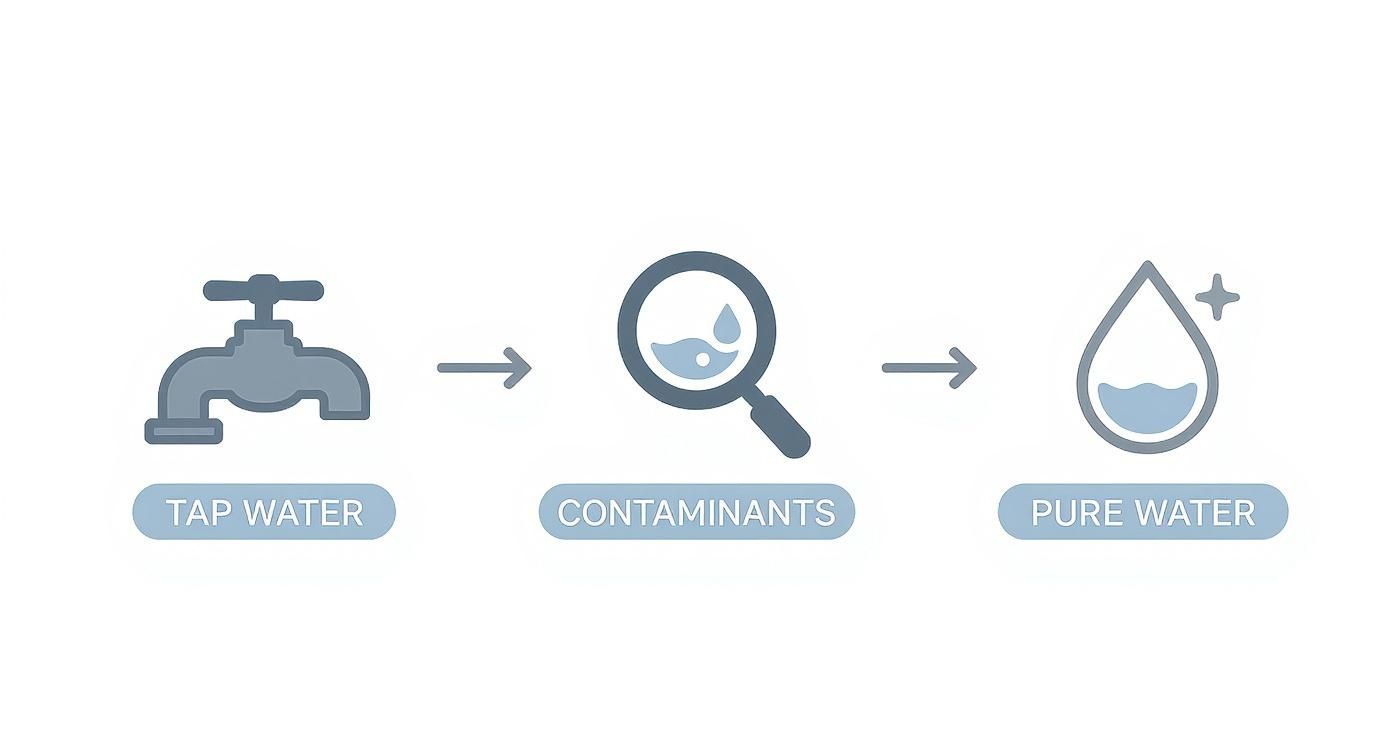
As you can see, the journey from your tap to pure drinking water is all about the targeted removal of contaminants, ensuring a high-quality final result.
Stage 1: The Protective Pre-Filters
Before the main event, your tap water first meets a set of pre-filters. These are the unsung heroes of the whole system, designed to protect the delicate and expensive reverse osmosis membrane from getting wrecked. Without them, the system's lifespan and efficiency would be cut drastically short.
A typical pre-filter setup includes:
- A Sediment Filter: This is the first line of defence. Its job is to catch the bigger gunk like dirt, rust, sand, and silt—the stuff that makes water cloudy. It’s a physical barrier that stops these gritty particles from tearing or clogging the more sensitive filters down the line.
- A Carbon Block Filter: Next up, water flows through an activated carbon filter. This stage is all about tackling chemical contaminants. The carbon acts like a magnet, adsorbing chlorine, chloramines, pesticides, and other volatile organic compounds (VOCs) that mess with the taste and smell of your water.
Getting rid of chlorine is particularly important. While it's great for sanitising the water supply, chlorine can literally eat away at the thin-film material of the RO membrane. The carbon filter effectively neutralises this threat.
Stage 2: The Heart of the System
With the bigger particles and harsh chemicals out of the way, the water is now ready for the main stage: the semi-permeable membrane. This is where the real magic of reverse osmosis happens. The membrane is a true marvel, featuring pores as small as 0.0001 microns. That's almost unimaginably tiny.
Under the pressure from your home's plumbing, only pure, tiny water molecules are able to squeeze through these microscopic holes.
Everything else—dissolved solids, heavy metals like lead and arsenic, fluoride, salts, and even microscopic bugs—is simply too large to pass. These rejected impurities are then flushed away down the drain, leaving behind incredibly pure water on the other side.
To really get your head around this multi-stage journey, it helps to understand how different filters work. Carbon is a vital pre-filter in RO systems, and you can learn more about the differences between HEPA and carbon filters to see just how versatile it is.
Stage 3: The Final Polish
After making it through the RO membrane, the purified water is stored in a small tank, ready for you to use. When you turn on your dedicated RO tap, the water makes one final trip through a post-filter before it hits your glass.
This is usually another carbon filter, often called a "polishing" filter. Its sole purpose is to remove any lingering tastes or odours the water might have picked up while sitting in the storage tank. This final step ensures the water you drink is not only incredibly pure but also crisp, fresh, and delicious. Some advanced systems might even have more stages here, which you can read about in our guide to the 8 stages of an awesome water filter.
What a Reverse Osmosis System Actually Removes
The real magic of a reverse osmosis system is its incredible precision. Think of it as the final, non-negotiable barrier between your family and a whole host of contaminants that might be lurking in your tap water. When you understand exactly what it targets, you gain a new level of confidence in every glass you drink.
This isn't just about making water taste a bit better—it's about making it fundamentally cleaner and safer. The system methodically strips out specific impurities that are a growing concern for health-conscious Aussies, from industrial 'forever chemicals' to microscopic plastics.
And it’s clear that Aussies are demanding this level of purity. In 2023, the Australian water purifier market was valued at around USD 557.03 million and is expected to rocket to USD 1,435.71 million by 2031. This boom is overwhelmingly driven by everyday households looking for reliable solutions like reverse osmosis. You can dive into the numbers in this Australian water purifier market assessment.
To get a clearer picture, let's look at what a standard reverse osmosis system can pull out of your water.
Reverse Osmosis Contaminant Removal Efficiency
| Contaminant | Potential Health Concern | Typical RO Removal Rate |
|---|---|---|
| PFAS ('Forever Chemicals') | Endocrine disruption, developmental issues | Up to 99% |
| Microplastics | Unknown long-term effects, inflammation | Over 99% |
| Fluoride | Dental & skeletal fluorosis (excessive intake) | Over 90% |
| Lead | Neurological damage, developmental delays | Over 98% |
| Chlorine | Poor taste/odour, disinfection byproducts | Over 98% |
| Arsenic | Carcinogenic, skin problems, circulatory issues | Over 95% |
| Nitrates | Blue baby syndrome in infants | Up to 90% |
| Dissolved Salts | High blood pressure, unpleasant taste | Over 95% |
As you can see, an RO system is a comprehensive defence against the most common and concerning substances found in tap water today.
Tackling Forever Chemicals and Microplastics
Two of the biggest worries in modern water quality are PFAS (per- and polyfluoroalkyl substances) and microplastics. PFAS, known as 'forever chemicals', are man-made compounds that just don't break down and have been linked to a raft of health issues. Microplastics, meanwhile, are tiny plastic fragments that are showing up in water sources all over the globe.
A good reverse osmosis system is exceptionally effective against both.
- PFAS Removal: The molecules of PFAS compounds are simply too big to squeeze through the microscopic pores of an RO membrane. As water is forced through, these chemicals are blocked and flushed down the drain, with quality systems removing up to 99% of them.
- Microplastics Filtration: It’s a similar story for microplastics. Even the tiniest fragments are massive compared to the 0.0001-micron pores of the membrane, guaranteeing they are filtered out of your drinking water.
Removing Fluoride and Heavy Metals
While fluoride is added to most Australian municipal water supplies to promote dental health, many people prefer to have control over their own intake. At the same time, heavy metals like lead or arsenic can leach into water from old pipes or natural deposits, posing serious health risks even in tiny amounts.
A reverse osmosis system is one of the most reliable methods for removing these dissolved inorganic compounds. It can effectively reduce fluoride concentrations by over 90%, giving you complete control over what's in your glass.
This precise filtration also knocks out dangerous heavy metals. Lead, arsenic, chromium, and copper are all effectively rejected by the semi-permeable membrane, ensuring they never reach your cup. If fluoride is a major concern for you, check out our detailed guide on how to remove fluoride from water to learn more.
Eliminating Chlorine and Other Contaminants
Finally, let’s talk about the most obvious offender in tap water: chlorine. It’s absolutely essential for disinfecting our public water supply and keeping it safe on its journey to your home, but that distinct swimming-pool taste and smell are far from welcome.
The carbon pre-filters in a reverse osmosis system are designed specifically to adsorb chlorine and its by-products, like chloramines. This doesn’t just make your water taste and smell infinitely better; it also protects the delicate RO membrane from chlorine damage.
Beyond these well-known substances, reverse osmosis water filter systems also remove a huge range of other dissolved solids, including salts, nitrates, and sediments. The result is water that isn’t just safer, but refreshingly pure and clean-tasting, straight from your own tap.
Weighing the Benefits and Drawbacks of RO Systems
Deciding if a reverse osmosis water filter system is right for you means looking at the complete picture. While the purification benefits are a huge drawcard, it's just as important to get your head around the practical side of owning one. By weighing up both the good and the not-so-good, you can make a choice you’ll be confident in.
This balanced view ensures there are no surprises down the track, helping you match the system to your budget, your lifestyle, and what matters most to you.
The Clear Advantages of an RO System
The number one reason families make the switch to reverse osmosis is the incredible quality of the water. This isn't just a basic filter; it's a technology that transforms your everyday tap water into something far superior.
- Exceptional Purification: Unlike simpler filters, RO systems get rid of up to 99% of total dissolved solids (TDS). This covers a massive range of contaminants, from heavy metals like lead and arsenic to fluoride and nitrates. It delivers a level of filtration that very few other methods can match, giving you genuine peace of mind with every glass.
- Vastly Improved Taste and Odour: By stripping out chlorine, dissolved minerals, and other chemical nasties, reverse osmosis produces water that’s unbelievably clean and refreshing. Say goodbye to that chemical aftertaste or earthy smell you sometimes get from the tap. It makes everything better, from a simple glass of water to your morning coffee or tea.
- Long-Term Cost Savings: Sure, there’s an initial investment, but an RO system pays for itself surprisingly quickly when you stop buying bottled water. A family can easily save hundreds, if not thousands, of dollars every year, all while enjoying pure water on demand without the mountain of plastic waste.
Key Considerations and Potential Drawbacks
To make a truly informed decision, you’ve got to look at the other side of the coin. No system is perfect, and RO technology has a few trade-offs worth knowing about, especially here in Australia.
First up is the initial setup cost, which can be a hurdle for some households. But it’s important to see this as a one-time expense that unlocks long-term savings.
Another point that often comes up is the removal of healthy minerals. Because the RO membrane is so incredibly fine, it can’t tell the difference between unwanted contaminants and beneficial minerals like calcium and magnesium. While we get most of these minerals from food anyway, some people choose to add a remineralisation filter to put them back into the purified water. To see how RO stacks up against other methods, check out our guide on how whole-house filtration removes contaminants like PFAS and fluoride.
Perhaps the biggest consideration, particularly for water-conscious Australians, is the issue of wastewater. The reverse osmosis process, by its very nature, uses water to clean the membrane and flush away all the rejected contaminants.
Environmental concerns around this water usage are a hot topic in Australia's purifier market. Older, classic RO systems might waste around 2 to 3 litres of water for every single litre of pure water they create—a real issue in drought-prone areas. As water scarcity becomes more pressing, this inefficiency raises valid questions about sustainability. You can learn more about these environmental considerations within the Australian market.
The good news? Modern "zero waste" or high-efficiency models are now available. These new systems dramatically reduce the amount of wastewater produced, making them a much more sustainable choice for the Aussie home.
Installation, Maintenance, and Long-Term Value
Knowing how a reverse osmosis water filter system works is one thing, but living with one is where the real magic happens. This is the point where all the science translates into practical benefits, completely changing your relationship with tap water. From the initial setup to simple, ongoing care, an RO system is a straightforward commitment that pays you back in spades—with better health, amazing taste, and a healthier bank account.
The first practical step is deciding where to put it. For most Australian homes, the choice comes down to two popular options: under-sink or countertop models. An under-sink unit is the stealthy choice, tucked away in your kitchen cabinet and delivering pure water from its own dedicated tap. On the other hand, a countertop system gives you portability and a super-simple setup, which is perfect for renters or anyone with limited space.
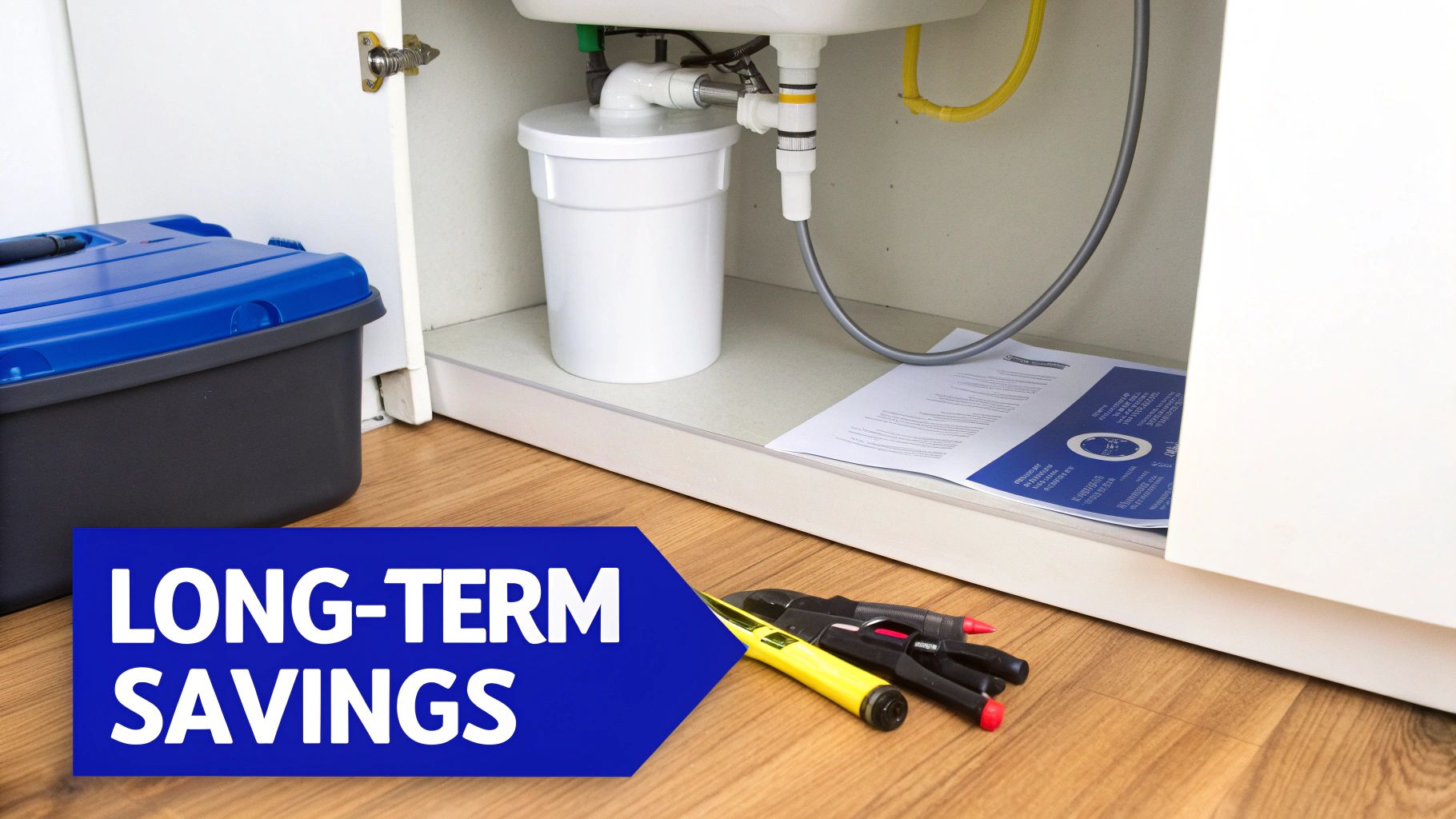
If you're handy with a few basic tools, you can likely install an under-sink system yourself in an afternoon. But if plumbing isn't your forte, calling in a professional is a smart move. They'll get it done quickly and ensure everything is connected perfectly, so you have peace of mind from day one.
Keeping Your System in Peak Condition
Once your RO system is up and running, a little bit of maintenance goes a long way. This is the key to making sure it keeps pumping out that pure, safe water day after day. Forgetting to change the filters is like never changing the oil in your car—sooner or later, performance will suffer. Luckily, staying on top of it is easy.
Here's a typical filter replacement schedule to keep in mind:
- Pre-Filters (Sediment and Carbon): Think of these as the system's bodyguards. They catch the bigger stuff like dirt and chlorine to protect the all-important membrane. Plan on swapping these out every 6 to 12 months.
- Reverse Osmosis Membrane: This is the heart of the whole operation. As long as you've been good about changing the pre-filters, the membrane itself will last a solid 2 to 3 years.
- Post-Filter (Polishing Carbon): This is the final touch, the filter that makes sure your water has that crisp, clean, refreshing taste. It needs to be replaced every 12 months.
Sticking to a maintenance schedule is the single most important thing you can do to guarantee your system works perfectly for years. It's the secret to making sure every glass of water is as pure as the first.
It’s a simple routine to get into, and you can find more great tips in our detailed guide on how to maintain a water filter to prolong its life.
The Financial Case Against Bottled Water
Let's talk money. One of the biggest eye-openers for new RO system owners is just how much cash they save in the long run. Many Aussie families don't realise how much they're spending on bottled water until they actually add it up. The upfront cost of an RO system might seem like a lot, but it's an investment that pays for itself faster than you’d think.
To put it in perspective, let's crunch some numbers for a typical family of four over a five-year period. We'll assume they drink about 8 litres of water a day and a 24-pack of 600ml bottles costs around $12 (which works out to about $0.83 per litre).
Cost Comparison: RO System vs. Bottled Water (5-Year Outlook)
| Expense Category | Reverse Osmosis System | Bottled Water |
|---|---|---|
| Initial Setup Cost | $500 (one-time) | $0 |
| Annual Filter Costs | $150 | $0 |
| 5-Year Total Filter Costs | $750 | $0 |
| Daily Water Cost | Negligible (tap water) | ~$6.64 (8L x $0.83) |
| 5-Year Water Cost | Negligible | ~$12,118 |
| Total 5-Year Cost | ~$1,250 | ~$12,118 |
The difference is massive. Even when you factor in the initial purchase and the ongoing filter costs, this family saves over $10,800 in just five years. And that's before you even consider the incredible environmental impact of keeping thousands of single-use plastic bottles out of our landfills and oceans.
Choosing a reverse osmosis system isn't just a decision for your health—it's one of the smartest financial moves you can make for your household. It’s pure water and pure savings, year after year.
Choosing the Right RO System for Your Home
https://www.youtube.com/embed/LQypQBH_iec
Deciding to bring a reverse osmosis water filter system into your home is a fantastic move towards a healthier lifestyle. You’ve now seen how the technology works, what it pulls out of your water, and the genuine value it offers in the long run. It’s all about taking back control over your water quality and feeling confident with every pure, delicious glass you drink.
The benefits are crystal clear. You’re getting exceptional purification that gets rid of up to 99% of contaminants—from the usual suspects like lead and chlorine to modern worries like PFAS and microplastics. The result is water that just tastes better, making everything from your morning coffee to your cooking noticeably cleaner. And, as we've seen, the savings stack up quickly compared to buying bottled water, making it a smart financial choice for your family.
Choosing an RO system is more than just buying an appliance; it's a proactive investment in your family's health and well-being, providing a reliable final barrier against unwanted impurities day after day.
This commitment to both purity and taste is exactly why reverse osmosis has become one of the most trusted solutions for Australian households who are serious about their tap water. It just delivers consistent, high-quality results you can count on.
Your Final Pre-Purchase Checklist
Before you pull the trigger, just run through this quick checklist. Getting these details right from the start will make sure you pick the perfect system for your needs and set you up for years of hassle-free pure water.
- Check Your Water Pressure: Most RO systems need a decent amount of push to work properly, usually somewhere around 40-60 PSI. You can grab a simple pressure gauge from a hardware store to quickly check if your home's plumbing is up to the task.
- Measure Your Available Space: Under-sink models are the most common choice, but they do need a bit of room to live. Get the tape measure out and make sure you have enough space in the cabinet for the main unit, the storage tank, and the filters.
- Factor in Ongoing Costs: Don't forget, the filters need to be replaced to keep the system running at its best. Have a quick look at the price and availability of replacement filters for the model you’re keen on so you can budget for this simple but essential maintenance.
Investing in a reverse osmosis system is a powerful step towards a healthier and more sustainable way of life. It’s your ticket to ditching single-use plastic bottles, saving a good bit of money, and giving your family the cleanest, best-tasting water possible. You’re all set to make a great choice.
Common Questions We Hear About RO Systems
Even after getting your head around how a reverse osmosis water filter system works, there are always a few practical questions that pop up. We get it. Making sure you have clear, straightforward answers helps you feel confident you're making the right choice for your home.
Let's dive into some of the most common queries we tackle every day.
Will an RO System Wreck My Water Pressure?
This is a big one, but the answer is simple: no, it won’t affect your main kitchen taps at all. An under-sink RO system is plumbed into your cold water line, but it delivers the purified water through its own separate, dedicated tap.
Your normal hot and cold taps will work exactly as they did before, with the same pressure you're used to. The flow from the smaller RO tap might seem a bit gentler, but that’s completely normal—it’s just a sign that the water has made its way through a very thorough multi-stage purification process.
Do RO Systems Take Out the Good Minerals Too?
Yes, the reverse osmosis process is so fine that it strips out almost everything that isn't a pure water molecule. This includes beneficial minerals like calcium and magnesium, right along with the nasty stuff like lead and fluoride.
But it’s important to remember we get the vast majority of our essential minerals from the food we eat, not the water we drink. For anyone who still wants minerals in their water, many modern reverse osmosis water filter systems come with an optional remineralisation filter. This adds a healthy blend of minerals back into the water right before it hits your glass, giving you the best of both worlds.
The main job of drinking water is hydration, and RO systems are superstars at providing the purest possible water for that. Adding minerals back in is a personal choice that today’s systems easily accommodate.
How Often Do I Really Have to Change the Filters?
Honestly, sticking to the filter replacement schedule is the most important thing you can do to keep your system running perfectly and your water pure. If you let old filters sit, they stop working properly and can even become a breeding ground for bacteria.
Here’s what a typical schedule looks like:
- Pre-Filters (Sediment & Carbon): These guys do all the heavy lifting to protect the main membrane. Plan to change them every 6 to 12 months.
- RO Membrane: This is the heart of the system. As long as you keep the pre-filters fresh, it will last 2 to 3 years.
- Post-Filter (The Polishing Filter): This final filter keeps your water tasting crisp and clean. Swap it out every 12 months.
Can I Actually Install One of These Myself?
Absolutely. If you’re comfortable with basic DIY tasks and know how to follow instructions, installing an under-sink RO system is a totally manageable weekend project. Most kits arrive with clear, step-by-step guides and all the parts you'll need.
That said, if you’re not confident working with your home's plumbing, there’s no shame in calling in a professional. A plumber can get the job done quickly and correctly, giving you total peace of mind that everything is secure and leak-free. It really just comes down to your personal comfort level and DIY skills.
Ready to enjoy the purest, best-tasting water right from your own tap? Explore the full range of advanced filtration solutions at Awesome Water® and find the perfect system for your home or workplace. Discover your ideal water filter today at https://www.awesomewater.com.