

Forgetting to replace your fridge water filter is about more than just taste; it's a critical maintenance task for your health and your appliance. An old, clogged filter can quickly become a breeding ground for bacteria and makes your fridge work harder than it should, risking damage down the line.
What Really Happens When You Neglect Your Filter
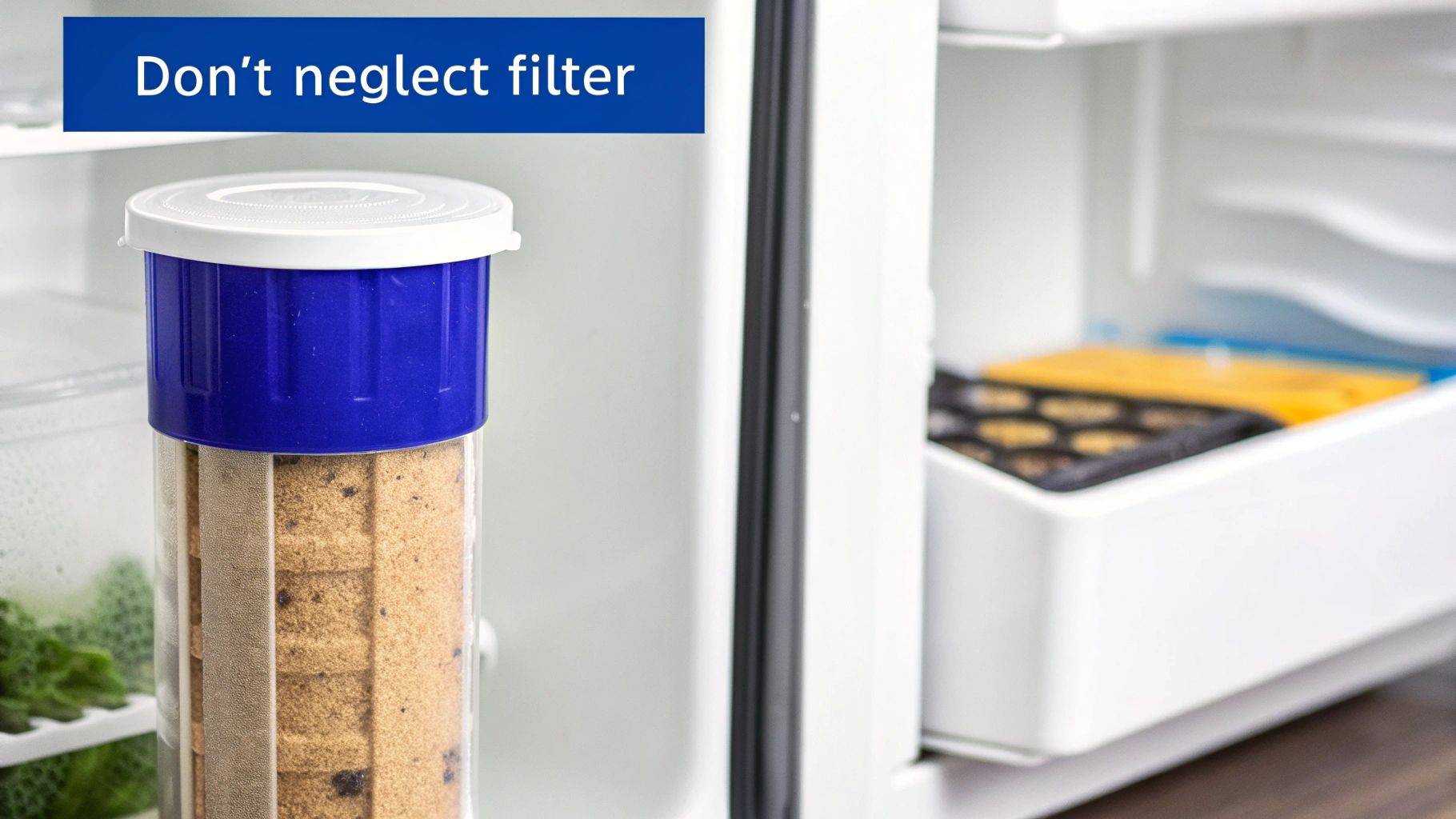
It’s easy to ignore that little glowing light on your fridge dispenser. After all, the water still comes out, right? But inside that old, saturated filter, a lot is happening—and none of it is good for your water or your refrigerator.
At first, the filter just stops doing its job properly. The activated carbon inside gets completely clogged with all the contaminants it's been dutifully pulling out for months—things like chlorine, lead, and sediment. This is usually when you’ll start noticing an "off" taste or a strange odour in your water and ice cubes. The water that was once crisp and clean now tastes no better than straight tap water.
The Hidden Health Risks
Beyond just poor taste, a neglected filter can become a genuine health concern. The damp, dark environment inside a filter cartridge is an ideal breeding ground for bacteria, mould, and other nasty microorganisms. Instead of trapping contaminants, the filter can actually become a source of them, releasing them straight back into your drinking water.
While industry estimates suggest up to 90% of Australian households with modern fridges have a water filter, the actual replacement rates are often much lower than the recommended six-month cycle. This simple oversight can lead to decreased water flow, unpleasant tastes, and a real microbial risk.
The Impact on Your Appliance
A clogged filter also puts a surprising amount of strain on your refrigerator's water system.
Think of it like trying to breathe through a blocked straw. Your fridge's pump has to work much harder to push water through the dense, clogged filter media. This can lead to slower water flow, a noisy dispenser, and even potential leaks or damage to the internal components over time.
Forgetting this simple task turns a helpful accessory into a potential liability. You can learn more about what happens if you don't change your water filter in our detailed guide.
Finding the Right Filter for Your Fridge Model
Picking out the right fridge water filter can feel like searching for a needle in a haystack. With so many different model numbers and cartridges that look almost identical, it's incredibly easy to go home with the wrong one. I've seen it happen countless times – a simple mistake leads to leaks, bad performance, or a filter that flat-out refuses to fit, sending you right back to the store.
The secret to getting it right on the first try is finding your refrigerator's model number. I'm not talking about the big brand name on the door; this is a specific code printed on a sticker somewhere inside your fridge. The most common hiding spot is along the interior wall, often near the top shelf or tucked away behind the crisper drawers. Once you have this number, the whole process gets a lot simpler.
OEM vs. Aftermarket Filters
Armed with your model number, you'll come to a fork in the road: do you buy a genuine manufacturer filter, also known as OEM (Original Equipment Manufacturer), or a third-party aftermarket option?
OEM filters come straight from your fridge's brand, so they're a guaranteed perfect fit and will perform exactly as expected. Aftermarket filters, on the other hand, are made by different companies and usually come with a friendlier price tag.
While going the aftermarket route is a fantastic way to save a bit of cash, it's vital to stick with a reputable brand. A poorly made generic filter might not offer the same level of contaminant reduction and, worse, could even cause leaks. You can find a great selection of reliable and compatible Awesome Water fridge filters that deliver a great balance of quality and value.
Here's a quick look at the key differences to help you decide which path is right for you.
OEM vs. Aftermarket Filter Comparison
| Feature | OEM (Genuine) Filters | Aftermarket (Generic) Filters |
|---|---|---|
| Price | Typically more expensive | More budget-friendly |
| Fit & Compatibility | Guaranteed perfect fit for your specific fridge model | Designed to fit, but quality can vary between brands |
| Performance | Meets the manufacturer's exact filtration standards | Performance can be excellent, but check for certifications |
| Warranty | Using an OEM filter won't void your fridge's warranty | Usually won't void warranty, but check the fine print |
| Availability | Available from the manufacturer and authorised dealers | Widely available online and in stores from various brands |
Ultimately, both can be great choices. OEM offers peace of mind, while a high-quality aftermarket filter provides fantastic value without compromising on safety or performance.
A common myth I hear is that all filters are basically the same. That couldn't be further from the truth. Filtration capabilities can vary dramatically, impacting everything from the taste of your water to its safety. Always double-check that any aftermarket filter you buy is certified to meet industry standards for contaminant removal.
And don't forget about your ice! Beyond the water from your dispenser, getting the ice quality right is just as important. For more on that, you can check out these Top Filters for Refrigerator Ice Makers to make sure every cube is as pure and fresh as your water. This ensures you get a clean, consistent taste whether you're filling a glass or chilling a drink.
Replacing Your Filter Without Making a Mess
Right, let's get our hands dirty. Changing a fridge water filter is one of those jobs that seems dead simple, but a few wrong moves can leave you with a puddle on the kitchen floor and a sputtering dispenser. The key is being prepared.
Before you even think about touching the old filter, grab a towel. Lay it down on the floor or the shelf directly underneath the filter housing. Trust me, a little bit of water is always going to spill out, and this one simple step saves you a cleanup job later.
Most modern fridges won't require you to shut off the water mains, but if you've got an older model or just want to be extra cautious, find the shut-off valve behind the fridge and give it a quick quarter-turn.
Handling Different Filter Types
Here in Australia, you’ll generally come across one of three filter styles, especially in popular brands like Samsung, LG, and Fisher & Paykel. Each one has its own little trick for a smooth, leak-free swap.
- Twist-In Filters: These are the most common and are usually tucked away inside the fridge, often in the top right corner. All it takes is a simple quarter-turn to the left, and it should pull straight out.
- Push-In Filters: You'll often find these located in a grille at the bottom of the fridge. They typically have a little eject button right next to them. Push it, and the filter pops out. The new one just clicks back into place.
- Drop-Down Filters: A lot of newer fridges have a handy filter compartment that drops down from the ceiling. A quick push or slide of a latch will release the housing, making it super easy to access.
Of course, the most crucial part of the job happens before you even open the fridge door: making sure you've bought the right filter. This flowchart breaks it down nicely.
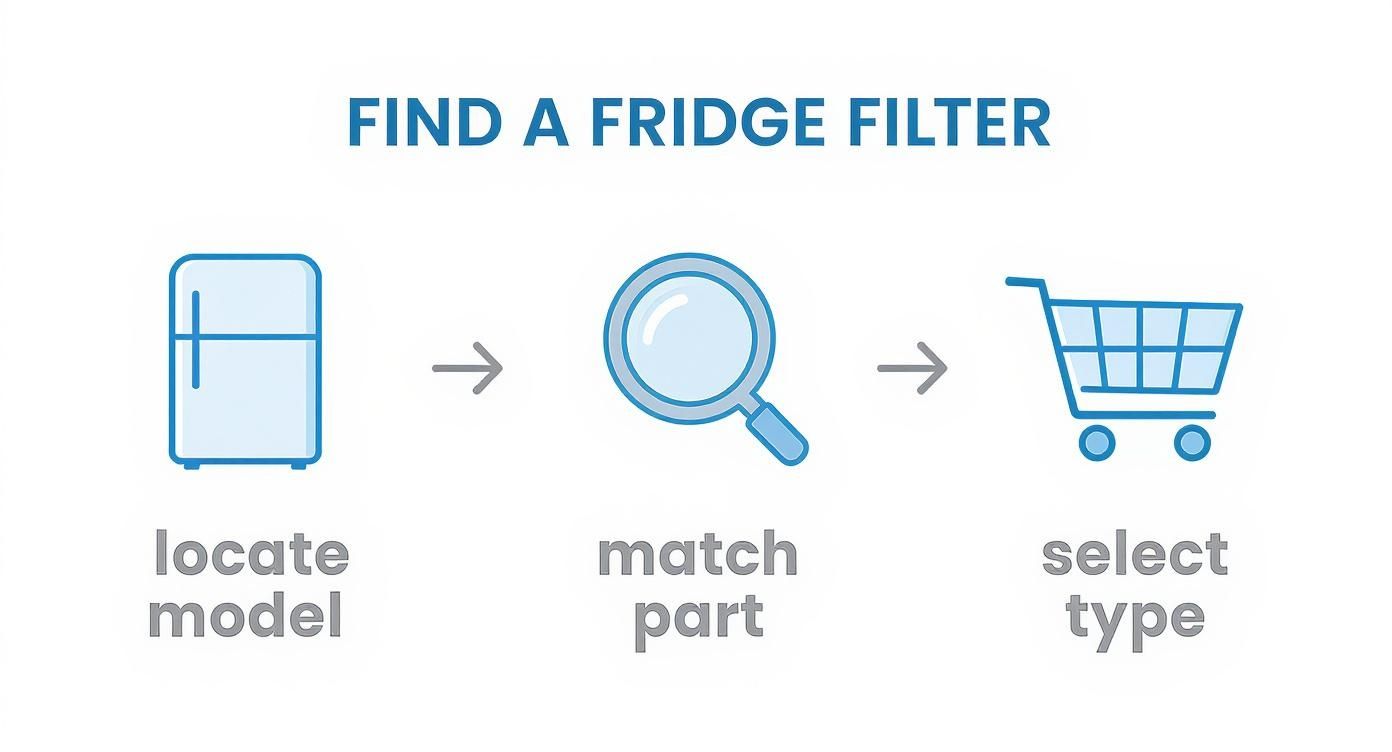
This visual guide cuts through the confusion, ensuring you have the correct part in your hand before you start.
Once the new filter is in, you’re not quite done. You need to purge the system. This step is vital for clearing out any trapped air and loose carbon fines from the new filter. They're harmless, but they can make your first few glasses of water look cloudy.
Grab a large jug and run about four litres of water through the dispenser. Don't be alarmed if you hear some sputtering and see cloudy water at first—this is completely normal. Just keep it running until the water is clear and the flow is nice and steady.
This final step is non-negotiable if you want clean, great-tasting water from the get-go.
For a deeper dive into filter maintenance, our guide on water filter replacement is packed with more tips to keep your system running perfectly. Follow these real-world steps, and you'll have the whole job knocked over in less than five minutes.
Right, you've swapped in the new fridge filter, feeling pretty pleased with yourself, but something isn't quite right. Maybe there's a slow, steady drip coming from the filter housing, or even worse, the water dispenser has given up the ghost.
Don't panic. These are really common headaches, and the fixes are usually straightforward.
A small leak is almost always the easiest one to sort out. It usually just means the filter isn't screwed in all the way. Forget everything you know about tightening jar lids—give the filter an extra quarter-turn clockwise. You should feel it lock into place with a satisfying click, which tells you you've got a proper seal.
If your dispenser is sputtering or has stopped working entirely, trapped air is the most likely culprit. It’s a classic issue that happens when air gets into the water lines during the filter swap. The fix is simple: purge the system. Just run a few litres of water through the dispenser. Keep going until the flow is smooth and steady again.
That Stubborn Filter Light Won't Turn Off
One of the most common frustrations is the 'change filter' light that flat-out refuses to turn off, even with a brand new filter installed. This doesn't mean your filter is faulty; it's just your fridge's way of saying it needs you to confirm the job is done.
The reset process is a bit different for every brand, but here are the usual suspects:
- Samsung Models: Often, you'll need to press and hold the "Ice Type" and "Child Lock" buttons together for three seconds.
- LG Models: These typically reset when you hold down the "Water Filter" button for three to five seconds.
- Fisher & Paykel Fridges: Look for a dedicated "Filter Reset" button. If there isn't one, it's likely a combination press similar to Samsung's.
When in doubt, a quick Google search for your fridge’s model number plus "reset filter light" will give you the exact button combo. It’s a simple step that’s easy to overlook when you're just trying to get the job finished.
Keep in mind that your local water quality and how much your household drinks can affect how long a filter really lasts. While most manufacturers suggest a six-month replacement cycle, homes with higher water use or particularly hard water might need a fresh filter as often as every three months to keep everything running smoothly.
For any tricky issues that these simple fixes don't solve, our Awesome Water help line and repair manual offers more in-depth guidance.
Getting the Best Taste After Your New Filter Is In
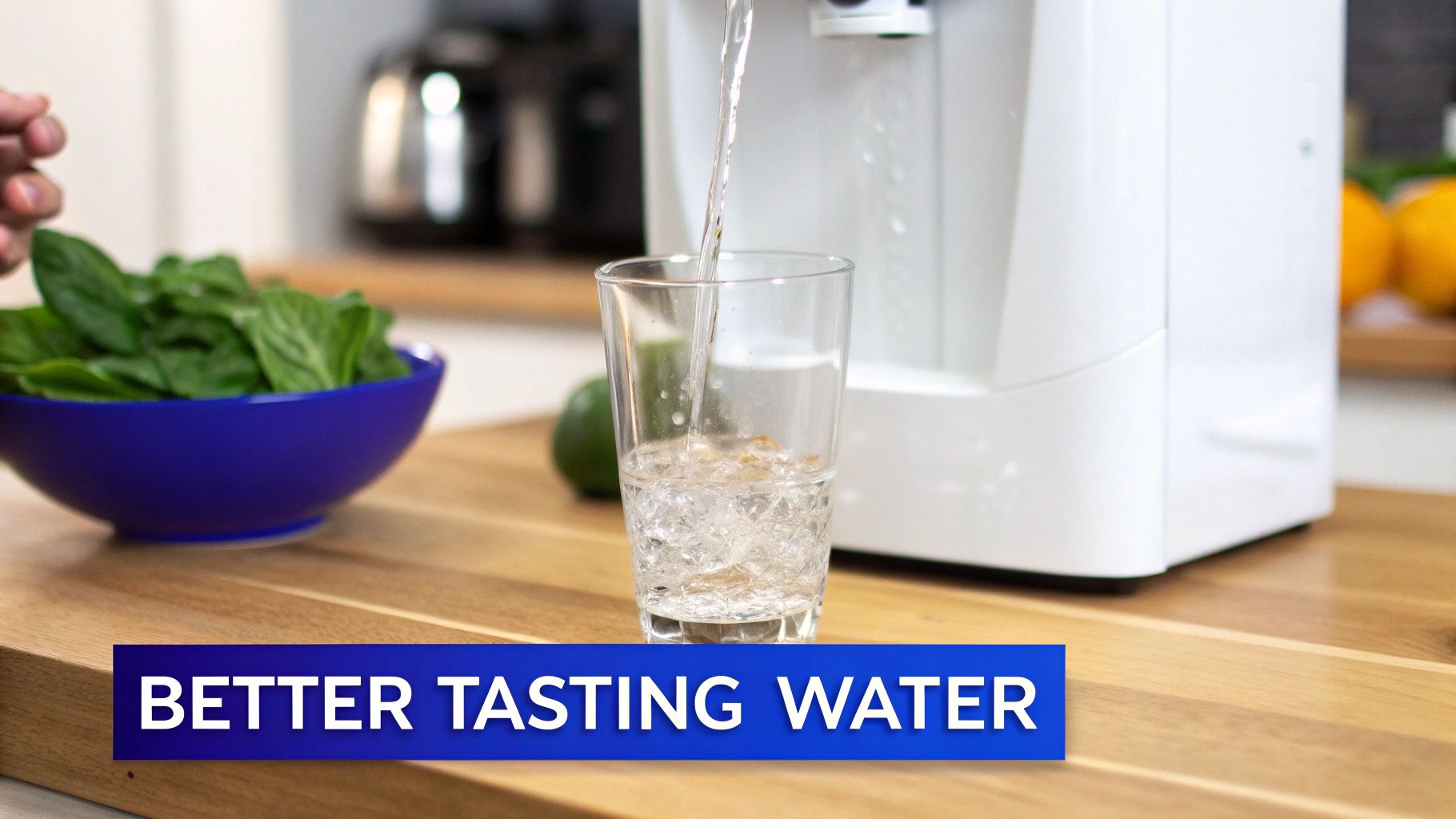
You've successfully installed your new fridge water filter, but don't start drinking just yet! The last couple of steps are crucial for getting that clean, crisp taste you're after. The main thing you need to do is give the system a good flush.
Don't panic if the first glass or two looks a bit grey or cloudy. This is completely normal and is just loose carbon dust, often called "fines," from the brand-new filter. To clear it all out, simply grab a large jug and run about four litres of water through the dispenser. You’ll probably hear it sputter a bit at first, but soon it will run clear and smooth.
Staying on Schedule for Safe, Pure Water
Now that your filter is running perfectly, the final piece of the puzzle is remembering when to change it next. A quick reminder in your phone's calendar or even a sticky note on the fridge will do the trick.
Here in Australia, big names like Samsung, LG, and Fisher & Paykel all recommend a fridge water filter replacement every six months. This isn't just a suggestion to sell more filters; it's a health and safety guideline. Over time, bacteria and fungi can build up inside the old filter, which you definitely don't want in your drinking water.
A fresh filter not only removes contaminants but also ensures the water tastes its best. Some people even explore the benefits of adding minerals back into filtered water to further enhance its quality and health properties.
To really get the most out of your setup, it's also a good idea to periodically clean the lines themselves. This comprehensive refrigerator water line cleaning guide is a fantastic resource for keeping your entire system in top-notch condition.
Got Questions About Your Fridge Filter? We’ve Got Answers.
We get asked about fridge filters all the time, so let's clear up some of the most common questions. Knowing the ins and outs will help keep your water pure and your fridge running like a dream.
Do I Really Have to Change It Every 6 Months?
Yes, and this isn't just a suggestion—it's the golden rule for a reason. Over time, the activated carbon inside your filter gets completely saturated with contaminants. When that happens, it simply stops working.
Worse still, a damp, old filter can become a perfect breeding ground for bacteria. Sticking to that six-month schedule is genuinely the best thing you can do to make sure your water is safe, clean, and tastes great.
So, What Happens if I Just Ignore the Little Red Light?
Putting it off might seem harmless, but ignoring that little reminder light will eventually cause problems you can't miss. First, your water might start to taste or smell a bit funky as chlorine and other impurities sneak back in.
Before long, the water flow from your dispenser will slow to a sad trickle. That’s because the filter is completely clogged, which puts a whole lot of unnecessary strain on your fridge’s water pump. Don't risk a costly repair over a simple filter change.
A lot of people think generic filters are a risky choice. While there are definitely some duds out there, many are a fantastic, cost-effective alternative. The trick is to find one that's certified for contaminant reduction and guaranteed to fit your fridge model. This way, you avoid leaks and know it's actually doing its job.
Ready to guarantee clean, great-tasting water for your family? Find the perfect, high-quality filter for your fridge at Awesome Water® and enjoy peace of mind with every glass. Shop our range of fridge filters now.