
Choosing the right shower filter in Australia really comes down to tackling our most common water problems: chlorine, chloramine, and the minerals that cause hard water. The best filters use a proven combination of media like KDF-55 and Activated Carbon to get these contaminants under control, saving your skin and hair from the dryness and irritation they cause. Investing in a good filter isn’t a luxury—it’s a must-have upgrade for any health-conscious Aussie home.
Why a Shower Filter Is a Non-Negotiable for Australian Homes
Ever jump out of the shower and feel like your skin is uncomfortably tight or your hair is strangely straw-like? You're not just imagining things. While Australian tap water is perfectly safe to drink, the chemicals used to treat it—mostly chlorine and chloramine—can do a real number on your body’s natural moisture.
These disinfectants work by stripping away the protective oils, or sebum, that keep your skin and hair healthy. This leads to a whole raft of frustrating problems you might not have connected to your daily shower.
The Hidden Impact of Your Daily Shower
For most people, the link between their shower water and ongoing skin or hair troubles isn't immediately obvious. But the effects build up over time and are surprisingly common.
- Skin Dryness and Irritation: Chlorine is a known irritant. It can make conditions like eczema, psoriasis, and general dermatitis much worse, leaving skin itchy, red, and flaky.
- Dull and Brittle Hair: The same chemicals that bother your skin are just as rough on your hair. They can make it brittle, lead to split ends, and strip the life out of colour-treated hair, meaning more trips to the salon.
- Accelerated Ageing: When your skin's natural oils are constantly being stripped away, its protective barrier is weakened. Over time, this can contribute to premature fine lines and a loss of elasticity.
Here's a surprising fact: you can absorb more chlorine through your skin and lungs during a 10-minute hot shower than you would from drinking eight glasses of the same tap water.
The Growing Demand for a Better Shower Experience
Aussies are becoming far more savvy about what’s actually in their water, and you can see it in the market trends. The concern over tap water quality has created a huge demand for shower filters. This is part of a bigger trend in the water purifier market, which hit AUD 337.79 million in 2023 and is expected to soar to AUD 610.64 million by 2034.
With so many Australians dealing with hard water and 45% of people reporting skin irritations they connect to their showers, it's no wonder that finding the best shower filter in Australia is now a top priority. You can dig into the full market analysis over at ExpertMarketResearch.com.
A quality shower filter tackles these issues head-on, neutralising chlorine and cutting down other nasty contaminants before they even reach your body. Taking a moment to understand the specific toxins that may be in your water is the first step toward a healthier home. It turns the daily shower from just another routine into a genuine act of self-care.
Decoding Filtration Technology for Australian Water
Choosing the right shower filter means looking beyond the slick marketing and shiny chrome casing. You need to get into the nitty-gritty of what’s actually inside, because the real work is done by the filtration media—the stuff engineered to grab, neutralise, or change contaminants as water flows past.
Not every filter technology is cut out for Australian water, especially when you factor in the high temperatures of a good, hot shower. Understanding what each component does empowers you to make a choice based on science, not just clever ad copy. The best systems almost always use a multi-stage approach, layering different media to tackle a wider range of nasties.
This flowchart breaks down the simple journey from your tap to your shower, showing exactly where a good filter steps in.
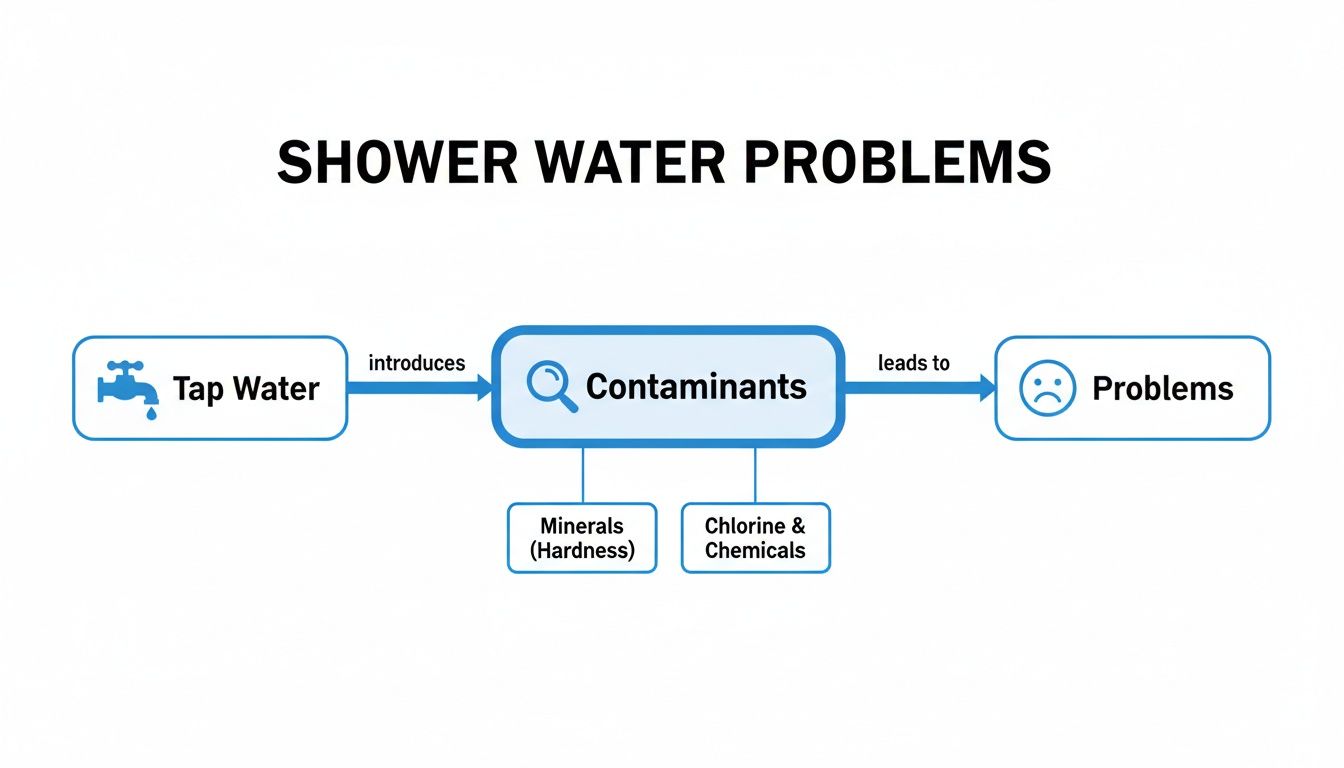
As you can see, what comes out of the tap isn't always what you want on your skin and hair. An effective filter acts as that crucial barrier.
The Power Players in Shower Filtration
Four key types of filter media are the backbone of almost every quality shower filter you'll find. Each has a specific job, and when they work together, the result is softer skin and healthier hair.
1. Kinetic Degradation Fluxion (KDF-55)
Think of this as the heavy lifter. KDF-55 is a high-purity blend of copper and zinc that triggers a small electrochemical reaction. As water passes through, it cleverly converts free chlorine into a harmless chloride salt. It's also fantastic at removing heavy metals like lead and mercury and helps stop bacteria and algae from growing inside the filter. Crucially, it works brilliantly in hot water, making it a non-negotiable for any serious shower filter.
2. Activated Carbon
This is the true workhorse of water filtration. Activated carbon is famous for its incredible porosity; a single gram can have a surface area of over 3,000 square metres. This massive surface area allows it to adsorb a huge range of organic compounds, chemicals, and especially chlorine. In a shower filter, it's the primary defence against volatile organic compounds (VOCs) and the chemicals that create that unpleasant "pool" smell.
If you want to dive deeper into how it works, our guide explains in detail what a carbon water filter is and how it works.
Essential Support Media for High Temperatures
While KDF and carbon do the bulk of the work, other materials are vital for ensuring top performance, particularly in the hot water common in Australian showers.
3. Calcium Sulphite (CaSO3)
Here’s a hero for hot water. Calcium sulphite is exceptionally good at removing chlorine and chloramine when the temperature cranks up. Some types of activated carbon can start to lose their punch as water gets hotter, but calcium sulphite excels in these conditions. It acts as the perfect backup, making sure chlorine is zapped right through to the end of your shower. Its inclusion is a sure sign of a thoughtfully designed filter.
4. Vitamin C Infusions
A more modern addition to the filtration world, Vitamin C (ascorbic acid) is lightning-fast at neutralising both chlorine and chloramine. It works almost instantly on contact, which is perfect for the fast flow rate of a shower. Filters that add a Vitamin C block provide an extra security layer, completely de-chlorinating the water and leaving it noticeably gentler on your skin and hair.
The best shower filters don't just rely on one trick. They layer these media strategically—KDF for metals and chlorine, carbon for organics, calcium sulphite for hot water performance, and sometimes Vitamin C for that final, rapid neutralisation. It's this combined defence that really tackles common water impurities.
When you're comparing filters, flip them over and check the specs for these key ingredients. A filter that proudly lists a mix of KDF-55, high-grade activated carbon, and calcium sulphite is built on proven science. It’s far more likely to give you the results you’re after, so you can choose the best shower filter for your Aussie home with total confidence.
How to Compare Shower Filters Like an Expert
Choosing the right shower filter isn't about scrolling through reviews or picking the sleekest design. To find the best one for your home here in Australia, you need to think strategically and cut through the marketing noise. It's about focusing on what actually works and delivers real value, not just what's cheapest upfront.
A smart approach means digging into certified performance data, understanding how a filter will feel in your daily shower, and figuring out the true cost of ownership over a year. Arm yourself with a clear evaluation plan, and you'll end up with a filter that genuinely delivers on its promises for your household.
Start with Certified Contaminant Removal
This is the most critical factor. What's the point of a filter if it doesn't remove the contaminants you're worried about, like chlorine and chloramine? Don't fall for vague claims like "removes up to 99% of chlorine." Instead, look for brands that back up their promises with independent, third-party lab results.
A proper lab report should tell you:
- The exact percentage of contaminants removed. A high-quality filter will show consistently high removal rates.
- The test conditions. This should include water flow rate and temperature that mimic a typical Aussie shower.
- Performance over time. A filter might remove 98% of chlorine when it's brand new, but what about after 2,000 litres? Honest brands show how the performance drops off over the cartridge's lifespan.
This is the kind of detail that separates scientifically-backed products from those making empty promises. Without verified data, you're just buying on blind faith.
Assess the Impact on Water Pressure
Nobody wants a filter that turns a relaxing shower into a frustrating trickle. This is where flow rate, measured in litres per minute (LPM), becomes a key point of comparison. The average Australian shower head pushes out about 7 to 9 LPM.
A well-designed shower filter should work efficiently within this range, meaning you shouldn't notice any drop in pressure. When comparing models, check for a specified maximum flow rate that matches or beats your current shower head. If a manufacturer doesn't list this info, consider it a red flag. A sudden drop in pressure is also the clearest sign that your filter cartridge is clogged and needs replacing.
Expert Tip: To check your current flow rate, grab a 10-litre bucket, stick it under your shower, and time how long it takes to fill. If it takes exactly one minute, your flow rate is 10 LPM. This simple test helps you choose a filter that’s guaranteed to work with your home's water pressure.
Analyse Cartridge Lifespan and True Usage
Filter brands often advertise their cartridge lifespan in months (e.g., "lasts 6 months") or in litres (e.g., "filters 50,000 litres"). The litre rating is a much more reliable guide because every household's water usage is different.
Just think about this real-world scenario:
- Household A (Single Person): One 8-minute shower a day at 8 LPM uses 64 litres. Over six months, that adds up to about 11,520 litres.
- Household B (Family of Four): Four 8-minute showers a day at 8 LPM uses 256 litres. Over six months, that's a whopping 46,080 litres.
A cartridge rated for 40,000 litres would last well over a year for the single person but would need replacing in under six months for the family. Always estimate your household's usage to get a realistic replacement schedule. For a deeper dive into making smart choices, check out our important tips to follow when purchasing a water filter.
Calculate the True Annual Cost of Ownership
The initial price tag on a shower filter is just one piece of the puzzle. The ongoing cost of replacement cartridges determines the true long-term value, and this is where some "budget" filters can end up being surprisingly expensive.
Let’s run the numbers on two hypothetical filters:
| Feature | Filter X (Budget Model) | Filter Y (Premium Model) |
|---|---|---|
| Initial Cost | $69 | $129 |
| Replacement Cartridge | $45 | $59 |
| Replacement Cycle | Every 3 Months | Every 6 Months |
| Annual Cost (Year 1) | $69 + (3 x $45) = $204 | $129 + (1 x $59) = $188 |
In this case, the premium model is actually cheaper over the first year because its cartridges last twice as long. Always do the maths before you commit.
The demand for effective water purification is growing fast in Australia, with the market expected to expand at a healthy clip of 7.4% CAGR through 2032. This is all driven by a growing awareness of water contaminants and a desire for healthier living. The best models tested by consumer groups often show over 98% chlorine removal, proving that quality filtration systems really do work.
Right then, let's dive into a real-world comparison of Australia's top shower filters.
We've covered the theory—what to look for and why it matters. Now it's time to see how the leading models stack up when you put them to the test. This isn't just a feature list; it's a practical breakdown based on the criteria we've already established, so you can see what really works.
We'll be looking at each filter's core technology, checking if their performance claims are actually verified, and figuring out the true ongoing costs, including those pesky cartridge replacements. I’ll walk you through a couple of common scenarios to help you picture which filter is the best shower filter in Australia for your specific needs—whether you're renting in a big city or running a busy family household.
This way, you can connect the dots between your situation and a product that genuinely delivers.
Scenario 1: The Sydney Renter
First up is a classic Aussie situation: someone renting an apartment in Sydney. They need a filter that’s dead easy to install (no tools, please!), tackles the high levels of chlorine and chloramine found in metro water, and won't break the bank for a single person.
- Key Needs: Tool-free installation, strong chlorine removal, and a low annual cost.
- Ideal Technology: A multi-stage filter with KDF-55, activated carbon, and calcium sulphite is the perfect combination for Sydney's treated water.
For this scenario, a model like the Awesome Water® Shower Filter is a brilliant fit. You can install it in minutes—literally just screw it on between the shower arm and your current shower head. When it's time to move out, you can take it with you without leaving a trace. Its 10-stage filtration is designed specifically to nail the chlorine and sediment common in urban water supplies, hitting the renter's main concerns right on the head.
With a cartridge life of about six months for one person, it’s incredibly cost-effective. That ticks all the boxes for a low-maintenance, budget-friendly solution, making it a top contender for city renters.
Scenario 2: The Family in a Hard Water Area
Now, let's imagine a family of four living somewhere with notoriously hard water, like parts of Adelaide or Perth. The shower is running constantly, so they need a filter that's built tough. It has to handle high usage, cut down on scale buildup, and, most importantly, not kill the water pressure.
- Key Needs: A high-capacity cartridge, scale reduction, and minimal impact on the flow rate.
- Ideal Technology: A system combining KDF-55 for heavy metals with polyphosphate crystals to stop scale from forming is essential here.
In this case, a high-capacity filter is a must. A family of four can blast through over 45,000 litres of shower water in six months, so a standard cartridge just won't cut it. A premium model designed for longevity is the smart play. While the initial cost might be a bit higher, you get far better value in the long run from durable cartridges that perform well under pressure.
It’s worth noting the growing demand for these solutions. The Asia-Pacific shower filter market, which Australia is a part of, is set to grow by 9.5% between 2025 and 2033. This is driven by more and more people becoming aware of what's in their water. We're seeing this locally, too, with Aussie household spending on water filtration jumping 22% recently. With chloramine now affecting the water for an estimated 65% of the population, it's no wonder people are taking action. You can learn more about these market insights and how they're shaping what’s available.
Performance Snapshot of Leading Australian Shower Filters
To make things even clearer, here’s a quick table comparing a few popular models based on the critical things we've been talking about. It really highlights how they differ in filtration power, how often you'll be changing cartridges, and what it all costs in the end.
| Model | Filtration Stages | Cartridge Lifespan (Litres/Months) | Impact on Water Pressure | Average Annual Cost (inc. cartridges) |
|---|---|---|---|---|
| Awesome Water® Shower Filter | 10-Stage | 45,000 Litres / 6 Months | Minimal to None | $178 |
| Brand A (Premium) | 15-Stage | 50,000 Litres / 6 Months | Minimal | $220 |
| Brand B (Budget) | 5-Stage | 30,000 Litres / 3 Months | Noticeable Drop | $240 |
As you can see, the sticker price doesn't tell the whole story. The "budget" model ends up being the most expensive over a year because you're constantly buying new cartridges. The Awesome Water® model, on the other hand, hits that sweet spot of great performance and long-term value.
A filter's true worth is measured not just by what it removes, but by its reliability and affordability over time. Always calculate the annual cost of ownership to avoid the trap of a cheap initial purchase that leads to expensive, frequent cartridge replacements.
Ultimately, the best choice comes down to matching a filter's strengths to your home's unique water challenges. By using these scenarios and real data, you can cut through the marketing noise and pick a shower filter that will genuinely make your daily routine better.
Installing and Maintaining Your Shower Filter
So, you’ve picked out a great shower filter—that’s a huge step towards healthier skin and hair. But its benefits only last if you install it properly and look after it. Thankfully, the best models are designed to be dead simple, meaning you can get cleaner water flowing in minutes without calling a plumber or digging through a toolbox.
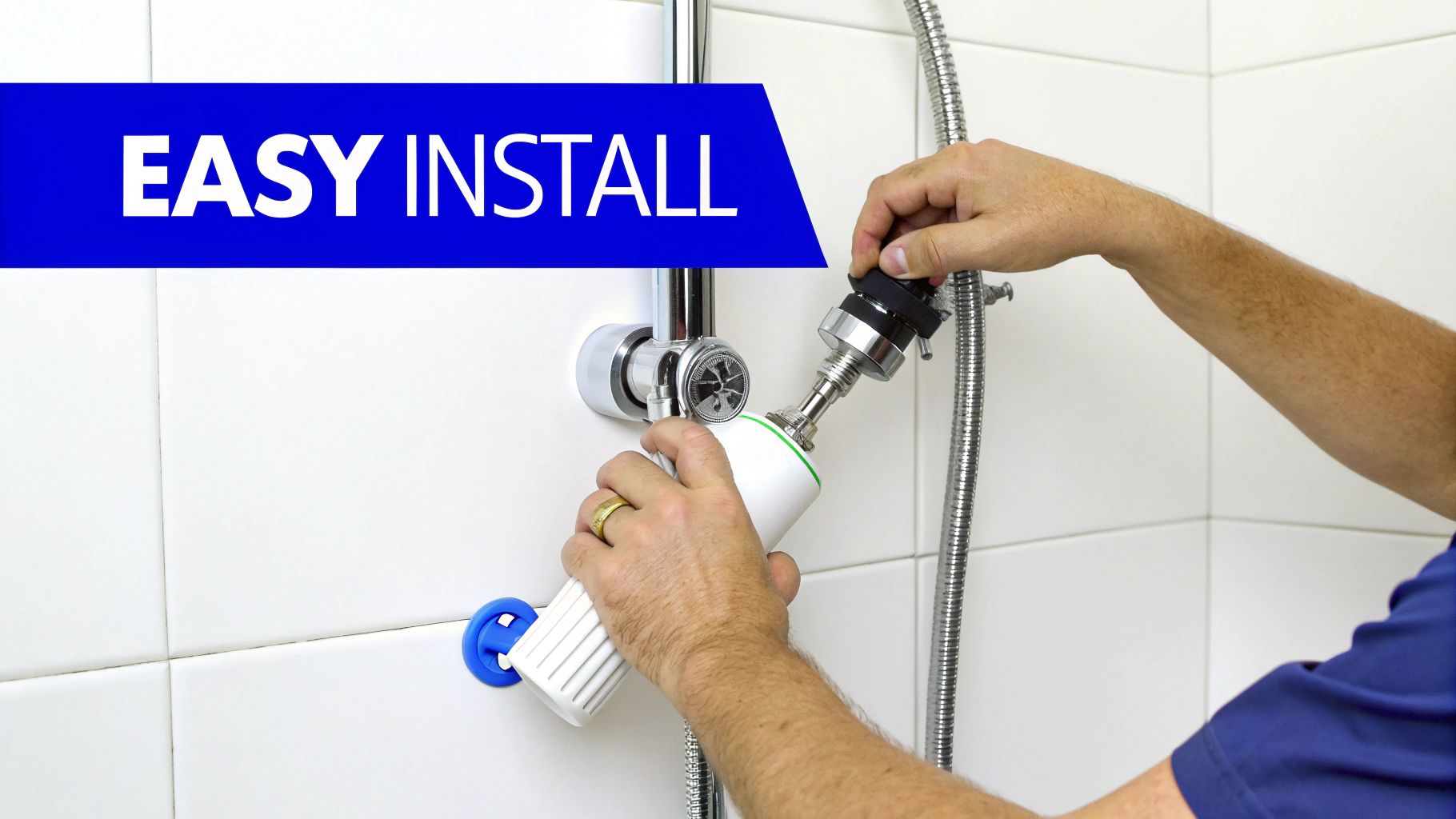
Most modern filters have a straightforward, screw-on design. It’s usually as easy as unscrewing your current shower head from the wall arm, twisting the filter housing onto that same thread, and then reattaching your shower head to the filter. It’s a tool-free job that genuinely takes less than five minutes.
Simple Steps for a Leak-Free Installation
To get that perfect, drip-free seal, just follow these quick steps. The goal is to create a secure connection without cranking down on it too hard.
- Clean the Threads: Before you start, give the threads on both the shower arm and your shower head a quick wipe. You want to clear off any old sealant tape or grit.
- Use Plumber's Tape: Wrap a fresh layer of plumber's tape (it’s often included with the filter) clockwise around the shower arm threads. This is the secret to a watertight seal.
- Hand-Tighten First: Screw the filter onto the arm by hand until it feels snug. Overtightening can damage the internal washers or the housing itself.
- Attach the Shower Head: Now, apply some plumber's tape to the filter's outlet threads and screw your shower head on firmly.
- Check for Leaks: Turn on the shower and watch the connection points for any drips. If you spot a small leak, just give the connections a tiny extra tighten.
Of course, thinking about the bigger picture is always smart, especially if you're renovating and exploring various walk-in shower base options.
Keeping Your Filter in Peak Condition
Once it’s installed, keeping your filter working properly comes down to one thing: replacing the cartridge on schedule. An old, clogged cartridge won't just stop filtering effectively—it can become a breeding ground for bacteria and seriously reduce your water pressure.
Most manufacturers, including Awesome Water®, recommend swapping cartridges every six months. This can change depending on your local water. If you're in a hard water area or have high sediment levels, you might need to replace it sooner, maybe every four to five months. The clearest sign it's time for a new one is a noticeable drop in your shower's flow rate.
Replacing the cartridge is the single most important part of maintaining your filter's performance. A fresh cartridge ensures you’re getting the maximum reduction of chlorine and other contaminants, protecting your skin and hair day after day.
The replacement process is just as easy as the initial setup. You simply unscrew the filter housing, pop out the old cartridge, slide in the new one, and screw it all back together. For a complete guide on looking after your gear, check out these tips on how to maintain a water filter to prolong its life. This simple routine guarantees your investment keeps paying off with every single shower you take.
Choosing the Right Shower Filter for Your Home
Making the final call on the best shower filter for your home doesn't have to be complicated. Now that we've walked through the options, it really just comes down to connecting the dots between your needs and the right features.
First things first, what's coming out of your tap? If you're in a metro area like Sydney or Melbourne, your biggest battle is likely against high levels of chlorine and chloramine. But if you’re in a regional spot with known hard water, then tackling scale buildup becomes just as critical. Pinpointing your main enemy helps you zero in on the right filter media—KDF-55 for chlorine, for instance, or polyphosphate for scale.
Your Final Checklist for a Confident Choice
Next up, let's talk about your personal goals. Are you dealing with sensitive skin, eczema, or trying to protect your colour-treated hair? If the answer is yes, then a multi-stage filter with certified, high removal rates isn't just a nice-to-have; it's an essential part of your daily wellness routine.
Finally, do the long-term maths. It’s easy to get drawn in by a low initial price tag, but don't stop there. A cheaper unit that needs a new cartridge every three months can easily end up costing you more over a year than a premium model with a six-month filter life. A quick calculation will reveal the true value.
A great shower filter is more than just an accessory. It's a targeted solution that matches your home's water quality, supports your health goals, and fits your budget for years to come.
With this in mind, you should feel ready to pick a system with confidence. For those concerned about specific contaminants like fluoride, it's also helpful to understand what shower filters can and can't do; our guide explains how to remove fluoride from water using different technologies. And, of course, it always helps to know your existing setup before you buy, so you can explore different types of showers to see how a new filter will integrate.
Here are some of the most common questions we get from Aussies looking to upgrade their shower. Getting the right answers is the key to picking a filter you’ll be happy with.
Will a Shower Filter Wreck My Water Pressure?
This is easily the number one concern, and a fair one at that. The good news is, a well-designed filter should have almost no noticeable impact on your shower's performance.
Quality shower filters are built to handle standard Australian water flow, which usually sits between 7 to 9 litres per minute. You really shouldn't feel a difference. If you do notice a major drop in pressure, that's actually your filter telling you it's done its job—it's clogged with all the gunk it has captured and needs to be replaced. Stick to the recommended replacement schedule, and your water pressure will stay strong.
Do Shower Filters Actually Remove Fluoride?
In short, no. Standard shower filters using media like KDF-55, activated carbon, or calcium sulphite are great for chlorine and heavy metals, but they are not effective at removing fluoride.
Getting fluoride out of water is a much trickier process, usually needing specialised systems like reverse osmosis or activated alumina. These just aren't practical for a showerhead. They can't cope with the high flow rate and hot water of a typical shower, so their focus remains squarely on chlorine, sediment, and other common contaminants.
How Often Should I Really Change the Filter Cartridge?
The general rule of thumb is every six months, but think of this as a starting point, not a hard-and-fast rule. How often you need a new cartridge really boils down to two things: your local water quality and how many people are using the shower.
- For a busy family home (say, a family of four), you might find you need a fresh cartridge every 4-5 months.
- If you live in an area with particularly hard water or lots of sediment, the filter will naturally clog up faster.
The best indicators? A noticeable drop in water pressure or the faint smell of chlorine making a comeback. Those are your cues that it's time for a change.
Ready for softer skin, healthier hair, and a better shower experience? The Awesome Water® 10-Stage Shower Filter is designed specifically for Australian conditions, hitting chlorine and other contaminants hard. Upgrade your shower today at Awesome Water.