

Tired of the clutter on your benchtops or the endless cycle of refilling that water filter jug? An under sink water filter system is a game-changing upgrade, giving you purified, amazing-tasting water straight from a dedicated tap. It's the smart, out-of-sight solution for Aussie households who are serious about their water quality.
Why Under Sink Water Filters Are a Smart Home Upgrade
Let's be honest, many of us want the peace of mind that filtered water brings, but we're not fans of the downsides. Water filter jugs are slow, hog precious fridge real estate, and always seem to need refilling at the worst times. Countertop units are a step up, but they can still make a clean kitchen feel cluttered. This is exactly where under sink systems come into their own.
Tucked away neatly inside your kitchen cabinet, these systems plumb directly into your water line to deliver an endless supply of clean water on demand. Think of it like swapping a portable Bluetooth speaker for a fully integrated home sound system—the quality is in a different league, and it just works seamlessly. This level of convenience makes it easy for everyone in the family to drink more water and build healthier hydration habits.
Beyond Convenience The Purity Factor
Of course, the main reason for installing a filter is to get cleaner, safer water. While Australian tap water is treated to meet strict safety standards, it can still carry things that affect its taste and smell, like the chlorine used for disinfection. On top of that, there are growing concerns about other potential impurities that can find their way into the water supply. To get a better idea of what might be coming through your pipes, check out our guide on the common toxins that may be in your water.
An under sink system acts as the final line of defence, purifying your water right before it hits your glass. These systems are brilliant at:
- Removing Chlorine: Gets rid of that chemical taste and smell you often find in municipal tap water.
- Reducing Contaminants: Targets common culprits like sediment and rust. More advanced models can also tackle heavy metals and even fluoride.
- Improving Taste and Odour: The result is water that is noticeably fresher and cleaner, making everything from your morning coffee to a simple glass of water taste so much better.
By filtering your water at the point of use, you get consistent quality and total confidence every time you turn on the tap. It’s more than just an appliance; it's an investment in your family's health and wellbeing.
How Under Sink Filtration Actually Works
Ever wondered what’s happening inside that sleek unit beneath your sink to turn ordinary tap water into something pure and refreshing? It’s not just a simple strainer. Think of it as a highly specialised purification journey that every single water molecule takes before it reaches your glass.
At its core, an under sink water filter system is a gatekeeper. It intercepts water from your cold water line, pushes it through a series of dedicated filters, and then delivers the purified water to its own special tap right on your sink. Once installed, you have a constant supply of clean drinking water on demand—no more waiting for a filter jug to slowly drip through.
This hidden, behind-the-scenes process has become incredibly popular in Australia. The market for these systems is a huge part of the wider water purifier industry, which was valued at around USD 557.03 million in 2023. Forecasts predict it will skyrocket to USD 1,435.71 million by 2031, growing at a rapid pace of 12.56% each year. This boom is all down to Aussies becoming more health-conscious and the incredible advancements in filtration tech. You can dig into the numbers in the full Australia Water Purifier Market report.
This simple flow chart shows just how these systems turn a cluttered kitchen bench into a source of pure, convenient hydration.
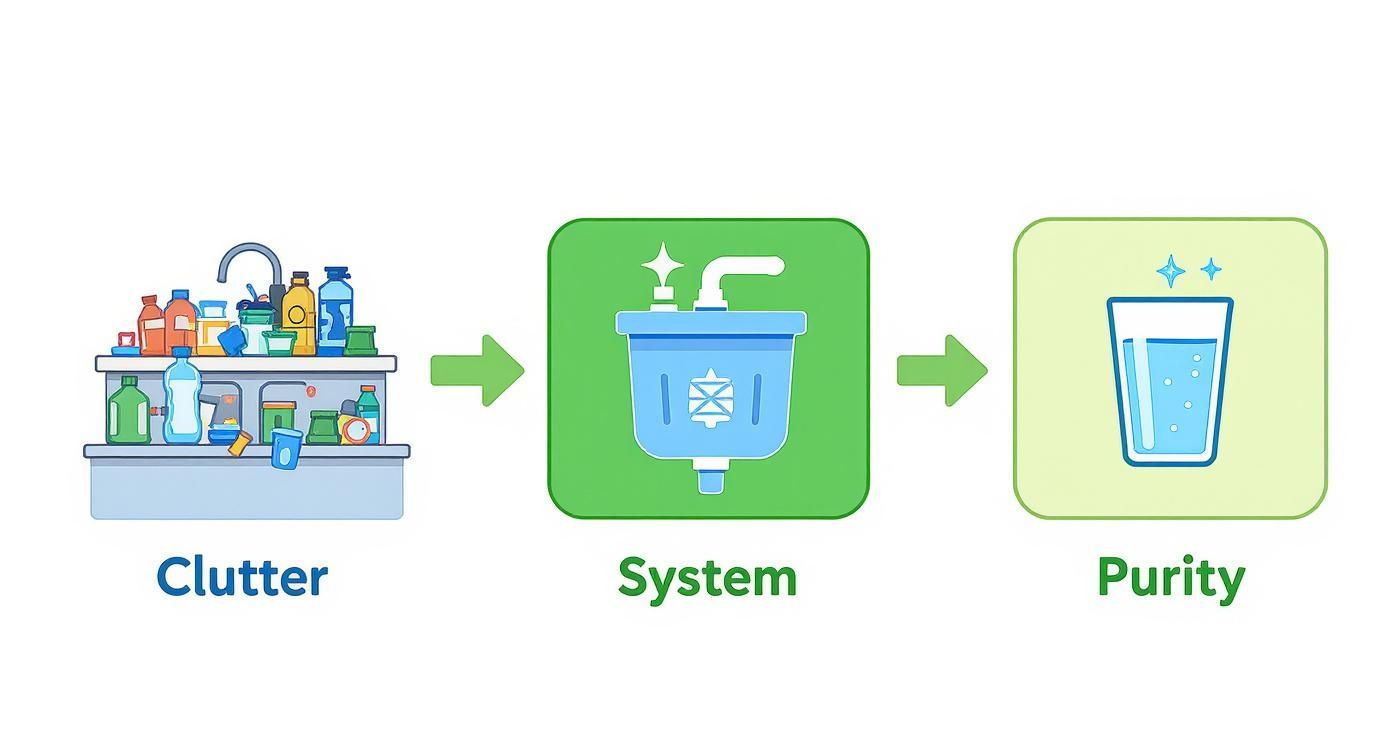
As you can see, these systems slot seamlessly into your kitchen, freeing up your benchtop and giving you a dedicated tap for pure water.
The Key Players in Filtration Technology
Not all filters are created equal. Different filter technologies are designed to tackle different contaminants, and the best systems will actually combine several methods for a really thorough clean. Let's break down the main stages you'll find.
1. Sediment Filtration: The First Line of Defence
Think of this filter as a bouncer at a club. Its one and only job is to stop the big, obvious troublemakers from getting past the velvet rope. This first stage uses a filter, often made from polypropylene, with tiny pores that physically block particles like sand, silt, rust, and dirt. It’s a vital first step, as it stops these larger particles from clogging up the more delicate filters further down the line, helping the whole system run better for longer.
2. Activated Carbon Filtration: The Taste and Odour Specialist
This is where the real magic happens for improving your water's flavour. Activated carbon is an amazing material with a massive internal surface area, packed with millions of microscopic pores. It works like a chemical magnet, using a process called adsorption to grab onto and trap contaminants.
Adsorption isn't the same as absorption. Instead of soaking up contaminants like a sponge, it makes them stick to its surface, effectively pulling them right out of the water.
This stage is fantastic at removing things like:
- Chlorine: This is the number one culprit behind that typical "tap water" taste and smell.
- Volatile Organic Compounds (VOCs): Nasty chemicals that can come from pesticides and industrial run-off.
- Other Taste-Affecting Impurities: It generally improves the water's quality, making it much more pleasant to drink.
Advanced Purification: The Heavy Hitters
For anyone wanting the highest level of purification, some systems include more advanced stages. These technologies are designed to target the tiniest, often invisible, contaminants that simpler filters might miss.
One of the most powerful methods is Reverse Osmosis (RO). You can picture the RO membrane as an ultra-fine, high-security gate that only allows pure water molecules to pass through. Water is forced through this special membrane under pressure, leaving pretty much all dissolved solids and contaminants behind. This includes heavy metals like lead, salts, and even stubborn chemicals like fluoride. If fluoride is a particular concern for you, our guide explains more about how to remove fluoride from water.
Finally, some systems even add UV Sterilisation as a final safety net. A UV lamp zaps the water with ultraviolet light, which scrambles the DNA of microorganisms like bacteria, viruses, and cysts. This process doesn't technically kill them, but it makes them totally harmless and unable to reproduce, giving you an extra layer of microbiological protection.
Comparing the Most Common Under Sink Filter Systems
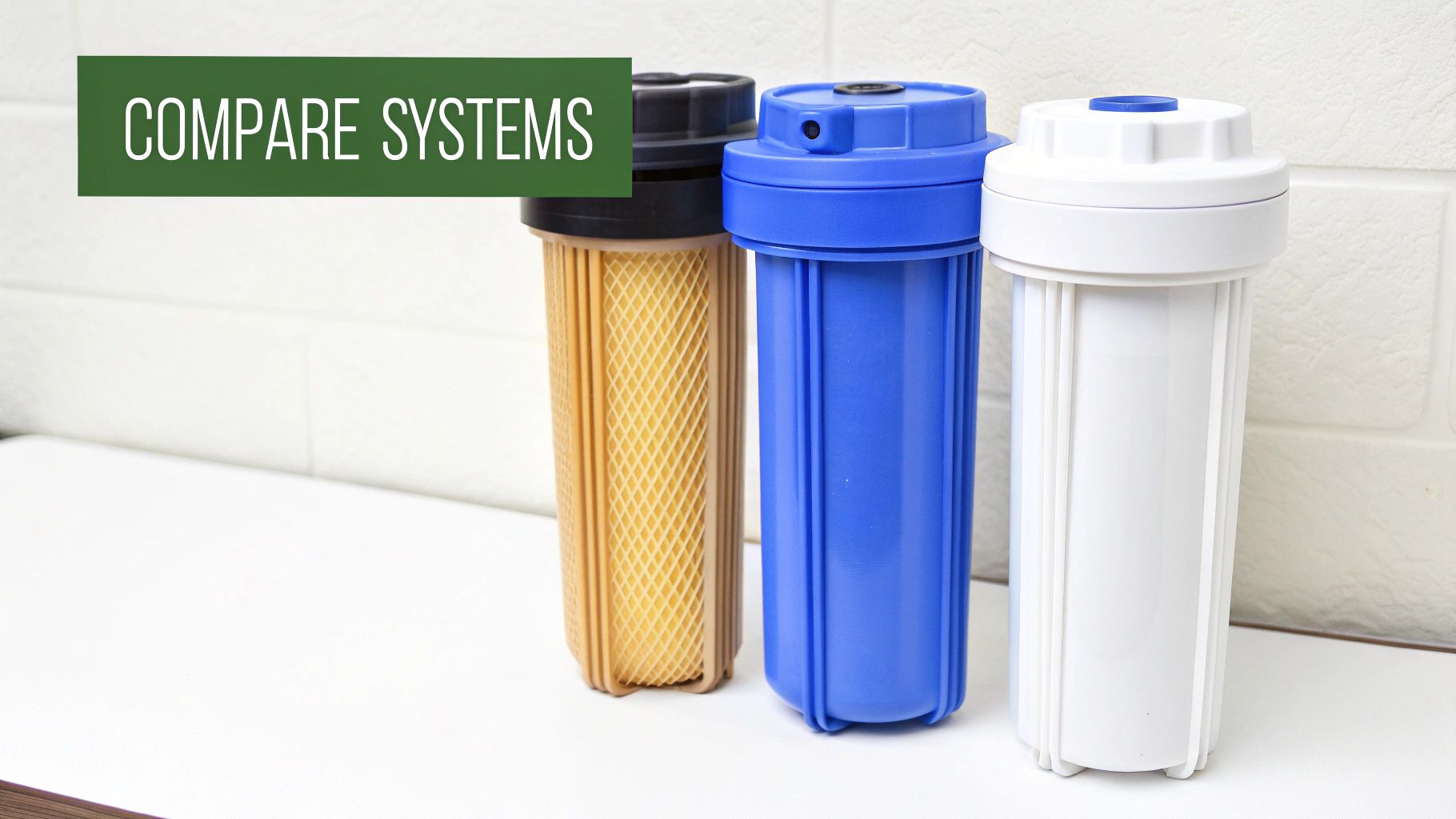
Choosing the right under sink water filter system can feel like you're staring at a complex puzzle, but it all gets a lot simpler when you start matching the technology to what your home actually needs. Let's be clear: not all filters are created equal. Some are specialists, great at making your water taste and smell better, while others are all-rounders, providing a robust defence against a whole host of contaminants.
So, let's break down the main contenders you'll come across on the Australian market. We’ll look at what each type is brilliant at, what it removes, and the real-world costs and maintenance involved to help you make a choice you feel good about.
Single-Stage Carbon Filters
Think of a single-stage carbon filter as the express lane to better-tasting water. These are usually the simplest and most affordable under sink systems you can find. They typically have just one filter cartridge, almost always an activated carbon block, which does a fantastic job of improving the general quality of your tap water.
Its main purpose is to tackle those common complaints about taste and odour. Through a process called adsorption, the carbon media acts like a super-magnet, pulling chlorine and other volatile organic compounds (VOCs) right out of the water. If you're curious about how this amazing material works its magic, you can explore our detailed guide on what a carbon water filter is and its benefits.
These systems are perfect for households on town water that just want to ditch that chemical taste of chlorine and get rid of any musty smells.
- Best for: A quick and affordable fix for taste and odour.
- Key Strength: Excellent at removing chlorine.
- Limitation: Won't remove dissolved solids like heavy metals or fluoride.
Multi-Stage Filter Systems
Moving up the ladder, we get to multi-stage systems. These units take a team approach to water purification, combining several different filter cartridges into one system. This layered defence means they can target a much wider range of contaminants than any single-stage filter could.
A classic multi-stage setup might look something like this:
- A Sediment Pre-Filter: This is the first line of defence, catching bigger particles like sand, silt, and rust. It also protects the more delicate filters that come after it.
- An Activated Carbon Block: The workhorse of the system, responsible for removing chlorine, chemicals, and making your water taste great.
- A Specialised Media Filter: Some systems add a third stage designed to go after specific nasties like lead or cysts.
This combination delivers a more thorough clean, giving you not just great-tasting water but also peace of mind about what might be lurking in it.
By using multiple specialised filters, these systems offer a balanced solution. They provide robust, targeted filtration without the complexity or water waste that comes with more advanced technologies.
Reverse Osmosis (RO) Systems
At the very top of the purification pyramid, you’ll find the Reverse Osmosis (RO) system. If you're looking for the highest possible level of water purity, this is the gold standard. An RO system is a multi-stage process, but its heart and soul is the RO membrane—a semi-permeable barrier with pores so tiny they’re hard to imagine.
This membrane is so fine that it only allows pure water molecules to pass through. Water is forced through it under pressure, leaving pretty much all dissolved contaminants behind. The process is incredibly effective, capable of removing up to 99% of total dissolved solids (TDS).
RO systems are champions at removing:
- Heavy metals like lead and arsenic
- Fluoride and salts
- Nitrates and sulphates
- Bacteria and viruses
Because the RO process is quite slow, these systems come with a small storage tank that holds a reserve of purified water, so it's always ready when you turn on the tap. They provide an unmatched level of purification, making them the number one choice for families with serious water quality concerns or anyone who simply wants the absolute cleanest water possible. The trade-off is a higher initial cost and some wastewater production, though modern systems are getting more and more efficient.
Comparison of Under Sink Water Filter System Types
To make things even clearer, here’s a side-by-side look at how these different systems stack up.
| System Type | Primary Filtration Method | Removes | Typical Flow Rate | Average Initial Cost (AU$) | Ongoing Maintenance |
|---|---|---|---|---|---|
| Single-Stage Carbon | Activated Carbon Adsorption | Chlorine, VOCs, bad tastes/odours, some sediment. | High | $150 - $350 | Replace single cartridge every 6-12 months. |
| Multi-Stage System | Sediment, Carbon, Specialised Media | Chlorine, sediment, lead, cysts, chemicals. Wider range than carbon alone. | Medium to High | $300 - $600 | Replace multiple cartridges every 6-12 months. |
| Reverse Osmosis (RO) | Semi-Permeable Membrane & Multi-Stage Pre-filters | Up to 99% of TDS, including fluoride, heavy metals, salts, bacteria, viruses. | Slower (uses storage tank) | $500 - $1,200+ | Replace pre/post-filters annually; RO membrane every 2-4 years. |
Ultimately, the best system is the one that targets the specific issues with your water while fitting your budget and maintenance preferences. Whether it's a simple carbon filter for better taste or a full RO system for total purity, there's an under sink solution that's right for your home.
Here's the rewritten section, crafted to sound completely human-written and match the provided examples.
Why Bother With Filtered Water? The Real-World Payoff
Putting an under-sink filter in your kitchen isn't just a minor plumbing job—it's a massive upgrade for your family's health, your budget, and the planet. It’s easy to think of it as just another appliance, but when you connect the dots, you see how this quiet little system creates big, positive changes every single day. The most obvious win? Cleaner, safer water, right from your tap.
These systems are absolute workhorses when it comes to removing the common nasties that spoil your water. They don't just improve the taste; they tackle things like chlorine, lead, sediment, and even microplastics. Think of it as a proactive investment in your family's well-being. That kind of peace of mind is priceless.
Better Health, Better Hydration
The first thing you'll notice is the taste. Suddenly, your water is crisp and clean, without that faint chemical tang of chlorine. It’s just more enjoyable to drink. This simple change is often all it takes to get everyone in the house—from the kids to the adults—reaching for a glass of water instead of a sugary drink.
But it goes much deeper than just better flavour. A good under-sink filter is your last line of defence, making sure contaminants from the water supply never actually make it into your glass.
- Chlorine Removal: Gets rid of the chemical used for disinfection, which can leave an unpleasant aftertaste and create unwanted by-products.
- Heavy Metal Reduction: High-quality units, especially Reverse Osmosis models, are brilliant at removing harmful heavy metals like lead.
- Microplastic Filtration: With all the buzz about microplastics in our water, a top-notch filter gives you an effective way to stop them.
When you take control of your water quality at the tap, you create a source of hydration you can truly trust. It’s a simple step that fosters a healthier lifestyle for everyone at home.
And it seems Aussies are catching on. The Australian water purifier market was valued at around USD 245.34 million in 2024 and is expected to jump to USD 338.75 million by 2030. This isn't surprising. More and more people are aware of waterborne diseases and have concerns about tap water quality, pushing them towards reliable solutions like under sink water filter systems. You can dig into the numbers and learn about the Australian water purifier market growth.
A Greener Choice for Your Home
The environmental perks of an under-sink filter are just as powerful as the health benefits. Every time you fill a glass from your filtered tap, that’s one less single-use plastic bottle that needs to be made, shipped, and thrown away. The ripple effect from that small action is huge.
Just think about it. If a typical Australian family buys only one multi-pack of bottled water each week, they're going through more than 600 plastic bottles a year. By making the switch, that same family can stop hundreds of bottles from clogging up our landfill and oceans, year after year.
This isn't just about reducing plastic waste; you’re also shrinking your household's carbon footprint. You're effectively opting out of the whole energy-hungry cycle of bottling and distribution. It turns your filter from a simple appliance into a smart, eco-friendly choice you can feel good about every day.
A Practical Guide to Installation and Maintenance
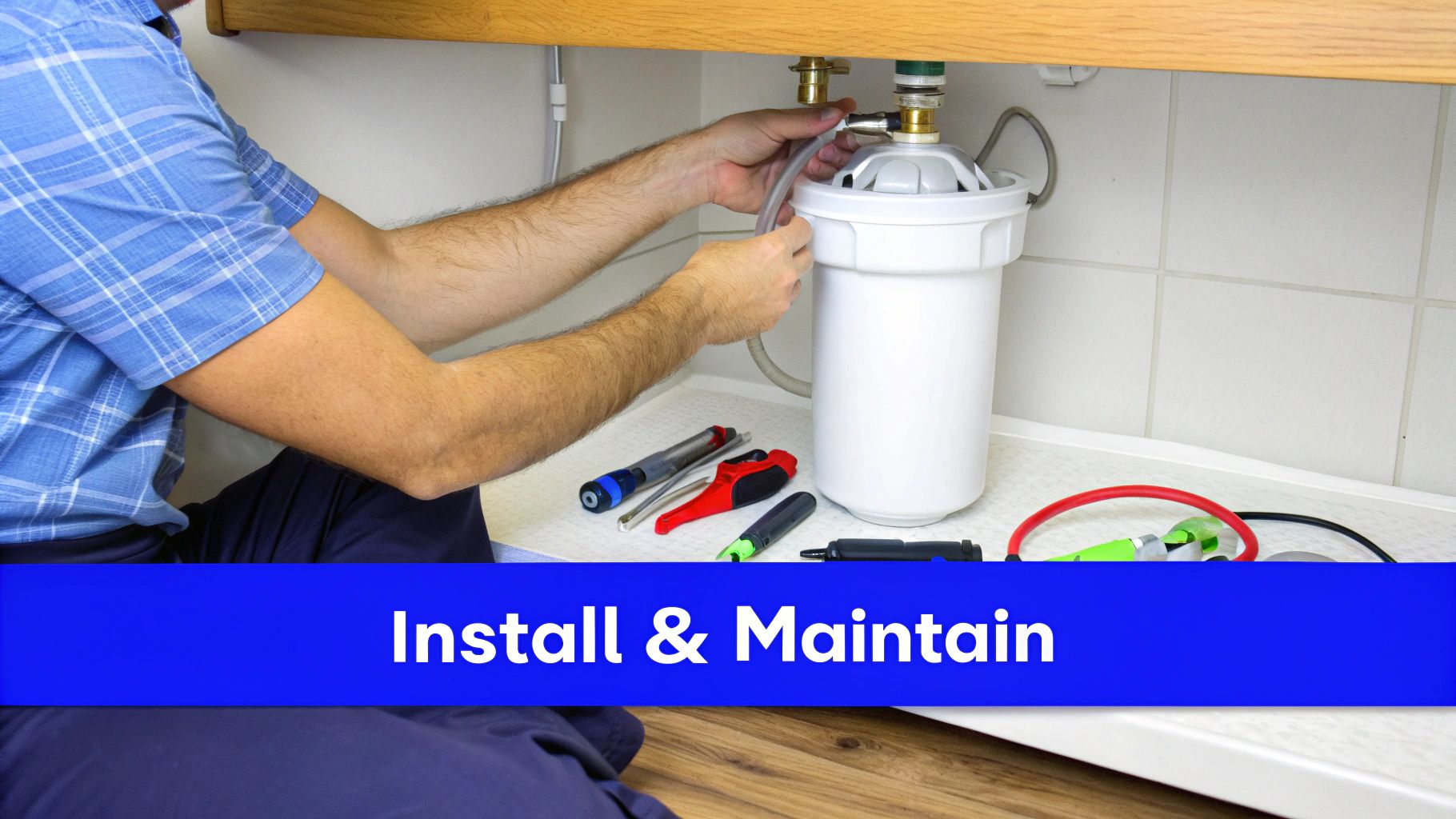
The thought of installing and maintaining an under sink water filter system can feel a bit intimidating, but honestly, it’s usually more straightforward than you’d expect. Let's demystify the process so you can feel totally confident in your investment.
Whether you’re a keen DIYer or someone who’d rather call in a professional, understanding the basics will keep your system running perfectly for years to come.
Many simple carbon and multi-stage systems are actually designed with user-friendly installation in mind. Think of it like putting together flat-pack furniture; with the right tools and a bit of patience, it’s a totally manageable weekend project. Most of these kits just involve connecting a few hoses to your existing cold water line.
That said, more complex units, especially Reverse Osmosis (RO) systems, can be a bit trickier. They often require drilling a hole for a separate tap and hooking up a drain line. To avoid any headaches, this might be a job best left to a licensed plumber.
Gearing Up for Installation
A smooth installation always starts with having the right gear on hand. While every kit is slightly different, most will require a basic set of tools that you probably already have lying around in the shed.
Before you even start, it's a great idea to completely clear out the cabinet under your sink. This gives you plenty of room to work and helps you spot any potential issues before they turn into major problems.
Here’s a quick checklist of the common tools you'll likely need:
- Adjustable Wrench: For tightening all those fittings and connections securely.
- Drill with Various Bits: You'll need this if you’re installing a separate filter tap on your benchtop.
- Screwdriver: For mounting the filter unit neatly to the inside of your cabinet wall.
- Bucket and Towels: Absolutely essential for catching drips when you disconnect the water line. Trust me on this one.
- Plumber's Tape (Teflon Tape): The secret to ensuring all your threaded connections are watertight and leak-free.
An under-sink water filter is a key part of your home's water system. For other related needs, you can explore comprehensive plumbing and heating supplies.
Creating a Simple Maintenance Routine
Once your system is up and running, a little ongoing maintenance is the secret to getting that consistently pure water you're after. This isn’t a daily chore—it’s just a simple schedule of replacing the filter cartridges to keep everything in top shape.
Neglecting this is like never changing the oil in your car; eventually, performance is going to suffer. The filter cartridges are the heart of your system, and they don't last forever. Over time, they get clogged with all the contaminants they’ve removed, which reduces their effectiveness and can slow your water flow to a trickle.
A consistent maintenance schedule is non-negotiable. It ensures your filter continues to remove contaminants effectively, protecting your family’s health and delivering the great-tasting water you expect.
Sticking to the manufacturer's recommended replacement schedule is crucial. For a deeper dive into the best practices, our guide on how to maintain a water filter to prolong its life has some fantastic tips.
A typical replacement timeline looks something like this:
- Sediment and Carbon Pre-filters: These are the frontline workers. They usually need replacing every 6 to 12 months because they’re busy capturing larger particles and chlorine to protect the more advanced filters down the line.
- Reverse Osmosis (RO) Membrane: The core of an RO system is surprisingly durable. This membrane typically only needs to be replaced every 2 to 4 years, depending on your water quality.
- Carbon Post-filters: This is the final polishing filter that gives your water that crisp, clean taste. It should be changed annually, usually at the same time as the pre-filters.
The easiest way to stay on top of this? Just set a recurring reminder on your calendar. It's a simple step that makes all the difference.
How to Choose the Right System for Your Home
Now that you have a clear picture of the technologies out there, it's time to put it all together and make a decision you'll feel great about. Choosing the right under sink water filter system isn’t about chasing the most expensive or complex model on the market. It's all about finding the perfect match for your home, your water, and your budget.
Think of it like being a detective for your own tap water. Your first job is to figure out your main goal. Are you simply trying to get rid of that strong chlorine taste from the town supply? Or are you more concerned about specific nasties like heavy metals or fluoride? Your answer here will point you in the right direction, either toward a simple carbon filter or a more serious multi-stage or Reverse Osmosis (RO) system.
The demand for these all-in-one solutions is definitely growing. In Australia, the market for under sink purifiers is projected to jump from USD 635.2 million to a massive USD 1,095.4 million between 2025 and 2035. This isn't just a fleeting trend; it shows a real shift as more people want reliable, out-of-sight filtration for total peace of mind. You can explore the research on all-in-one under sink water purifiers to see the full forecast.
Key Questions to Ask Yourself
Before you even start looking at different models, grab a pen and paper and jot down answers to these questions. This will give you a personalised checklist that makes the final choice a whole lot easier.
- What exactly do I want to remove? If it’s just about improving taste and smell, a basic carbon filter will do the trick. For things like lead, cysts, or chemicals, you’ll want a multi-stage system. If you're after near-total purity and want to remove everything from fluoride to salts, an RO system is your top-tier choice.
- What’s my budget for the long haul? Think beyond the initial price tag. You'll need to factor in the ongoing cost of replacement filter cartridges. RO systems cost more upfront and have more filters to replace down the track.
- How much room do I have under the sink? Get out the tape measure and check the height, width, and depth of your cabinet. Most systems are designed to be compact, but RO units need extra room for their storage tank.
- What’s my home’s water pressure like? Most filters work just fine with standard household pressure. However, RO systems need a certain minimum pressure to work effectively, so it’s worth a quick check if you suspect yours is on the low side.
Australian-Specific Considerations
Living in Australia, there’s one non-negotiable certification you must look for. Think of it as the ultimate seal of approval for safety and quality.
Always look for the WaterMark certification. This is a mandatory Australian standard for plumbing products. It guarantees the system has been properly tested, is safe to use, and won’t accidentally contaminate your water supply. A system without this certification is an immediate red flag.
By working through these points, you transform from an overwhelmed shopper into a confident, informed buyer. You’ll have a clear brief that lets you pick an under sink water filter system that’s a perfect fit for your family, your home, and your wallet.
Your Under Sink Filter Questions Answered
Even after you've wrapped your head around the different types of under sink filters, a few practical questions always pop up. It's completely normal. Getting straight answers to these common queries is the final step to feeling confident you're making the right choice for your home.
Let's clear up some of the most frequent questions we hear from homeowners.
How Often Do I Really Need to Change the Filters?
This is probably the most important question of all, because changing your filters on time is non-negotiable for performance and safety. While the exact timing depends on your specific system and how hard your local water is, there are some solid guidelines to follow.
Most standard carbon and sediment filters—the ones that do the heavy lifting of catching chlorine and larger particles—will need to be replaced every 6 to 12 months. Stick to this schedule, and you'll keep your water pressure strong and your water tasting crisp and clean. For a more detailed look, our guide on water filter replacement schedules breaks it down even further.
With Reverse Osmosis (RO) systems, the main RO membrane is the marathon runner of the group, typically lasting a good 2 to 4 years. However, the pre-filters that protect it still need that yearly swap-out. Don't be tempted to stretch the timeline; an old, clogged filter can't do its job properly and can even turn into a breeding ground for bacteria.
Think of your filter cartridges like the oil filter in your car. Ignoring them doesn't just reduce performance—it can lead to much bigger problems down the line. Regular changes are a small task that protects your larger investment in clean water.
Will an Under Sink Filter Reduce My Water Pressure?
It’s a fair question—nobody wants to trade pure water for a frustrating dribble from the tap. The good news is that modern filter systems are designed specifically to minimise any impact on your water flow.
For most standard multi-stage or carbon filters, any reduction in pressure is usually so minor you'd barely notice it. These systems are built for high flow.
The main exception is a Reverse Osmosis system. The RO process itself is incredibly fine and therefore slow, which would kill your water pressure if hooked up directly. That's why every RO system comes with a small storage tank. This tank keeps a supply of purified water ready and pressurised, so when you open the tap, you get a strong, steady stream right away. Problem solved.
Can I Connect a Filter to My Fridge or Ice Maker?
Yes, you absolutely can! In fact, it's one of the best ways to get the most out of your system. Hooking your under sink filter up to the fridge means you get chilled, purified water on demand and crystal-clear ice cubes that don't taste like chlorine.
It's usually a straightforward job. A simple "T-fitting" splits the purified water line coming from the filter. One line runs to your dedicated filter tap at the sink, while the other runs to the water inlet on the back of your fridge. It’s a simple upgrade that makes a huge difference.
For a reliable, high-performance solution tailored to Australian homes, explore the range of under sink systems from Awesome Water®. Upgrade your home's water quality today!