

Quick Summary
A stainless steel gravity water filter needs no power, plumbing or water pressure, because gravity pulls water from the top chamber through a filter candle into the lower chamber. It suits kitchens, campervans and holiday houses without mains pressure. Check each model's rated contaminants, capacity and cartridge costs before buying.
- No power, plumbing or water pressure is needed, as gravity moves the water through the filter.
- Food-grade stainless steel housings hold up better to knocks and daily use than plastic.
- Ceramic candles are durable and can often be scrubbed and reused.
- Check whether a model is specifically rated for fluoride or PFAS if either is your main concern.
- A gravity filter is not a steriliser, so boil water or use certified treatment where the source is uncertain.
Table of Contents
- How a Stainless Steel Water Filter Works
- Gravity Water Filter Contaminant Removal: What It Can and Cannot Reduce
- Checking Performance Claims and Independent Verification
- Gravity Water Filter Capacity: Matching Litres to Your Household
- Replacement Cartridges and the Real Cost of Ownership
- How to Clean a Stainless Steel Water Filter
- Choosing Your Gravity Filter and Next Steps
- Frequently Asked Questions
How a Stainless Steel Water Filter Works
Last Updated: November 17, 2026
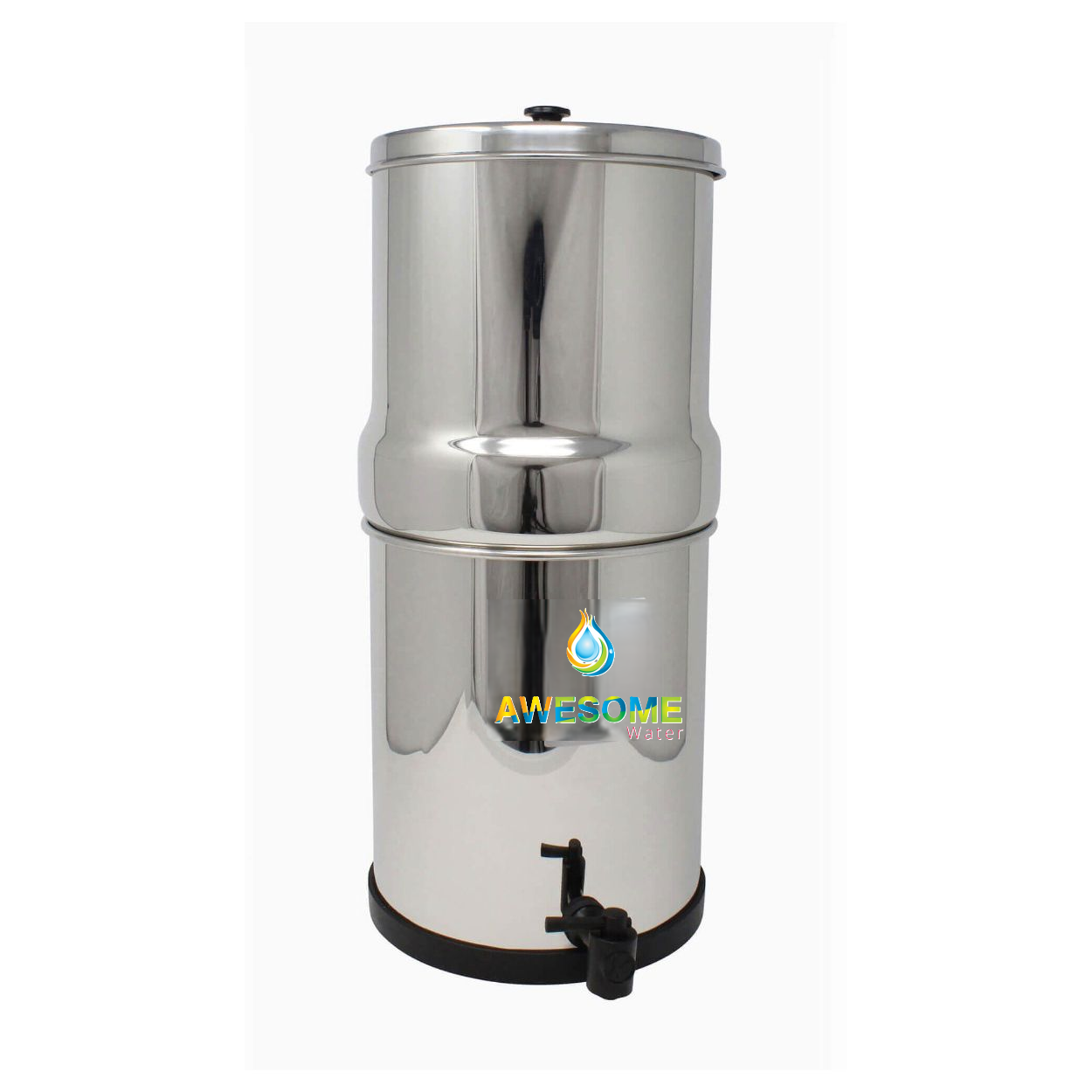
If you are shopping for a stainless steel gravity water filter, the first thing to understand is that no power, plumbing or water pressure is needed. You pour untreated water into the top chamber, gravity pulls it down through a filter candle, and clean water collects below. Gravity-fed designs like this one are built around this simple principle, so they can be used in a kitchen, a campervan or a holiday house with no mains pressure.
A gravity filter has three parts: the upper chamber that holds the raw water, a ceramic or carbon filter element, and a lower chamber that stores the filtered water. The upper chamber nests inside the lower one for storage, which matters if you have limited bench or cupboard space.
Here is what to look for in the specifications of any model you compare:
- Housing material: food-grade stainless steel holds up better to knocks and daily use than plastic.
- Filter element: ceramic candles are durable and can often be scrubbed and reused.
- Storage footprint: check the stored height so the unit fits your cupboard or pantry.
- Chamber capacity: this determines how much water you can filter at once.
The Australian Drinking Water Guidelines set out the health-based targets that drinking water should meet, which is a useful benchmark when you judge a filter's claims.
The Awesome Water® Gravity-Fed Stainless Steel Water Filter is priced at $490.00, and the Bench Top Stainless Steel Water Filter at $209.95 for those who want a tap-mounted option. Both are priced in AUD.
Gravity Water Filter Contaminant Removal: What It Can and Cannot Reduce
A gravity water filter is only as useful as the contaminants it is designed to reduce. The Awesome Water® Gravity-Fed Stainless Steel Water Filter's listing includes bacteria such as E. coli and Salmonella, parasites such as Giardia and Cryptosporidium, chlorine, nitrates, heavy metals, sediment and unpleasant tastes and odours.
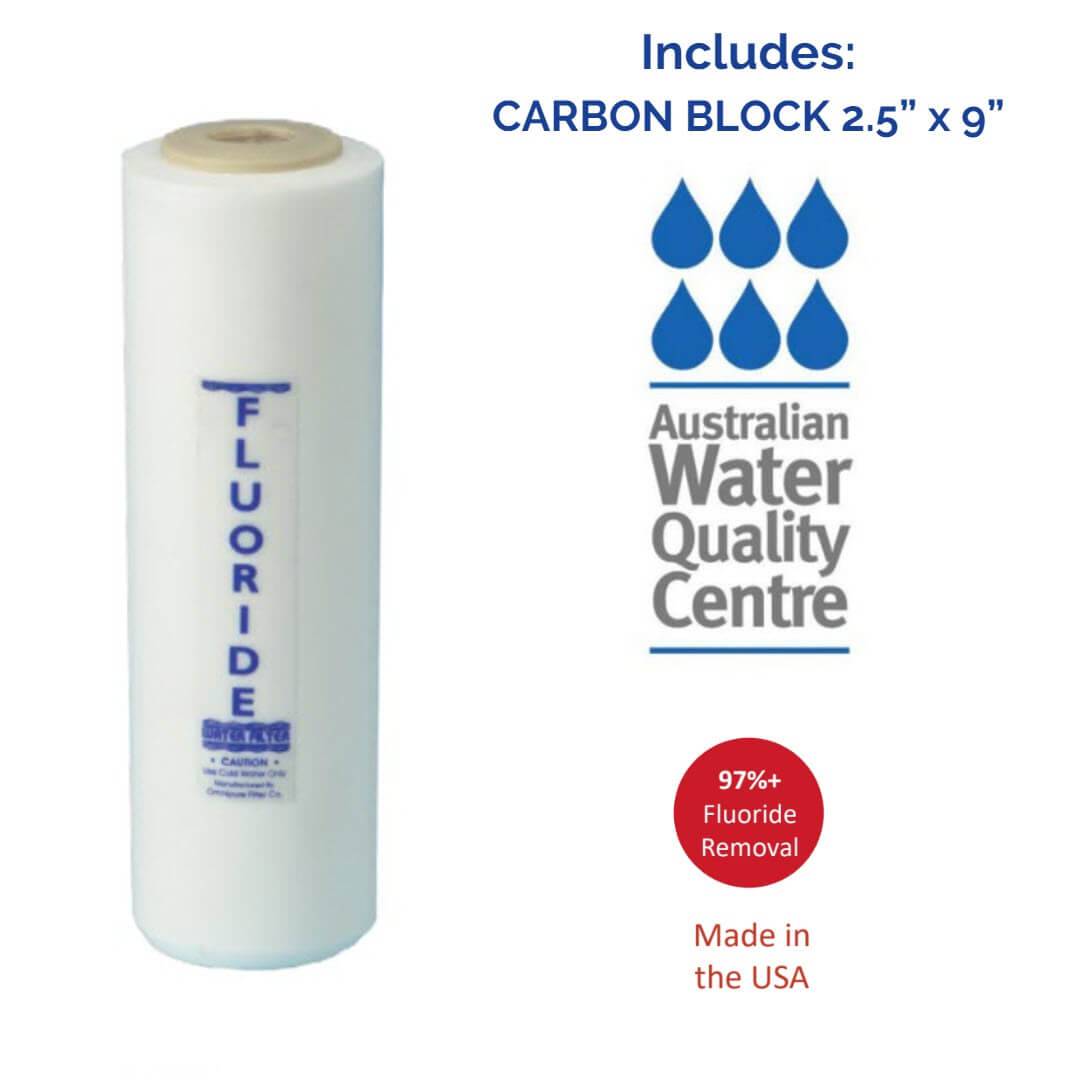
Read the list carefully. A filter that reduces chlorine taste is not the same as one that removes fluoride, and neither is the same as one that targets PFAS. If fluoride or PFAS is your main concern, check whether the model is specifically rated for it. The Awesome Water® listing recommends pairing the gravity filter with its Fluoride Filter for advanced purification.
The Australian Drinking Water Guidelines are a good reference point for which substances matter in your local supply.
Checking Performance Claims and Independent Verification
Performance claims are only as credible as the testing behind them, and most buying guides stop at "ask for the test report". The useful skill is knowing what a report actually tells you, and what it does not.
Start by separating three things a supplier may present as proof:
- A laboratory test report. This records a specific contaminant, a starting concentration, a contact time, a flow rate and a measured reduction under controlled conditions. It is the strongest form of evidence, but only for the conditions tested.
- A certification or registration. A certification body assesses a product against a defined standard and audits the manufacturer. It is broader than a single test, but check which standard and which contaminants are in scope, a certificate for taste and odour reduction says nothing about microbiological performance.
- A marketing claim. Phrases such as "pure", "removes 99% of impurities" or "hospital-grade" are not test results. Treat them as unverified until a report or certificate is produced.
When you read a test report, look for the following:
- The contaminant and the challenge level. A filter tested against a high starting concentration is more convincing than one tested against a trace amount.
- The test water conditions. Temperature, pH and turbidity affect gravity filter performance. A result obtained with cold, clear water may not hold with warm, sediment-laden rainwater.
- The flow rate during testing. A gravity candle tested at a slow drip may perform differently at the faster flow you actually draw.
- The laboratory. An independent, accredited laboratory carries more weight than an in-house bench test, though in-house data can still be a starting point.
- The date. Cartridge formulations change; an old report may not describe the element you are buying today.
Ask for the full document, and check whether each figure is tied to a named contaminant and a test method. If a claim covers bacteria, parasites, chlorine, nitrates, heavy metals and sediment in one line, the report should show a separate result for each.
Be equally careful about what is absent. The Australian Drinking Water Guidelines describe the health-based targets for drinking water, which gives you a benchmark for judging whether a filter's claimed reductions address the substances that matter in your supply.
Watch out: a gravity filter is not a steriliser. Even a filter with strong microbiological test results should not be relied on to make water from an unknown or contaminated source safe to drink, boiling or a certified treatment method is still needed where the source is uncertain.
Gravity Water Filter Capacity: Matching Litres to Your Household
Capacity is the amount of water a unit holds and filters per fill. A single person who drinks from the tap and cooks occasionally needs far less than a family of five, or a small office sharing a kettle. Work out your daily drinking and cooking water in litres, then choose a chamber size that lets you refill once or twice a day without running dry.
Flow rate matters too. A slower filter gives more thorough treatment but takes longer to fill your glass, so consider how quickly you need water in practice. For camping or caravanning, a compact model that nests for storage is often more practical than the largest capacity available.
Replacement Cartridges and the Real Cost of Ownership
The purchase price is only the first number. A gravity filter is a long-lived housing paired with consumable elements, so the honest comparison is cost per litre over several years, not the sticker price on the box.
Work through four figures for any model you are considering:
- Purchase price. The housing, tap and any elements included in the box.
- Replacement cartridge cost. The cost of each ceramic candle, carbon block or combined cartridge, bought individually or as a pack.
- Service life. How many litres or months the element is rated for before replacement, and whether it can be cleaned and reused in between.
- Consumables beyond the element. Cleaning brushes, replacement taps or seals, and any fluoride or PFAS cartridge you add.
The formula is straightforward:
Cost per litre = (purchase price + (number of replacements × replacement price)) ÷ total litres filtered over the period
A worked example makes the difference clear.
A few practical points shape the real number:
- Sediment shortens element life. If your source is rainwater or bore water with visible sediment, expect to clean more often and replace sooner than the rated figure suggests.
The purchase price is only the first figure, so the table below sets out the four numbers to weigh when comparing models.
| Cost figure | What it covers | Why it matters |
|---|---|---|
| Purchase price | Housing, tap and any elements in the box | The sticker price, not the full cost |
| Replacement cartridge cost | Each ceramic candle, carbon block or combined cartridge | Repeats across the unit's life |
| Service life | Litres or months rated before replacement | Sets how often you pay for elements |
| Consumables beyond the element | Brushes, taps, seals, fluoride or PFAS cartridges | Adds to the running cost |
How to Clean a Stainless Steel Water Filter
Regular cleaning keeps the flow rate up and stops sediment building on the filter element. Empty both chambers, remove the ceramic candle, and rinse it under running water. Scrub gently with a soft brush to dislodge deposits, and avoid harsh abrasives that can damage the surface. Wipe the stainless steel housing with a damp cloth and dry it before reassembling.
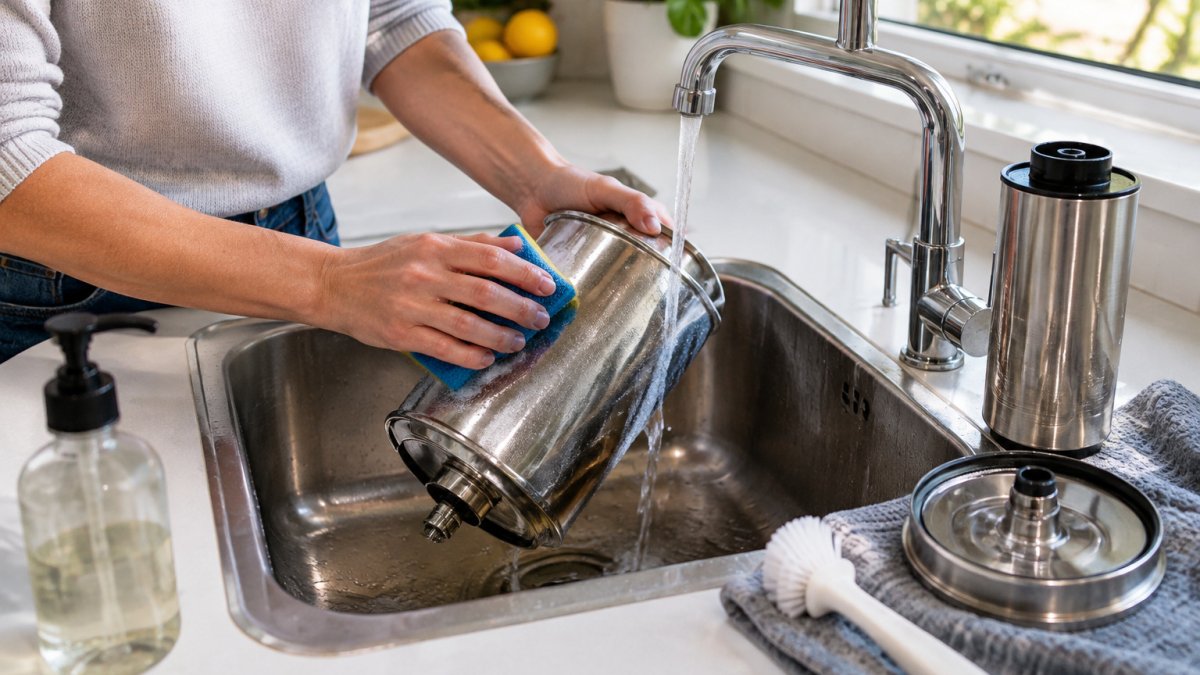
Clean the chambers at least once a month, or more often if your water carries a lot of sediment. Let the parts dry fully before storing the unit, so mould does not develop in the chamber.
Choosing Your Gravity Filter and Next Steps
Start by listing your priorities: the contaminants you most need to reduce, your daily water volume, the space you have, and the running costs you can accept. A stainless steel gravity filter suits households, rentals, camping and emergency preparedness. The Awesome Water® Gravity-Fed Stainless Steel Water Filter suits people who want a portable, no-power solution, while the Bench Top model suits renters who want a tap-mounted option.
For a broader view of your options, read [How To Choose Whole House Water Filtration System] to see how a whole-home system compares with a single gravity unit. When you are ready to see the models in person, [Explore the Showroom] to compare sizes, materials and cartridge options before you buy.
Frequently Asked Questions
How does a stainless steel gravity water filter work?
A stainless steel gravity water filter relies on water weight rather than electricity or mains pressure. You pour untreated water into the upper chamber, and it passes through the filter element into the lower chamber. The ceramic or carbon media removes sediment, bacteria and many chemicals as the water slowly drips through. Because flow depends on gravity, filtration speed is slower than a mains-connected system, so plan for a few hours to refill a large batch. Check the listing for the specific filter media fitted to any model you consider.
Which contaminants can a gravity water filter reduce?
Gravity filters vary by model, but the Awesome Water Gravity-Fed Stainless Steel Water Filter is listed to reduce bacteria such as E. coli and Salmonella, parasites including Giardia and Cryptosporidium, sediment, unpleasant tastes and odours, and metals including lead, copper, iron and mercury. The Bench Top Stainless Steel Water Filter lists removal rates for chlorine by-products and metals. Always confirm the exact removal list against the product listing, as filter claims differ between models and cartridges.
How often should gravity water filter cartridges be replaced?
Replacement depends on the filter element and how much water passes through it. The Awesome Water gravity system uses a ceramic filter candle that can be cleaned and reused, which extends its service life. The bench top model's UltraCeram carbon can also be scrubbed clean and reused. You should still follow the manufacturer's guidance on when a cartridge needs full replacement.
Is a gravity water filter suitable for a household?
Yes, a gravity filter suits many Australian households, particularly those without a stainless steel filter fitted to the tap or with limited space under the sink. The Gravity-Fed Stainless Steel Water Filter measures 490mm high and 260mm wide, and the upper chamber nests inside the lower one for storage. Households with larger daily water needs should compare capacity against their usage, as a countertop unit refills more slowly than a plumbed system.
