
Last Updated: 26 November 2026
Quick Summary
A portable water purifier for camping and travel should be matched to your water source and trip type. A gravity-fed system suits car camping and caravanning because it needs no power. A compact bottle suits hiking, and a countertop unit suits renters on mains water.
- Start by identifying whether your water source is a tap, a creek or a rainwater tank.
- Gravity-fed systems need no power, so they suit sites without electricity.
- A water purifier is designed to inactivate or remove bacteria, viruses and parasites, unlike a basic filter.
- Confirm which contaminants each cartridge is verified to remove before relying on it.
- The Doulton carbon block cartridge is listed as needing replacement every six months.
Table of Contents
- Which Portable Water Purifier Suits Your Trip?
- Water Filter vs Water Purifier: What Is the Difference?
- Comparing Awesome Water Portable Options at a Glance
- Best Portable Water Filter for Camping: Selection Criteria
- How to Purify Water While Camping Safely
- Water Filter Replacement and Maintenance on the Road
- Choosing Your Portable Filter Before Your Next Trip
- Frequently Asked Questions
Choosing a portable water purifier for camping and travel comes down to knowing what you are actually filtering out and where you will be using it. Choosing the right filtration for your trip is less complicated than it first appears. Start by asking whether your water source is a tap, a creek or a rainwater tank, because that answer determines how much filtration you need.
Which Portable Water Purifier Suits Your Trip?
For most car camping and caravanning trips, a gravity-fed or bench-style system is the practical choice. These units need no power and sit comfortably on a camp table or kitchen bench.
Backpackers and day hikers generally need something lighter. A compact filter bottle covers drinking water on the move, though it will not handle large volumes for cooking.
Hotel and holiday rental stays call for a different approach. A countertop filter connects to the kitchen tap and suits renters who cannot modify the plumbing.
A common mistake is buying for the trip you imagine rather than the trip you take. Think about how many people you are feeding and how many litres you will need each day.
Water Filter vs Water Purifier: What Is the Difference?
A water filter removes sediment, chlorine, taste and odour, and some specific contaminants, through physical or chemical barriers. A water purifier goes further and is designed to inactivate or remove bacteria, viruses and parasites to a defined standard. If you are weighing up a cooler-style system against a filter, that comparison sets out the differences.
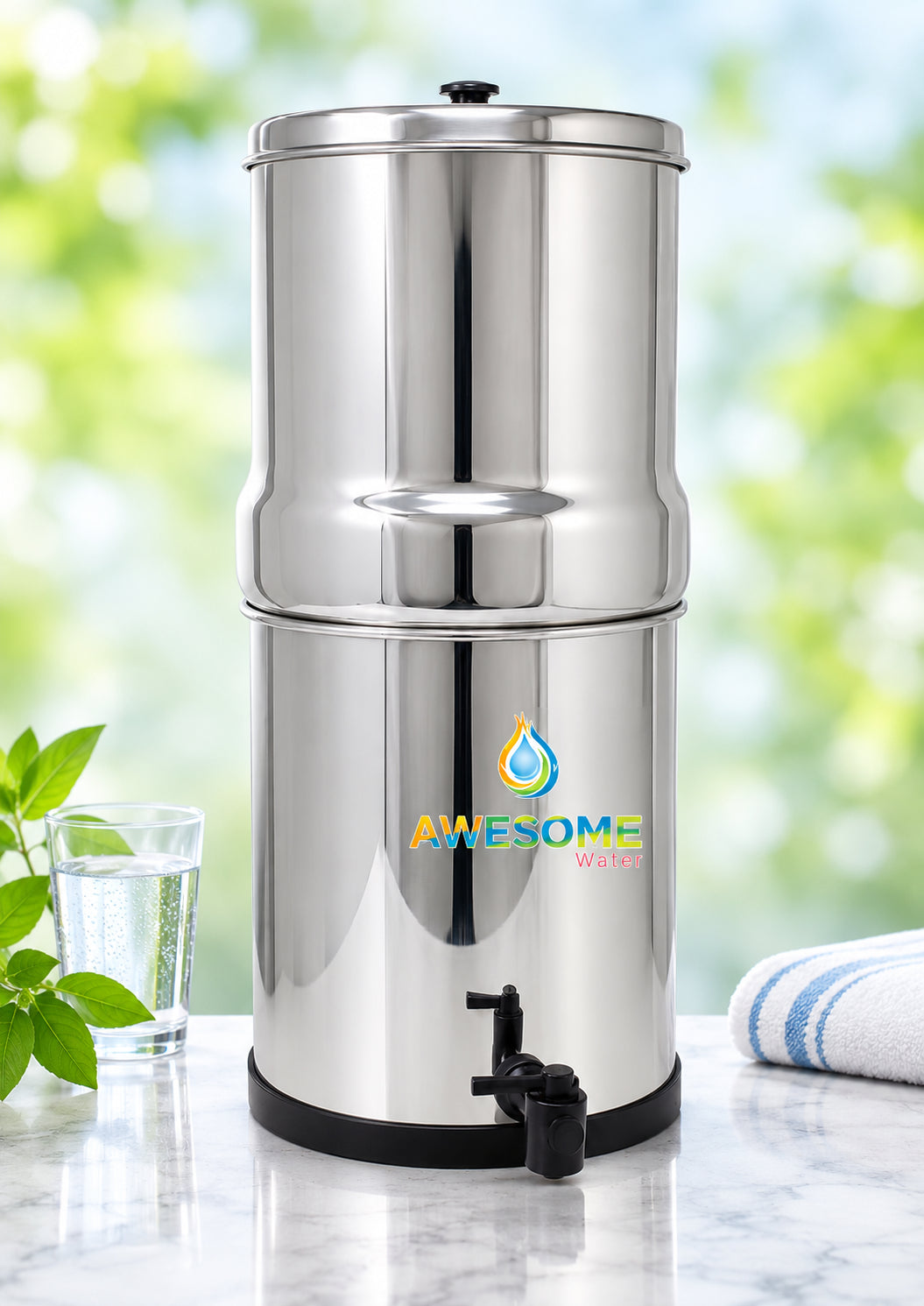
The distinction matters because many products sold as "filters" do not claim to make untreated water microbiologically safe. Read the specifications carefully. The Bench Top Stainless Steel Water Filter, for example, lists removal rates for parasites, cysts and bacteria, while the Gravity-Fed Stainless Steel Water Filter is designed for physical filtration of suitable source water.
Check the standards each product is tested against. Always confirm which contaminants a specific cartridge has been verified to remove.
Comparing Awesome Water Portable Options at a Glance
The table below summarises the Awesome Water® range we would recommend for camping and travel. Prices are the current listed prices in AUD. For a wider side-by-side look at stainless steel filter bottles, see the comparison page.
| Product | Price (AUD) | Best For | Electricity Needed |
|---|---|---|---|
| Gravity-Fed Stainless Steel Water Filter | $490.00 | Camping, caravans, off-grid | No |
| Bench Top Stainless Steel Water Filter | $209.95 | Renters, mains and tank water | No |
| WATERWORKS Self-fill Filter Bottle (SFB 3F) | $149.00 | Hiking and personal carry | No |
| Doulton 9" Single Countertop Water Filter | $199.00 | Renters, holiday homes | No |
| Doulton Double Countertop Water Filter | $239.00 | Holiday homes, fluoride-conscious households | No |
Price (AUD)
Gravity-Fed Stainless Steel Water Filter
This is our pick for car camping and caravanning. It runs on gravity alone, so there is no pump to charge and no pressure to build up. The upper stainless steel chamber nests inside the lower one, which makes it easier to pack.
Pros: No power or plumbing needed, compact storage, cleanable ceramic element.
Cons: Output depends on how fast gravity moves the water, so it is slower than a pressurised system. It is not designed to make unknown water safe on its own.
Best for: Campers and caravanners with a known, suitable water supply.
Skip if: You need guaranteed microbiological treatment of creek or lake water.
Bench Top Stainless Steel Water Filter
This system works well for renters and anyone filtering mains or rainwater tank supply. It is portable, so you can take it between properties.
Pros: Food-grade stainless steel housing, portable, includes diverter valve and hose.
Cons: Requires fitting to the kitchen sink spout, so it is less suited to a shared tap on a camp site.
Best for: Renters and households on mains or tank water.
Skip if: You need to filter water away from a sink.
Doulton Countertop Systems
The Doulton 9" Single and the Doulton Double Countertop Water Filter both sit on the bench and connect to the kitchen tap. The double unit offers a second filter housing, so you can add a cartridge for a specific need such as lead or heavy metal reduction.
Pros: Self-installation, moveable between locations, filter choice on the double model.
Cons: Tap connection required, and the single unit does not connect to pull-out taps.
Best for: Renters, students and holiday homes with a standard kitchen tap.
Skip if: Your tap is a pull-out style or you have no bench space.
Best Portable Water Filter for Camping: Selection Criteria
When choosing a camping filter, weigh these factors against your trip:
- Water source: Tap, rainwater, bore or natural water each carry different risks.
- Volume: Count the litres needed for drinking, cooking and washing.
- Power and plumbing: Gravity models suit sites without power.
- Weight and storage: Consider what fits in your vehicle or pack.
- Maintenance: Factor in cartridge replacement and cleaning.
For travel rather than camping, prioritise size and the ability to use the filter at different accommodation. For camping, prioritise independence from power and a water source you can verify.
How to Purify Water While Camping Safely
Start with the cleanest source available. Where possible, use treated mains water filled before you leave, or a verified supply at the site.
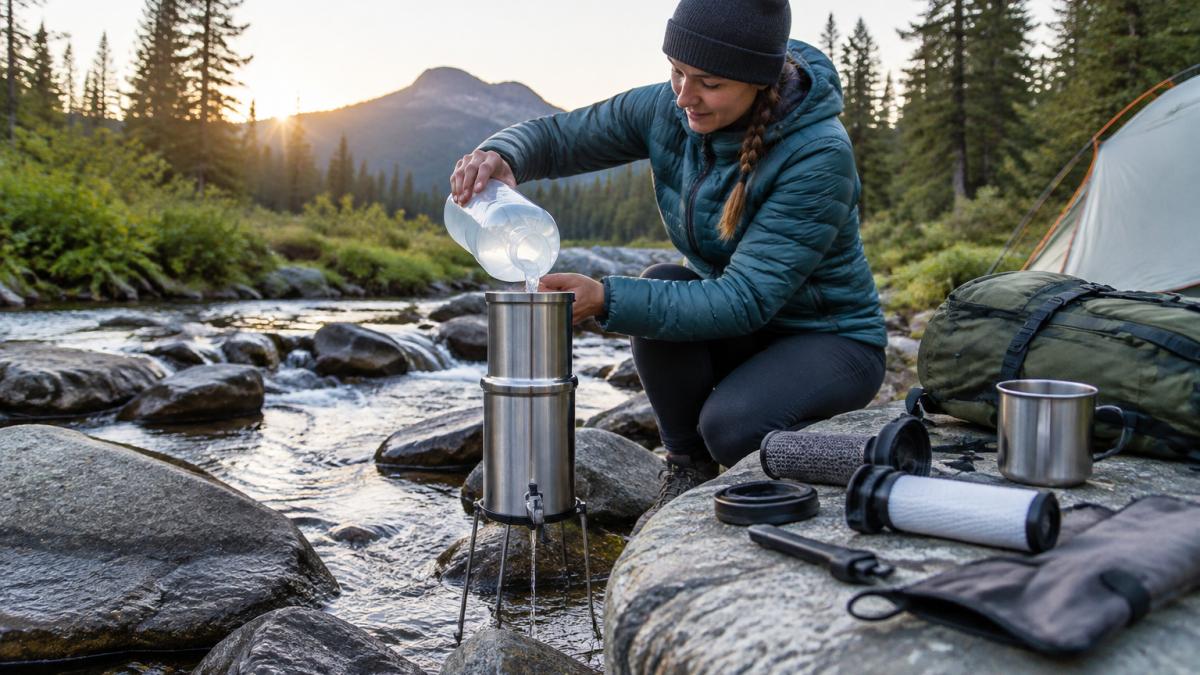
Pre-filter visibly dirty water through a cloth or allow sediment to settle before filtering. This extends the life of the cartridge and improves flow.
Fill the upper chamber of your gravity unit, let it run fully, and discard the first batch if the manufacturer recommends flushing the element.
Keep filtered and unfiltered water in separate containers. Cross-contamination undoes the work of any filter.
Where the source is untreated or uncertain, check the product specification for the specific contaminants it is verified to remove. If you are unsure, boil the water or use a dedicated treatment method suited to the risk, following local health advice.
Water Filter Replacement and Maintenance on the Road
Replacement intervals depend on the cartridge and how much you use it. The Doulton carbon block cartridge is listed as needing replacement every six months.
Clean the stainless steel chambers regularly with the method recommended by the manufacturer. Wait for the ceramic element to dry fully before storing it.
If flow slows noticeably, inspect and clean the ceramic filter according to its care instructions. Replace worn or damaged components promptly.
Carry a spare cartridge on longer trips so you are not caught without one.
Choosing Your Portable Filter Before Your Next Trip
Match the product to the trip: gravity-fed for camping, a bottle for hiking, and a countertop system for holiday rentals. Confirm which contaminants each filter is verified to remove, and treat untested sources with appropriate caution.
Browse the full range to compare options side by side. Explore the Showroom to see the Awesome Water® filters in person before you choose.
Frequently Asked Questions
What is the difference between a water filter and a water purifier?
A filter removes sediment, particles and some contaminants through a physical or carbon barrier, while a purifier is designed to inactivate or remove a wider range of microorganisms, including viruses. Many portable products sold as filters do not claim full virus removal, so check the verified performance data for the specific element before relying on it for untreated water. Awesome Water's gravity-fed system is a filter.
Can a portable water filter make river water safe to drink?
Not always. The suitability of any source depends on its contaminants and the verified performance of the installed element. Awesome Water's bench top stainless steel filter lists removal rates for parasites, cysts, bacteria and Cryptosporidium, Where the source is uncertain, boil the water or use an additional treatment step first.
How often should you replace a portable water filter?
Replacement depends on the element and the water quality. The Doulton single countertop filter's carbon block cartridge is listed as needing replacement every 6 months, while the gravity-fed system's ceramic candle should be cleaned according to the manufacturer's instructions and replaced when the manufacturer recommends. Reduced flow is a common sign that cleaning or replacement is due.
How do you clean and store a portable water filter?
Wash the stainless steel chambers regularly using the manufacturer's recommended method, and inspect the ceramic element if water flow slows. The gravity-fed system's upper chamber nests inside the lower chamber, reducing storage height. Keep the system covered, handle filtration components with clean hands, and keep untreated and filtered water separate. The Bench Top unit's UltraCeram Carbon can be scrubbed clean and reused to extend cartridge life.
