

Getting PFAS out of your water isn't as simple as just boiling it. In fact, boiling won't work at all. Because these "forever chemicals" are so persistent, you need specific filtration methods like activated carbon, reverse osmosis, or ion exchange systems that physically grab onto or block the contaminants, making your drinking water much safer.
The Reality of PFAS in Your Water Supply
The name ‘forever chemicals’ sounds pretty intimidating, and for good reason. But understanding what they are is the first step toward getting some peace of mind. Per- and poly-fluoroalkyl substances (PFAS) are a massive group of man-made chemicals that became popular because they're fantastic at resisting heat, water, and oil. For decades, they were used in just about everything, from non-stick pans to firefighting foam.
Unfortunately, the very thing that makes them so useful is also their biggest drawback. These chemicals simply don't break down easily in the environment or in our bodies.
How PFAS Find Their Way Into Australian Waterways
PFAS contamination isn't random; it usually traces back to specific places where these chemicals were used heavily. Think of airports and military bases that ran training exercises with PFAS-based firefighting foams, or industrial plants that made textiles, paper goods, or electronics.
From these sites, the chemicals seep into the soil and slowly make their way into the groundwater, rivers, and dams that feed our public water supplies. That’s how they can end up in your home's tap water without you ever seeing, smelling, or tasting them. Knowing this helps explain why some communities across Australia are at a much higher risk of exposure.
This growing awareness isn't just about water. Many Aussies are becoming more mindful of what's in their food too, leading them to research things like safely cleaning produce to cut down on pesticide residues.
Navigating Australian Drinking Water Guidelines
To keep us safe, Australian authorities have set official guidelines for acceptable PFAS levels in drinking water. In a major recent update, the National Health and Medical Research Council (NHMRC) made the limits for several key PFAS compounds much stricter. For example, the guideline for PFOS was slashed from 70 ng/L down to just 8 ng/L (nanograms per litre).
A recent UNSW Sydney study on Sydney's tap water really put this into perspective. Researchers found 31 different PFAS chemicals, and while some samples were below Australia's official limits, they were still higher than the tough new advisory levels set in the US.
These guidelines aren't just arbitrary numbers. They're a safety benchmark set to protect even the most vulnerable people over a lifetime of exposure. If your water test results come back near or over these limits, it's a clear sign you need to take action.
Having these official limits gives you a concrete reference point when you get your water tested. It turns a vague worry into a measurable result, empowering you to make a smart decision for your family. Once you understand the problem and the guidelines, you can confidently look into effective solutions, like specialised filtration systems for removing forever chemicals and other carcinogens, and get back to enjoying clean, safe water.
Confirming PFAS Levels with Home Water Testing
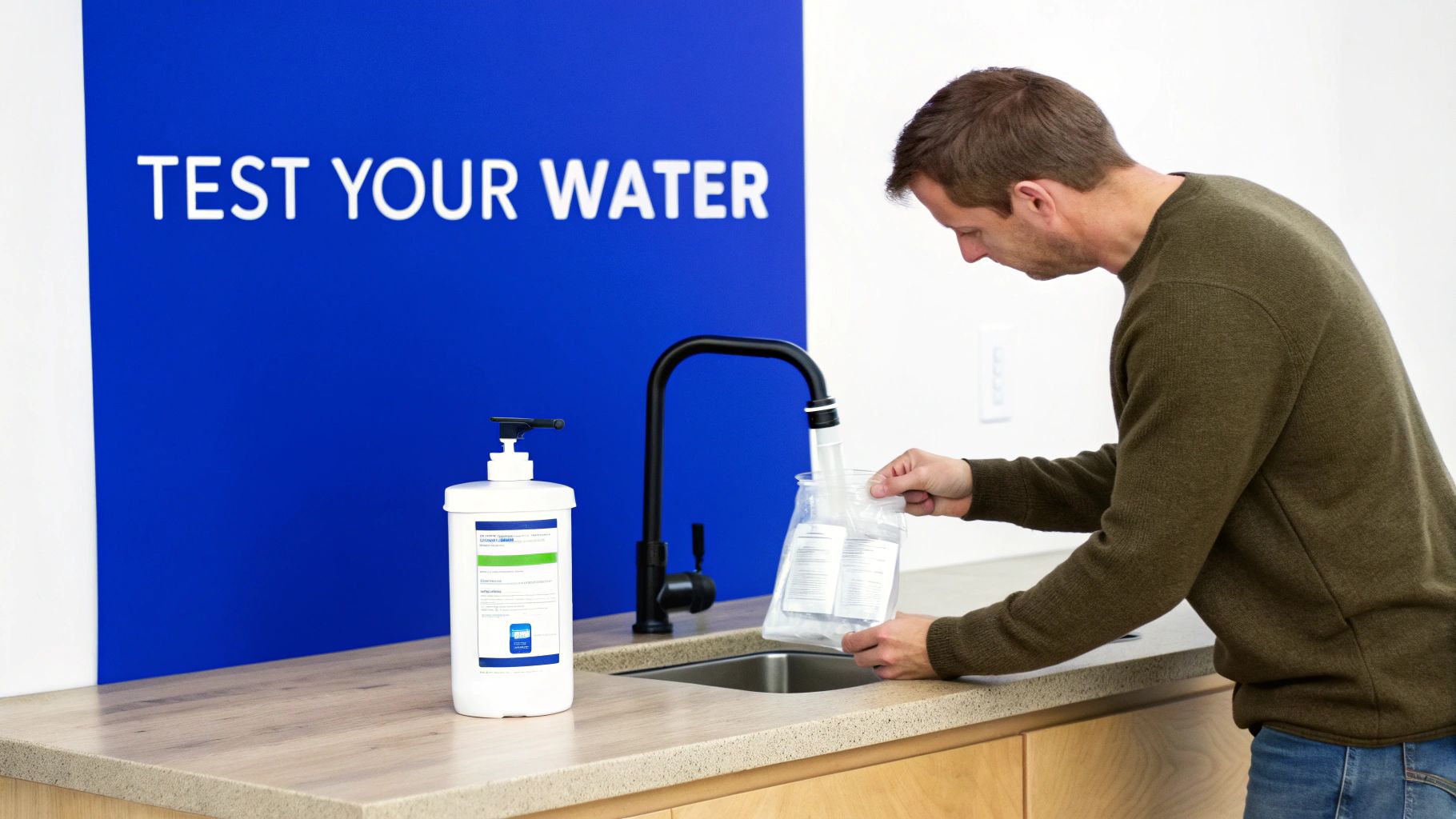
Before you can even think about removing PFAS from your water, you need a clear picture of what you’re actually dealing with. Guessing or just assuming you have a problem won't get you very far — you need hard data. The only way to get that is through a professional laboratory analysis.
Unfortunately, those standard DIY test strips you can grab from the local hardware store simply won't cut it. They aren’t designed to detect these complex, man-made chemicals. PFAS testing requires incredibly sensitive equipment to measure contaminants in parts per trillion, so you'll need to call in the experts.
Finding a NATA-Accredited Laboratory
Your first move is to find a laboratory accredited by the National Association of Testing Authorities (NATA). In Australia, NATA accreditation is the gold standard. It’s your assurance that the lab meets strict quality and competency requirements for the specific tests they're running.
A quick search for "NATA accredited water testing labs" in your state should bring up a few good options. It's always a good idea to contact a couple of them to compare costs and turnaround times for PFAS analysis. When you get in touch, make sure to specify you're testing a residential water supply.
It’s also worth remembering that PFAS might be just one piece of the puzzle. To get a complete picture of your water's profile, you might want to look into other common toxins that may be in your water, like heavy metals or chlorine by-products.
Once you’ve picked a lab, they’ll send you a specialised test kit. This isn't just a simple vial; it comes with specific sample bottles and very detailed instructions. Why all the fuss? It’s all designed to prevent cross-contamination, which is a massive risk when testing for chemicals as pervasive as PFAS.
Collecting Your Sample Correctly
The accuracy of your results depends entirely on how carefully you collect the sample. PFAS are everywhere in modern homes — in non-stick pans, certain clothes, even some cosmetics — so avoiding accidental contamination is absolutely crucial.
Your kit will have a precise set of instructions, but here are some general best practices to keep in mind:
- Wash your hands thoroughly with plain soap and water. Skip the moisturisers or hand sanitisers right before you start.
- Run the cold tap for a few minutes before filling the bottle. This flushes out any stagnant water sitting in the pipes.
- Don’t touch the inside of the bottle or the lid. And whatever you do, don't rinse the bottle out, as it might contain preservatives needed for the test.
- Fill the bottle right up to the indicated line and seal it tightly.
Follow the lab’s instructions to the letter. Any deviation, like letting water splash off the sides of the sink into the bottle, can completely skew your results and give you a false reading.
After you've collected the sample, package it up exactly as directed and send it back to the lab. They’ll usually ask you to use an express courier to make sure it gets there promptly and in good condition.
Interpreting Your Lab Report
In a few weeks, you’ll get a report that can look a bit technical at first glance. Don’t be intimidated. The main things you want to look for are the names of specific PFAS compounds (like PFOS and PFOA) and their measured concentrations. These are usually reported in nanograms per litre (ng/L), which is the same as parts per trillion (ppt).
Now, take those numbers and compare them directly against the Australian Drinking Water Guidelines. For example, if your report shows PFOS at 12 ng/L, you’ll know straight away that it’s above the current guideline of 8 ng/L. This is the specific, actionable data you need. It’s what empowers you to choose a filtration system that’s actually proven to target the exact chemicals present in your water.
Comparing the Best PFAS Removal Technologies
Alright, you've got your water test results back. The good news is the uncertainty is over. Now it’s time to take action. The big question shifts from if you have a PFAS problem to how you're going to solve it. Picking the right filtration technology from here is the most critical decision you'll make.
There's no single 'best' filter that works for every Aussie home. What's ideal for your situation hinges on a few things: the specific PFAS compounds in your water, your budget, and how much time you're willing to spend on maintenance.
Let’s dive into the three most effective and proven technologies available: Granular Activated Carbon (GAC), Reverse Osmosis (RO), and Ion-Exchange Resins.
Granular Activated Carbon (GAC) Filters: The Popular Workhorse
Granular Activated Carbon, or GAC, is by far the most common and accessible technology you'll find for home water filtration. It's best to think of it as a highly effective chemical sponge. Inside a GAC filter, you'll find porous carbon granules with a massive surface area, which allows them to trap and hold onto contaminants through a process called adsorption.
This approach is especially good at grabbing the long-chain PFAS, like the infamous PFOS and PFOA. The longer the chemical chain, the more easily it gets tangled up in the carbon's complex structure. This makes GAC a really solid first line of defence, particularly if your tests show these are the main culprits in your water. You can find out more about what a carbon water filter is and how it works in our detailed guide.
But GAC isn't perfect. Its main weakness is its performance against the newer, short-chain PFAS compounds. Because these chemicals are smaller and more mobile, they can sometimes slip right through the carbon media. If your water report shows a cocktail of different PFAS types, a GAC filter on its own might not be the complete solution you need.
Reverse Osmosis: The Purity Powerhouse
When you’re after the highest possible removal rate, Reverse Osmosis (RO) is the undisputed champion. It’s a brute-force method, but an incredibly effective one. The system uses high pressure to force water molecules through a semipermeable membrane with microscopic pores. These pores are so tiny they block almost everything else—including the entire spectrum of PFAS compounds, from the longest chains right down to the shortest.
RO has become one of the go-to technologies for tackling PFAS in Australia, especially in high-risk areas. The data speaks for itself: RO systems can remove over 90–99% of PFAS. For instance, technical assessments by the Australian Water Association showed that full-scale RO plants in contaminated zones cut PFOS levels from 20–40 ng/L down to less than 2 ng/L, well below the national guidelines. To get the full picture, you can review the official PFAS advice from the NHMRC.
The main trade-off with RO is water waste. To keep the membrane from clogging up with all the contaminants it rejects, the system has to flush itself constantly. This sends a stream of concentrated wastewater down the drain. While modern systems are much better than they used to be, you can still expect to lose between one and four litres of water for every litre of pure water you get. Another point to consider is that RO strips out everything, including beneficial minerals like calcium and magnesium, so many systems now include a remineralisation cartridge to add them back in, improving the taste and health benefits.
Ion-Exchange Resins: The Targeted Specialist
Ion-exchange is a more specialised technology that acts like a powerful, selective magnet. The system uses a bed of tiny resin beads that carry a positive electrical charge. As water passes through, the negatively charged PFAS ions are irresistibly drawn to the resin, swapping places with harmless ions like chloride.
This process is incredibly effective and can be fine-tuned to target specific types of PFAS, including some of those tricky short-chain ones that carbon filters struggle with. It’s why you often see ion-exchange used in high-end residential systems or at the municipal level, where precision really counts.
The catch? Ion-exchange systems are generally more expensive and less common for home use than GAC or RO. You need to make sure the resin is optimised for the specific PFAS in your water. Eventually, the resin becomes saturated and has to be replaced or regenerated, which can be a bit more involved than just popping in a new filter cartridge.
When you're weighing your options, think of it this way: GAC is the reliable, budget-friendly choice for common PFAS. RO is the ultimate purification solution if you want near-total removal of everything. Ion-exchange is the targeted specialist for tricky contamination profiles.
To help you see how they stack up, we've put together a quick comparison of the top home filtration methods.
Comparison of Home PFAS Water Filtration Technologies
This table breaks down the key differences between the top four PFAS removal methods, giving you a clearer picture of their effectiveness, costs, and maintenance needs for a typical Australian household.
| Technology | Effectiveness (PFOS/PFOA) | Initial Cost (AU$) | Annual Maintenance Cost (AU$) | Key Pros | Key Cons |
|---|---|---|---|---|---|
| Granular Activated Carbon (GAC) | Good to Excellent (70-95%) | $150 - $600 | $100 - $300 | Affordable, widely available, improves taste and odour. | Less effective on short-chain PFAS, requires regular filter changes. |
| Reverse Osmosis (RO) | Excellent (90-99%+) | $400 - $1,500 | $150 - $400 | Removes all PFAS types, plus other contaminants. | Wastes water, removes beneficial minerals, slower flow rate. |
| Ion-Exchange Resin | Excellent (90-98%) | $800 - $2,500+ | $200 - $500 | Highly effective on a broad range of PFAS, including short-chain. | Higher initial cost, requires specialised resin replacement. |
Choosing the right technology comes down to balancing performance with practicality. For many, a high-quality GAC filter is a great starting point, while those with more complex or severe contamination might find the investment in an RO or ion-exchange system offers greater peace of mind.
Choosing Between Whole-House and Point-of-Use Filters
Once you’ve picked the right technology to tackle PFAS in your water, the next big question is where to put it. This really boils down to two main game plans: treating water right at the kitchen tap with a point-of-use (POU) system, or filtering every single drop that comes into your home with a point-of-entry (POE), or whole-house, system. What’s right for you will come down to your home, budget, and how much peace of mind you’re after.
For a lot of Aussies, especially renters or those in apartments, a POU system is the most practical and wallet-friendly place to start. These are usually installed right under the kitchen sink, feeding a separate, dedicated tap. This ensures the water you drink and cook with is perfectly clean.
A quality under-sink reverse osmosis or activated carbon filter gives you fantastic protection where you need it most. It’s a targeted, effective solution that focuses on ingestion – the main way we’re exposed to PFAS – without the cost or hassle of a massive installation.
When Point-of-Use Makes Perfect Sense
Let’s paint a picture. Imagine you’re a family renting a house in a suburb of a major city. Your water test results came back showing PFAS levels that are a touch over the health guidelines—not terrifying, but enough to make you think twice. You want clean drinking water but can’t exactly go ripping out the plumbing.
This is where an under-sink POU filter is the perfect hero. Installation is usually pretty simple and can be easily reversed when your lease is up. It’s a smart, cost-effective way to get immediate protection for your family without sinking cash into a property you don’t own.
This infographic breaks down the main technologies that power both point-of-use and whole-house systems for PFAS removal.
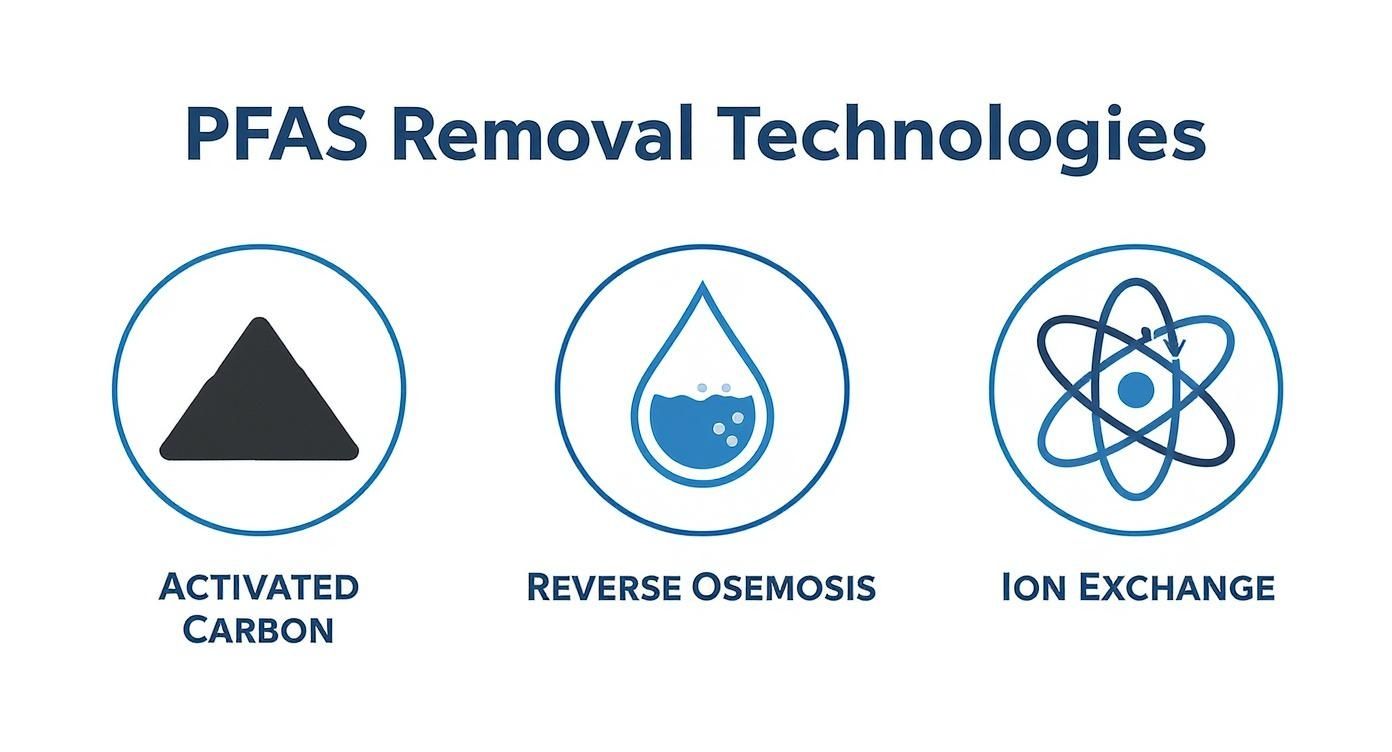
As you can see, while activated carbon is a solid choice, reverse osmosis and ion exchange really step up the game for more complete removal. This is a key detail when you're deciding on the right filter for your situation.
The Case for Whole-House Filtration
On the flip side, a whole-house system is the ultimate safeguard. It treats the water for your showers, your washing machine, and every other tap in the house. This is the gold standard for homeowners, particularly if you're in an area with known, significant contamination. While we mainly worry about drinking PFAS, research is starting to look into skin absorption during bathing, which makes full protection a priority for many families.
These big-gun POE systems are installed where your main water line enters the property, guaranteeing every tap delivers PFAS-free water. This gives you total confidence that your family's exposure is cut down across every part of your daily life. Granular activated carbon (GAC) is the go-to technology for these larger setups.
Here in Australia, GAC filtration has been the workhorse for PFAS removal at the council level for years, used by major suppliers like Sydney Water. Data from the Water Services Association of Australia shows GAC can reliably remove 70–90% of common PFAS compounds, making it a proven and trusted choice for a whole-house system.
A whole-house system is more than just a filter; it's an investment in your property and your family's long-term health. It addresses all potential exposure points, not just the kitchen tap.
Going for this comprehensive solution does mean a higher upfront cost, and you'll need a licensed plumber to handle the installation. You’ll also need to find a spot for the equipment, usually in the garage or a utility closet. But for anyone serious about creating the safest home environment possible, the benefits are undeniable. You can dive deeper into how to remove PFAS, microplastics, and fluoride with whole house water filtration in our dedicated guide.
Proper Installation and Maintenance for Lasting Safety
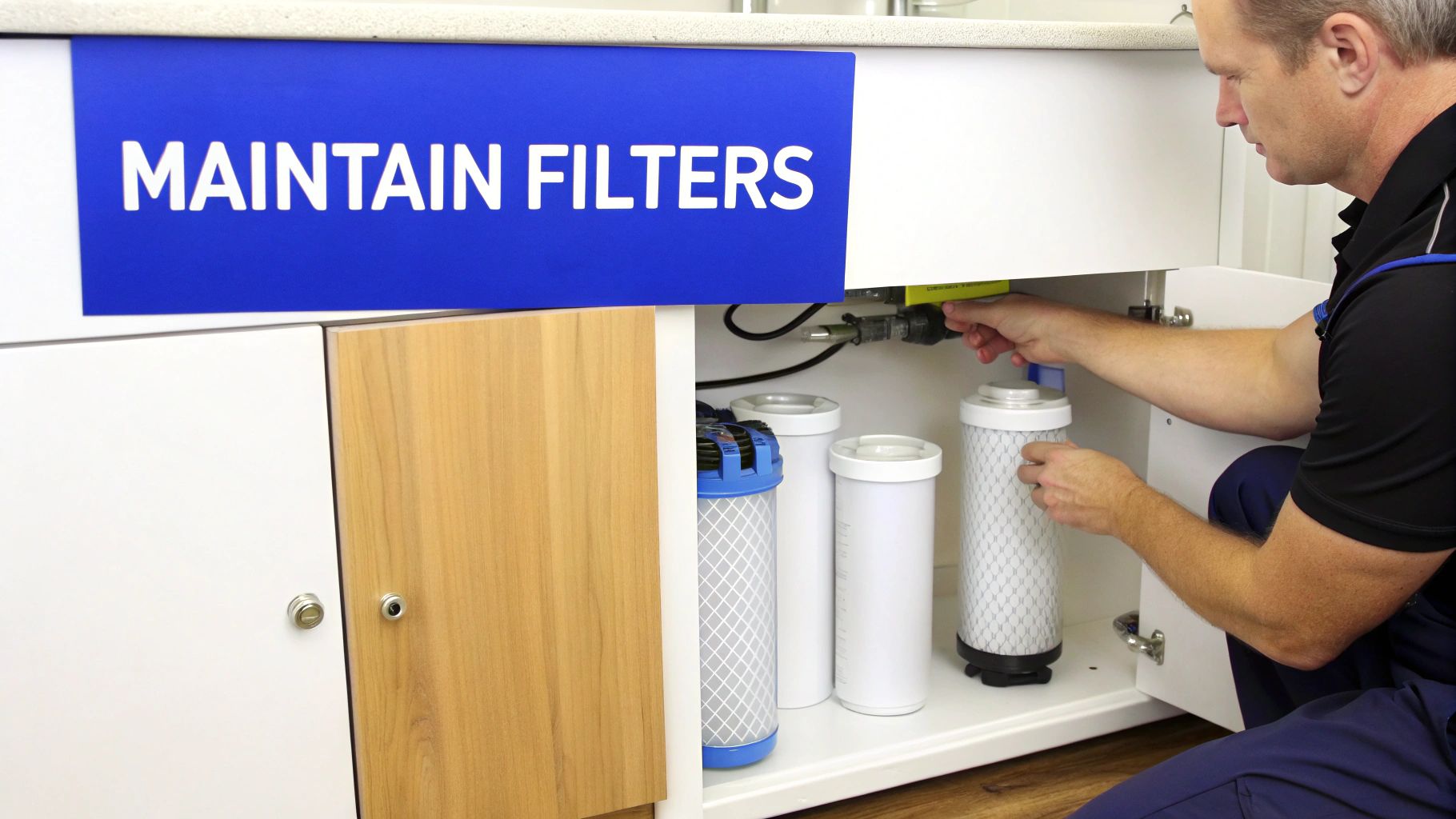
So, you've invested in a quality water filtration system. That’s a fantastic first step. But its power to consistently pull PFAS out of your water is only as good as its installation and ongoing upkeep.
Cutting corners here can lead to leaks, damage, and worst of all, a false sense of security about your water quality. You simply can't set it and forget it.
Whether you're a keen DIYer or prefer to call in the professionals, getting the setup right from day one is absolutely essential. For many under-sink units, installation can be a straightforward weekend project if you're comfortable with basic plumbing. For the bigger whole-house systems, though, professional installation is almost always the smartest move.
The DIY Route vs Professional Installation
If you’re tackling a smaller system yourself, patience is your best friend. Always, and I mean always, read the manufacturer’s instructions twice before you start. Lay out all your tools so everything is within arm's reach.
A classic mistake we see is people over-tightening the fittings. It feels secure, but it can easily crack the plastic housing and cause slow, hidden leaks down the track.
For more complex jobs like a whole-house filter or a reverse osmosis system, bringing in a licensed plumber is a wise investment. They’ve got the experience to ensure the system is installed to code, runs at optimal pressure, and doesn't create headaches with your existing plumbing. To dig deeper, you can learn about why a professional plumber is preferred to install a home water filter in our detailed guide.
Here's a quick checklist for finding a qualified pro:
- Check their licence and insurance. This is non-negotiable. It protects you from any liability if something goes wrong.
- Ask about their specific experience with water filtration systems. Not all plumbers specialise in this, so find one who knows their way around these units.
- Get a clear, itemised quote upfront. This helps avoid any nasty surprises on the final bill.
Creating a Realistic Maintenance Schedule
Once your system is up and running, maintenance becomes your top priority. Think of a filter as a trap; if you don't empty it (by replacing the cartridges), it eventually fills up and stops working. A consistent schedule is the only way to ensure you keep removing PFAS effectively.
The easiest way to stay on top of this is to create a recurring reminder in your phone or digital calendar. Most manufacturers give a recommended replacement interval, but remember this can change depending on your household's water usage and the initial PFAS levels.
Think of your filter cartridges like the oil filter in your car. You wouldn't skip an oil change and expect the engine to run well. Your water filter needs the same regular attention to protect your family's health.
For a typical family of four, here are some general guidelines to start with:
- Granular Activated Carbon (GAC) Cartridges: Usually need replacing every 6-12 months.
- Reverse Osmosis (RO) Pre-filters: Also typically swapped out every 6-12 months.
- RO Membrane: This is the heart of the system and generally lasts 2-3 years.
The Critical Task of Filter Disposal
Properly disposing of used filter cartridges is a crucial final step. These filters have done their job by concentrating PFAS and other contaminants. You definitely don’t want to just toss them in the bin where those chemicals could leach back into the environment.
At the moment, specific residential recycling programs for used cartridges are still pretty rare in Australia. The safest approach is to seal the used filter in a sturdy plastic bag before putting it in your general waste bin. This helps contain the trapped contaminants within the landfill environment.
It’s always a good idea to check with your local council for any specific guidelines they might have, as local rules can and do change. Handling the entire lifecycle of your filtration system responsibly ensures you're protecting both your home and the wider community.
Common Questions About Removing PFAS From Water
Trying to get your head around PFAS and water filtration can definitely feel a bit overwhelming. It's only natural to have a bunch of questions before you decide on the right setup for your home. We get asked these all the time, so let's clear up some of the most common queries and get you pointed in the right direction.
First up, many people wonder if the simple filter jug they already have in the fridge is doing the job.
Will a Standard Water Filter Jug Remove PFAS?
The short answer is, unfortunately, no. Most standard water filter jugs you'd pick up from a supermarket just aren't designed to tackle PFAS effectively. While their basic activated carbon might catch a tiny amount of certain long-chain PFAS, they simply don’t have the grunt or the certification to handle the full spectrum of these chemicals.
For real, reliable removal, you need to step up to systems specifically certified for PFAS reduction. We're talking about more advanced multi-stage carbon block filters or, for the highest level of protection, reverse osmosis units. Always look for certifications like NSF/ANSI 53 or 58 on the product’s performance data sheet that explicitly state they reduce PFOA/PFOS.
Is Boiling Water an Effective Way to Remove PFAS?
This is a really important one to get right. Boiling water does not remove PFAS. In fact, it actually makes the problem worse. PFAS are incredibly stable 'forever chemicals' that don't break down or evaporate when you heat them.
Think about it: when you boil water, some of it turns into steam, but the PFAS get left behind in the water that remains. This means you're actually increasing their concentration. The only way to deal with them is to physically filter them out with technologies like reverse osmosis or specialised media like granular activated carbon.
Never rely on boiling to make your water safe from PFAS. It concentrates these chemicals, turning a bad situation into a worse one.
Understanding this really drives home why specialised filtration is the only game in town for PFAS. It’s all about physically capturing and removing them, not trying to neutralise or destroy them.
How Do I Know if a Filter Is Certified for PFAS Removal?
In Australia, the gold standard for knowing if a filter truly works is third-party certification. While we have our own national standards, the most trusted and recognised certifications for contaminant removal come from global bodies like NSF International.
When you’re looking at a filter, keep an eye out for these specific certifications:
- NSF/ANSI 53: This is the standard for filters designed to reduce specific health-related nasties, including lead, cysts, and, most importantly for us, PFOA and PFOS.
- NSF/ANSI 58: This one is specific to reverse osmosis systems and confirms they are effective at reducing a huge range of contaminants, PFAS included.
A good, reputable brand will have these certifications listed clearly on their packaging and website. Be very sceptical of vague claims like "removes harmful chemicals." You should always look for specific, certified proof that a filter performs against PFAS before you buy.
If I Install a Whole-House System Do I Still Need a Drinking Water Filter?
For the most part, no. A whole-house system, also known as a point-of-entry (POE) system, is plumbed in to treat all the water coming into your home. That means every single tap—from the kitchen sink to the shower—delivers water that has been filtered for PFAS.
That said, some people prefer a "belt-and-braces" approach for total peace of mind. For instance, they might install a whole-house granular activated carbon (GAC) system for general protection across the entire home. Then, they might add a point-of-use reverse osmosis (RO) system under the kitchen sink. This combo ensures the water they drink and cook with gets the most rigorous purification possible, layering the benefits of both technologies for near-complete removal of contaminants.
At Awesome Water®, we believe every Aussie family deserves access to clean, safe water without the guesswork. Our range of certified water filtration systems is built to effectively remove PFAS and other contaminants, giving you the protection you need. Explore our solutions today and take the first step toward better, safer hydration.