
You've probably heard the old advice that boiling your tap water is a quick and easy way to purify it. And while it’s true for things like nasty bacteria, when it comes to chlorine, the answer is a little more complicated.
Boiling water does remove chlorine, but it's far from the instant fix many people think it is.
The Quick Answer to Boiling Chlorine Out of Water
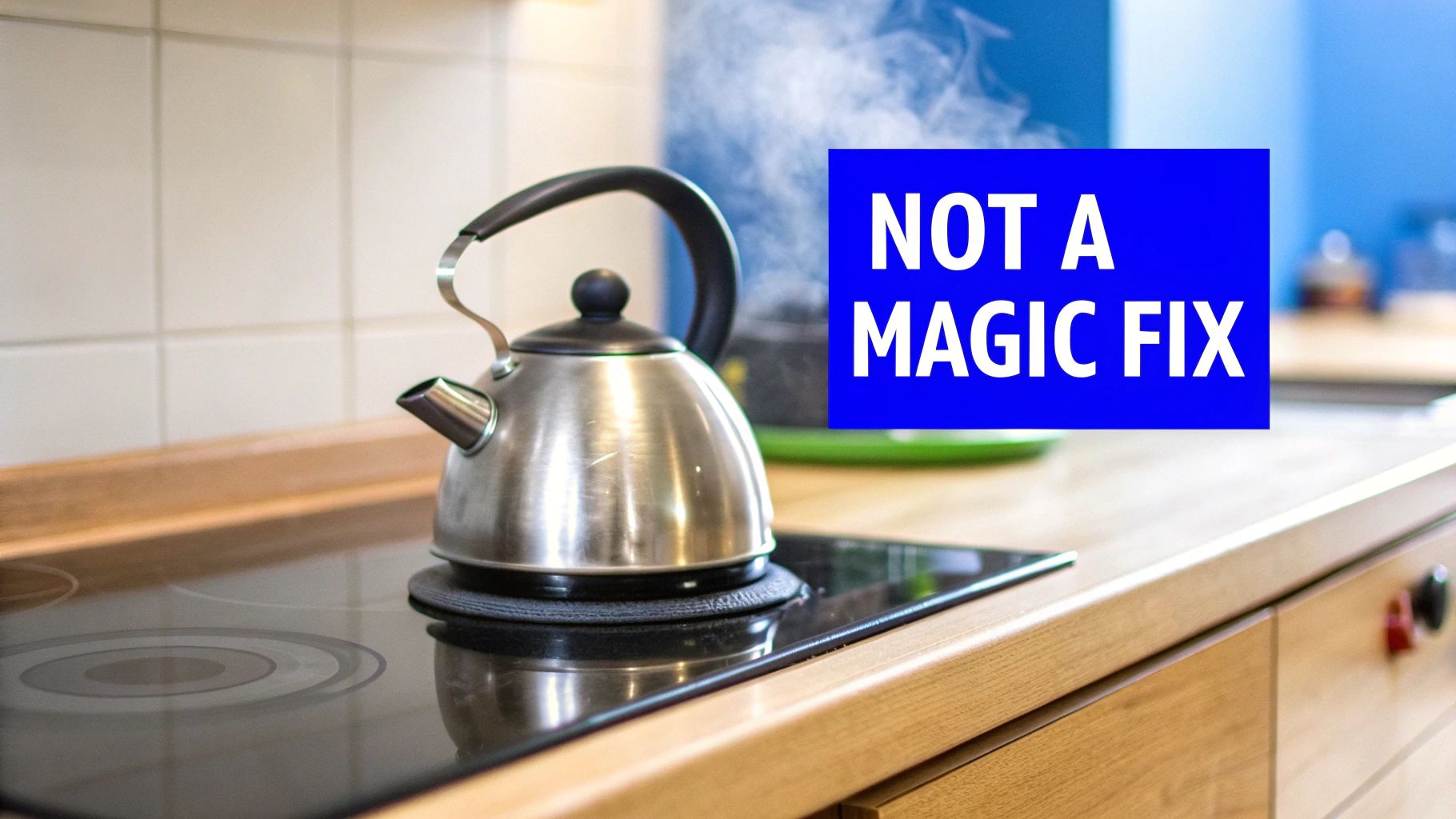
The idea makes sense. Chlorine is a volatile chemical, which means it wants to escape from water as a gas. Heating speeds up this process, letting the chlorine evaporate away. Simple, right?
Not quite. It’s a much slower process than most of us realise. Just bringing your kettle to a boil for a cup of tea won't do much. To really make a dent in the chlorine levels, you’d need to keep the water at a hard, rolling boil for at least 15 to 20 minutes.
Honestly, who has the time (or energy bill) for that every day? It’s just not a practical solution for getting clean, great-tasting drinking water on demand.
The Chloramine Complication
Here’s the real kicker for many Aussie households: boiling might not work at all. Many water suppliers across Australia have switched from using just chlorine to using chloramine.
Chloramine is a more stable, longer-lasting disinfectant made by combining chlorine with ammonia. That stability is great for keeping pipes clean, but it’s bad news if you’re trying to remove it at home.
Unlike chlorine, chloramine is not volatile. It’s designed to stay in the water and doesn't just evaporate when you heat it. Boiling your water will do next to nothing to remove chloramine, leaving you with the same chemical taste you were trying to get rid of.
This table breaks down the key difference:
Boiling vs Chloramine: A Quick Comparison
| Disinfectant Type | Chemical Stability | Effectiveness of Boiling |
|---|---|---|
| Free Chlorine | Low. It's volatile and naturally wants to evaporate from water. | Moderately Effective. Requires a rolling boil for 15-20 minutes to significantly reduce levels. |
| Chloramine | High. It's designed to be stable and remain in the water for longer. | Ineffective. Standard boiling does not remove it, making it a poor purification method. |
As you can see, simply boiling is a gamble. You might be putting in a lot of effort for very little reward, especially if your local council uses chloramine.
Understanding the surprising effects of drinking chlorinated water is often why people look for ways to remove it in the first place. But when it comes to improving the taste and quality of your tap water, boiling is an unreliable and often ineffective method.
Understanding Chlorine vs Chloramine in Your Tap Water
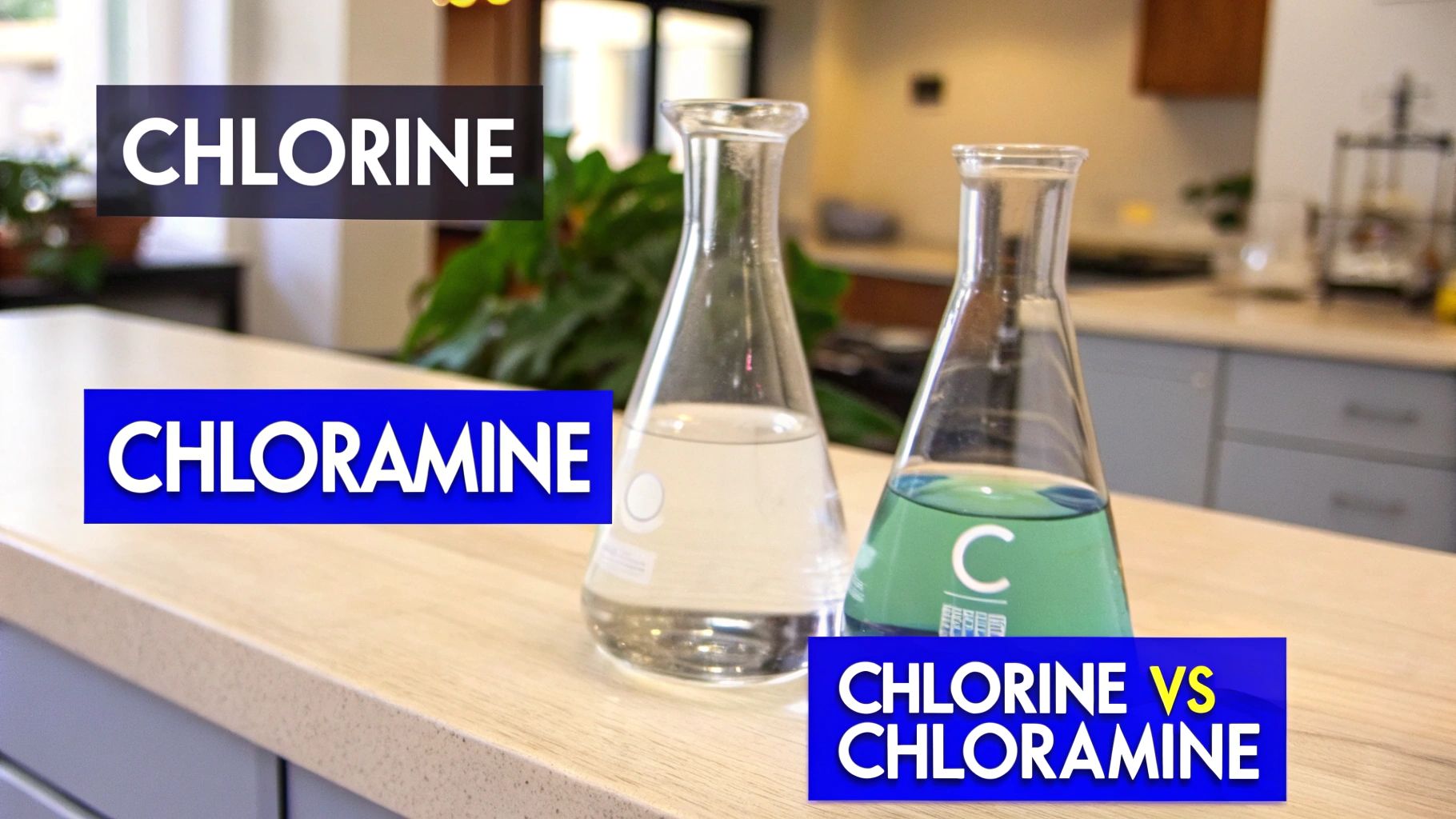
To figure out why boiling your water might not be giving you the results you want, you first need to know what’s actually in it. Water authorities add disinfectants to keep the supply safe on its long journey to your home. The two main players here are free chlorine and chloramine.
Think of free chlorine as a sprinter. It’s brilliant at killing off nasties quickly, but it’s also quite volatile and doesn’t last very long. This is the classic chemical you associate with a swimming pool smell. Because it's unstable, it can be removed from water with simple methods like boiling or even just letting the water stand for a while.
The More Stubborn Alternative
Chloramine, on the other hand, is the marathon runner of water disinfection. It’s a compound made by mixing chlorine with a small amount of ammonia. This simple tweak makes it far more stable and longer-lasting, which is exactly why many Australian water authorities now prefer it.
This stability is great for ensuring water stays safe over vast distances, but it creates a real headache for treatment at home. Chloramine doesn’t easily evaporate or “gas off” when you heat it. So, if your water is treated with it, boiling the kettle won’t get rid of that distinct chemical taste or smell.
The core reason that simply asking "does boiling water remove chlorine" can be misleading is this fundamental difference. The effectiveness of boiling depends entirely on which of these two disinfectants is flowing from your tap.
Many water suppliers, especially in Western Australia, keep chlorine levels between 0.5 and 1.5 milligrams per litre (mg/L). The Australian Drinking Water Guidelines allow up to 5 mg/L, but most people can notice the smell at levels as low as 0.2 mg/L, making taste a common complaint.
Knowing which disinfectant is used in your area is the first step. It helps explain why your efforts to get purer-tasting water might be falling short, and it's important to remember they are not the only toxins that may be in your water.
The Science Behind Boiling and Chlorine Removal
So, how does boiling water actually get rid of chlorine? The short answer is a process called off-gassing. Think of the chlorine in your tap water as a dissolved gas, a bit like the bubbles trapped in a bottle of soft drink.
Heating the water gives these dissolved gas molecules a serious energy boost. As the temperature climbs, the chlorine becomes far more active and volatile. This agitation allows it to break free from the water and escape into the air. It’s the same reason you might notice a stronger chlorine smell when you’re running a hot shower.
But this isn't an instant fix. The effectiveness of boiling really depends on a few real-world factors that determine just how much chlorine actually makes its escape.
Key Factors That Affect Chlorine Removal
Several variables can change how well boiling actually improves your water's taste. Understanding them makes it clear why just flicking the kettle on for a quick cuppa won't do much.
- Boiling Time: This is the most critical factor. A brief boil just isn't enough. You need a sustained, rolling boil for at least 15–20 minutes to see a significant drop in free chlorine levels.
- Water Volume: Boiling a large stockpot of water will naturally take much longer to dechlorinate than a small saucepan simply because there's more chlorine to remove in the first place.
- Surface Area: A wide, shallow pan is your best friend here. It exposes more of the water’s surface to the air, allowing chlorine to off-gas much faster than it would in a tall, narrow pot.
Simply put, the goal of boiling is to give the chlorine gas every possible chance to escape. A longer, more vigorous boil in an open container provides the perfect conditions for this to happen.
To get a better handle on the chemistry, it helps to understand the active forms of chlorine at work. You can learn more about Hypochlorous Acid and its disinfecting properties to see exactly how these compounds keep our water safe.
It's also important to remember that boiling only tackles certain chemicals. For instance, if you want to know how to remove fluoride from water, you'll need completely different methods, as boiling can actually make fluoride more concentrated.
So, you want to get that chlorine taste out of your tap water. While boiling is often the first thing people think of, there are a few practical things to know. It's not just about flicking the kettle on.
If you’re going to boil your water to remove free chlorine, you need to do it properly. That means getting it to a rolling boil in an open pot and keeping it there for at least 15 minutes. Honestly, it's a bit of a hassle, uses a fair bit of power, and isn't very practical for the water you drink every day. Plus, you have to wait for it all to cool down again.
Easier, Low-Cost Alternatives
Luckily, if your main issue is that typical chlorine taste from free chlorine, there are much simpler ways to deal with it.
One of the easiest tricks is aeration—just letting the water breathe. Fill a pitcher with tap water, leave it uncovered on the counter or in the fridge, and within about 24 hours, most of that volatile free chlorine will have simply vanished into the air. Popping it in the fridge also helps improve the taste, as most people find chilled water more refreshing anyway.
It's crucial to remember that these simple methods are only effective for free chlorine. They do absolutely nothing for the more persistent chloramine, which is designed to stay in the water longer and needs more advanced filtration to be removed.
Comparing Household Chlorine Reduction Methods
To make it clearer, here’s a quick look at how these common household methods stack up against each other. This table breaks down their effectiveness, the time you’ll need to invest, and the overall convenience.
| Method | Effectiveness (Free Chlorine) | Effectiveness (Chloramine) | Time Required | Cost & Effort |
|---|---|---|---|---|
| Boiling | High (with 15+ min rolling boil) | Very Low / Ineffective | 15+ minutes boiling, plus cooling time | High (energy use, time-consuming) |
| Aeration (Letting it stand) | Moderate to High | Ineffective | 24+ hours | Low (no cost, minimal effort) |
| Refrigeration | Low | Ineffective | 2-4 hours | Low (minimal energy use) |
| Activated Carbon Filter | Very High | Low to Moderate (depends on filter) | Instant | Low (cost of filter cartridge) |
As you can see, while boiling works for free chlorine, it's a lot of effort. Letting water stand is easy but slow, and neither method touches chloramine.
For a reliable and instant fix, a good filter is easily the best way to go. Simple jug filters or tap-mounted devices usually contain activated carbon, which is fantastic at grabbing chlorine molecules and pulling them out of your water. If you want to get into the nitty-gritty, you can explore our guide on the benefits of a carbon water filter and how it works. These systems are a massive upgrade in both convenience and performance compared to boiling or just letting your water sit out.
Finding a Better and More Reliable Alternative
While boiling water works in a pinch, let's be honest—it's hardly a practical solution for daily life. Who really has the time to boil a kettle for 20 minutes, then wait for it all to cool down just for a glass of water? It's a hassle.
Thankfully, there’s a much smarter, faster, and more effective way to deal with chlorine and its stubborn cousin, chloramine: carbon filtration.
Think of a carbon filter as a high-tech sponge for chemicals. As water flows through it, the filter's huge, porous surface area grabs onto chlorine molecules and won't let go. This process, called adsorption, is like a magnet for bad tastes and smells, pulling them right out of your water instantly.
Why Carbon Filters Outperform Boiling
The biggest win for carbon filtration is its ability to handle both chlorine and chloramine. While standard activated carbon is brilliant at removing chlorine, a special type called catalytic carbon is engineered to break the tough chemical bonds in chloramine—something boiling just can't do.
This makes filtration a consistently reliable solution, no matter how your local Australian water authority treats your supply. You get clean, great-tasting water on demand without the heat, hassle, or energy bills that come with boiling.
This quick guide shows just how much easier filtration is compared to the old-school methods.
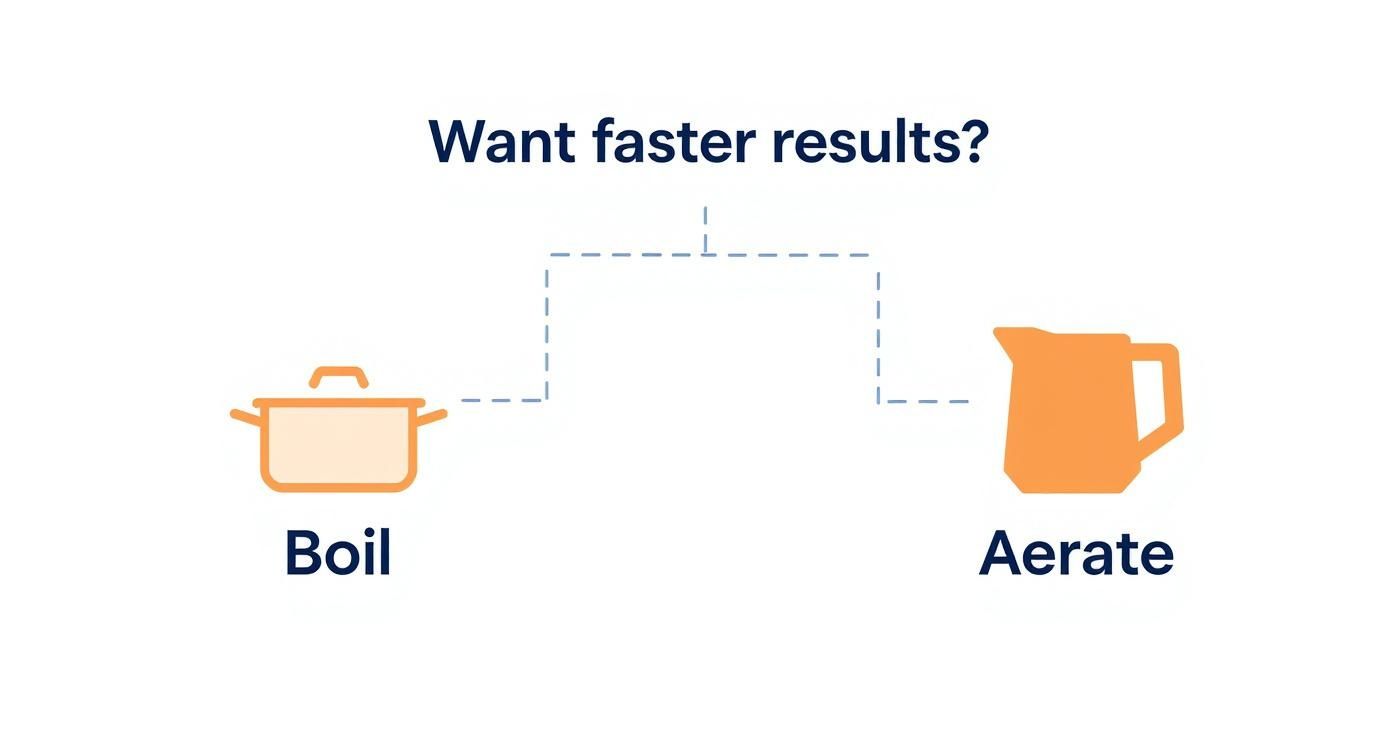
As you can see, even the simplest household methods involve a trade-off. It’s why so many people prefer a modern filtration system for everyday convenience.
Choosing the Right Filter for Your Home
Carbon filters aren't a one-size-fits-all product. They come in all shapes and sizes to suit different homes and budgets, so everyone can have access to pure, clean water.
- Water Filter Jugs: Affordable, portable, and perfect for renters or smaller households. Their activated carbon cartridges do a great job of reducing chlorine and improving taste.
- Tap-Mounted Filters: These handy devices attach right onto your kitchen tap, giving you filtered water with the simple flip of a switch.
- Under-Sink Systems: For a more seamless solution, an under-sink filter connects directly to your water line, providing a dedicated tap for purified water while keeping your benchtops clear.
- Whole-House Systems: This is the ultimate upgrade, treating every drop of water that enters your home. It ensures every tap—from the kitchen to the shower—delivers chlorine-free water.
At the end of the day, understanding why filtered water is better than boiled water comes down to efficiency, reliability, and peace of mind. Filtration gives you a consistent, hassle-free way to improve your water quality, day in and day out.
How to Check Your Water and Confirm Its Safety
Before you can pick the right fix for your tap water, you first need to know exactly what you’re dealing with. The most important step is figuring out whether your water contains free chlorine or its tougher cousin, chloramine.
Luckily, you don't have to guess.
The most straightforward method is to simply check with your local water authority. Most water suppliers across Australia publish annual water quality reports right on their websites. These reports are a goldmine of information, detailing everything from water sources to the exact disinfectants used. It’s the definitive answer, straight from the source.
Simple At-Home Water Testing
If you’d rather get a hands-on answer, at-home test strips are a cheap and easy way to go. You can grab these kits from most hardware or pool supply shops. Just dip a strip into a sample of your tap water, and the colour change will tell you what’s going on.
This simple test gives you an instant snapshot of both free and total chlorine. Here’s how to read the results:
- If the free chlorine and total chlorine readings are the same, your water is treated with free chlorine.
- If the total chlorine reading is higher than the free chlorine, that difference is chloramine.
For a deeper dive into how these levels are measured and what they mean, this comprehensive guide to pool chlorine levels offers some great insights into safe ranges and testing methods, which share similar principles.
A Critical Distinction: Boiling water to get rid of chlorine is all about improving the taste and smell. It is absolutely not a substitute for safety during an official health warning. If your council issues a 'boil water' alert, you must boil your water to kill dangerous bacteria, no matter what its chlorine content is.
When Boiling Is Essential for Safety
It's crucial to understand the two very different reasons for boiling water. One is a personal choice for a better brew; the other is a non-negotiable step to protect your health.
- For Taste: A good, long boil can help stubborn chlorine gas escape your water, making it taste cleaner.
- For Safety: A rapid, rolling boil for at least one full minute is the official advice to kill off nasty microorganisms like Giardia and Cryptosporidium during an emergency alert.
Knowing what’s in your water gives you the power to make the right call—whether that’s grabbing a quality filter for better-tasting water every day, or boiling for safety when it really counts.
Common Questions About Removing Chlorine
When you're trying to get better-tasting water straight from your tap, a few questions always come up. Here are the simple, no-nonsense answers to help you understand what works, what doesn’t, and why.
Does Leaving Water to Stand Remove Chlorine?
It sure does, but only for free chlorine. If you leave a jug of water uncovered on your benchtop or in the fridge, the chlorine gas will naturally dissipate into the air over time. This process, known as aeration, usually takes about 24 hours to get the job done.
Here’s the catch: this trick is completely useless against chloramine. Chloramine is a much more stable compound deliberately designed to stay in the water longer, so it won’t simply evaporate on its own.
Will a Standard Water Jug Filter Work?
For the most part, yes. Your typical water filter jug, like a standard Brita, uses activated carbon. This material is fantastic at grabbing free chlorine particles, which is why you'll notice a rapid improvement in the taste and smell of your water with very little effort.
Once again, though, chloramine is the tricky one. To properly tackle it, you need a filter that contains catalytic carbon, a more advanced material specifically engineered to break the strong chemical bond in chloramine.
The key takeaway is that simple, low-cost methods are great for free chlorine but fall short when tackling the more persistent chloramine used by many Australian water authorities.
Is Drinking Chlorinated Water Harmful?
Not at all. The levels of chlorine and chloramine in Australian public water systems are tightly regulated by the Australian Drinking Water Guidelines and are considered perfectly safe to drink. The main reason people want to remove these disinfectants is simply to get rid of that distinct chemical taste and smell.
Does Boiling Concentrate Other Contaminants?
Yes, and it’s an important side effect to be aware of. While boiling forces volatile compounds like chlorine to escape, it also causes pure water to evaporate as steam. This can slightly increase the concentration of any non-volatile contaminants left behind, such as heavy metals, nitrates, or minerals.
For a reliable, on-demand solution that removes both chlorine and chloramine without the hassle or guesswork, explore the advanced filtration systems from Awesome Water®. Discover our range of water purifiers and coolers today!