

When you use a charcoal filter, your water is cleaned through a fascinating process called adsorption. Essentially, the filter acts like a powerful magnet, pulling impurities out of the water and trapping them, which dramatically improves the taste, smell, and overall quality of your drinking water.
How a Charcoal Filter for Water Actually Works
Ever wondered how a simple piece of charcoal can make your tap water taste so crisp and clean? The secret isn't magic; it's a clever bit of science. It’s much more than just a physical barrier—it's a highly targeted purification method that zeroes in on the stuff you don't want in your glass.
The star of the show is activated charcoal. This isn't the same stuff you'd find in a fireplace. It's charcoal that has been treated to become incredibly porous. Picture a tiny sponge packed with millions of microscopic nooks and crannies. This massive internal surface area is where all the action happens.
The Power of Adsorption
As water flows through the filter, a process known as adsorption kicks in. Think of it like static cling on a tiny scale. The surface of the charcoal has a slight chemical charge that attracts and holds onto certain contaminants, effectively pulling them out of the water as it passes by.
It’s important not to mix this up with absorption, which is when a substance soaks up liquid like a paper towel. Adsorption is different; it’s a surface-level event where impurities literally stick to the charcoal.
At its heart, adsorption is a selective process. It's brilliant at capturing the larger organic molecules that create unpleasant tastes and odours, like chlorine and some pesticides, while letting the smaller, beneficial minerals flow right through.
This selective nature is exactly why activated charcoal filters are a staple for water purification here in Australia. The method binds impurities to the charcoal's surface, allowing it to remove a whole range of things like volatile organic compounds while keeping good minerals like fluoride in the water.
This infographic breaks down how a charcoal filter for water cleverly separates unwanted chemicals from the essential minerals your body needs.
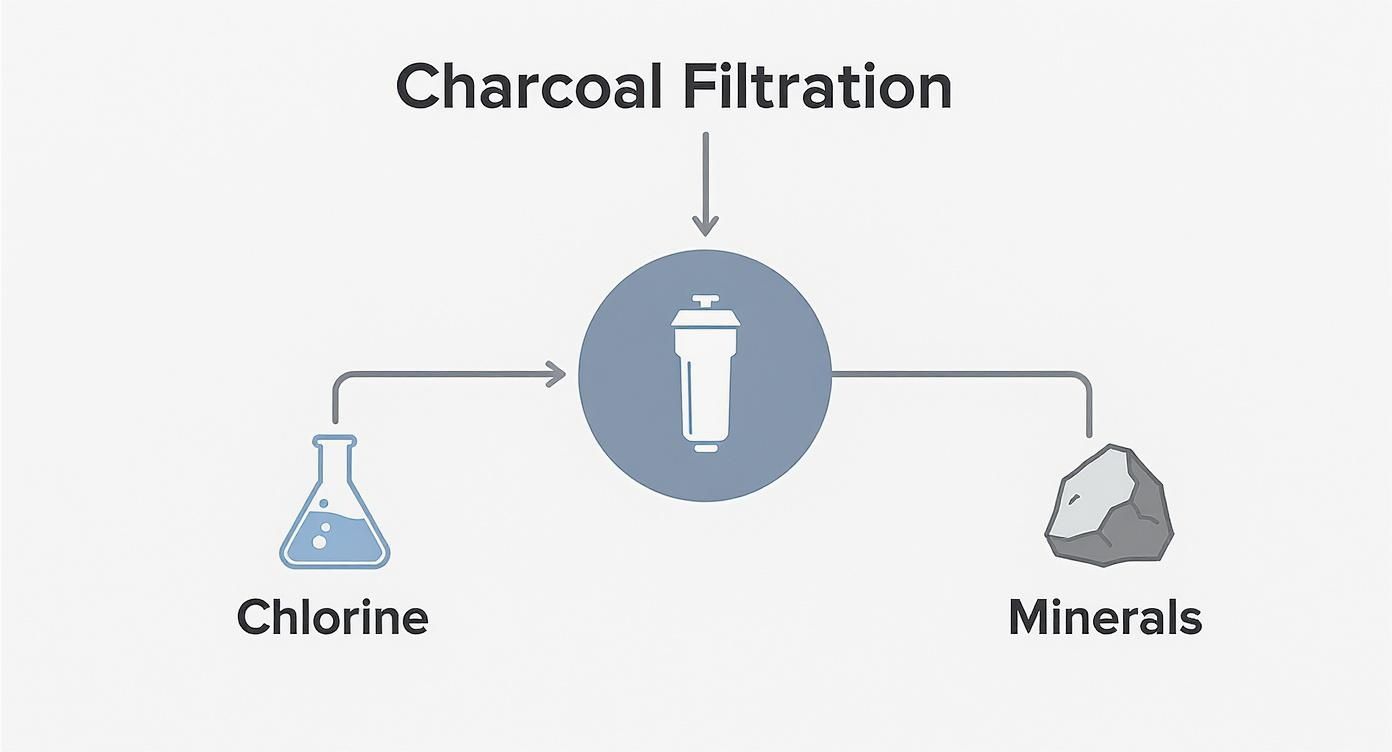
As the visual makes clear, contaminants like chlorine get trapped, but the healthy minerals pass straight through. The result? A much better-tasting and healthier glass of water.
What Stays and What Goes
This targeted approach gives you the best of both worlds: cleaner, safer water that hasn't been stripped of its healthy compounds. To give you a clearer picture, here’s a quick rundown of what gets filtered out and what’s intentionally left behind.
What Activated Charcoal Removes vs What It Leaves Behind
This table gives a quick look at the common impurities charcoal filters target and the healthy minerals that remain in your water.
| Contaminant or Mineral | Action | Examples |
|---|---|---|
| Chlorine | Removed | The chemical often used for disinfection in tap water that causes a distinct "pool water" taste and smell. |
| Pesticides & Herbicides | Removed | Certain common agricultural chemicals that can find their way into water sources. |
| Volatile Organic Compounds (VOCs) | Removed | Industrial solvents and by-products like benzene and toluene. |
| Bad Tastes & Odours | Removed | Organic compounds that create earthy, musty, or unpleasant smells and flavours. |
| Healthy Minerals | Left Behind | Essential minerals like calcium, magnesium, and potassium, which are beneficial for health. |
| Fluoride | Left Behind | Often added to municipal water for dental health benefits. |
Ultimately, the goal is to produce water that not only tastes and smells pure but also keeps its natural, beneficial mineral content. If you're keen to learn more, check out our detailed guide on the benefits of a carbon water filter.
Why More Australians Are Choosing Filtered Water
Something is changing in kitchens and offices right across Australia. More and more, people are looking beyond the standard tap and actively seeking out better water purification. This isn't just some passing trend; it's a deliberate choice that comes from being more aware of what’s actually flowing through our municipal water supplies.
While Australian tap water is generally safe, it's often treated with chlorine and can pick up sediment and other things that mess with the taste and smell. As we all become more health-conscious, it's only natural to want more control over the quality of water we drink every day. This simple desire for pure, great-tasting water and peace of mind is what’s driving the big switch.
A Growing Market Reflects a Healthier Focus
This shift towards cleaner hydration is plain to see in the market's growth. It’s clear that getting a high-quality charcoal filter for water is becoming a real priority for Aussie households.
The numbers really back this up. The Australian water purifier market was worth about USD 193.23 million in 2023 and is expected to hit around USD 260.76 million by 2029. That steady growth, at about 5.3% each year, is fuelled by people like you looking for an effective way to get rid of things like chlorine while keeping the good minerals in.
But this isn't just about the numbers. It highlights a much bigger cultural shift. Families aren't just buying a product; they're making an investment in their long-term health. It’s a proactive step towards a healthier lifestyle, starting with the most essential thing we consume—water.
Beyond Health: The Eco-Friendly Choice
Another huge driver is the growing push for more sustainable living. The environmental damage caused by single-use plastic bottles is a major worry for many of us. Filtering your own tap water is a brilliantly simple way to slash your plastic waste and shrink your carbon footprint.
By filtering water at home, a family can stop hundreds, if not thousands, of plastic bottles from ending up in landfill or our precious oceans each year. It’s a small change with a massive collective impact.
This decision fits perfectly with the wider move towards being more eco-conscious. Instead of feeding the cycle of plastic production and waste, households are choosing a reusable, responsible alternative. It’s a win for your health and a massive win for the planet. For a closer look, check out our article on the top 10 reasons to filter your tap water.
Finding The Right Charcoal Filter System For Your Home
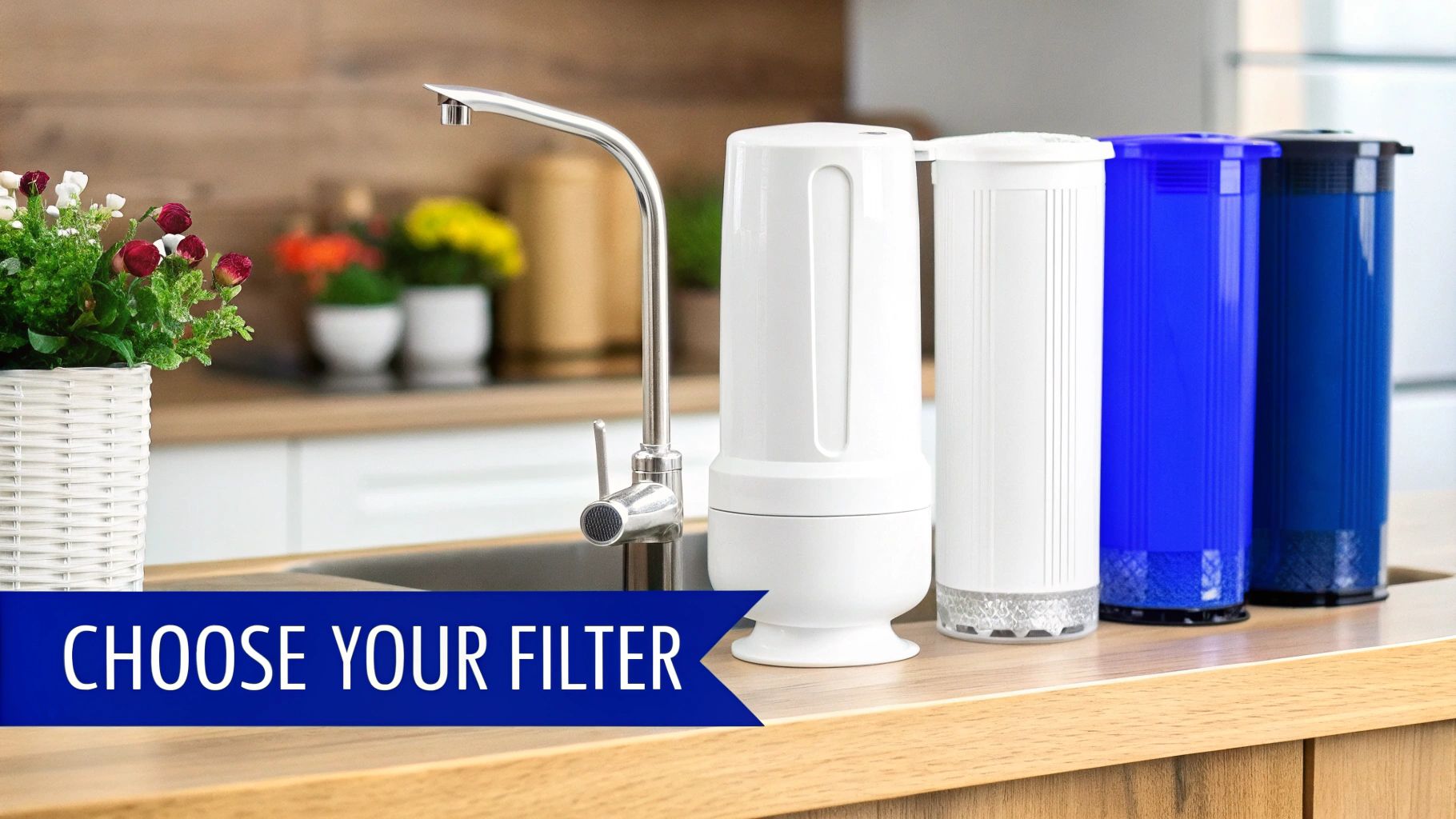
With so many options on the market, choosing the right charcoal filter for your water can feel a bit overwhelming. The secret is to find a system that fits your life—think about your household size, whether you rent or own, and what your budget looks like.
Let’s walk through the most common types you’ll find in Australia to help you pinpoint the perfect match.
Countertop Pitchers and Dispensers
The simplest way to get started with filtered water is with a classic pitcher or a larger benchtop dispenser. These are incredibly popular, and for good reason: they’re affordable and dead simple to use. Just fill them up from the tap, and the water slowly trickles through a charcoal filter.
They are an excellent choice for:
- Individuals or small households that don't go through massive amounts of water.
- Renters who can't make any permanent changes to their plumbing.
- Anyone looking for an affordable, no-installation solution.
The only real downside is their smaller capacity and the fact you'll need to refill them often. The filter cartridges also need replacing every couple of months to keep the water tasting fresh.
Faucet-Mounted Filters
A step up in convenience, faucet-mounted filters connect right onto your kitchen tap. This gives you instant filtered water with the flick of a switch, so you can easily choose between filtered water for drinking and unfiltered water for things like washing dishes.
Installation is usually a breeze and requires no special plumbing skills, making them another fantastic option for renters. They filter water on demand, which is perfect for filling up a water bottle or a pot for cooking in a hurry. Just keep in mind that they can slow down your water flow a little and might not fit on every tap design.
Under-Sink Systems
For a more permanent, high-performance solution, under-sink systems are tough to beat. These units are tucked away neatly under the sink, connected directly to your cold water line. They deliver pure, filtered water through a dedicated, smaller tap installed right on your sink.
An under-sink charcoal filter for water offers a seamless experience, delivering a high volume of purified water without cluttering your countertop. It’s the "set and forget" choice for busy family homes.
These systems are ideal for homeowners and larger families who use a lot of filtered water for both drinking and cooking. While the initial cost is higher and the installation is more involved, the filters last much longer—often up to a year—making them more cost-effective in the long run.
Whole-House Filtration Systems
This is the ultimate, all-in-one option. A whole-house system is installed right where the main water line enters your home, ensuring that every single tap—from your kitchen sink to your showers and laundry—delivers clean, filtered water. It’s the best way to protect your plumbing from sediment and ensure purified water flows throughout your entire property.
This type of system is a significant investment and definitely requires a professional plumber for installation. It’s best suited for homeowners who are serious about their water quality and want a complete, worry-free solution for the whole family.
To help you visualise how these options stack up, here's a quick comparison.
Comparing Popular Charcoal Filter Systems
This side-by-side look at common filter types should help you decide which is the best match for your home or office.
| System Type | Ideal For | Installation Effort | Typical Price Range |
|---|---|---|---|
| Pitchers & Dispensers | Individuals, small households, and renters. | None. Just unbox and fill. | $30 - $100 |
| Faucet-Mounted Filters | Renters and small families wanting on-demand filtering. | Low. Simple screw-on attachment. | $50 - $150 |
| Under-Sink Systems | Homeowners and larger families needing high volume. | Medium. Requires basic plumbing skills or a pro. | $250 - $700+ |
| Whole-House Systems | Homeowners wanting comprehensive filtration for every tap. | High. Requires a professional plumber. | $800 - $3,000+ |
Ultimately, the right system is the one that aligns with your daily water use, your home setup, and your budget.
For a deeper dive into making the right choice, explore our guide on choosing the right water filtration system for your home or business.
Once you've picked the perfect system, getting the setup right is key. For a great walkthrough, check out this guide on how to install a water filter to make sure it works perfectly from day one.
Keeping Your Water Filter Working at Its Best
A charcoal water filter is only as good as its last cartridge change. Like any hardworking tool in your home, it needs a bit of regular attention to perform at its peak and keep delivering that clean, safe water you expect. Sticking to the recommended replacement schedule isn't just a suggestion—it's essential for ensuring your water stays pure.
Think of your filter as a highly efficient sponge for contaminants. Over time, it gets completely saturated with all the gunk it has pulled from your water. Once it's full, it simply can't adsorb anything else. Worse yet, a clogged and overloaded filter can even start to release those trapped contaminants back into your water, undoing all its good work.
Signs It Is Time for a Change
Don't worry, your system will usually give you a few clues that its filter is nearing the end of the road. Paying attention to these signals is the easiest way to stay on top of maintenance and keep your water quality high.
Keep an eye (and your tastebuds) out for these common indicators:
- A Drop in Water Pressure: If your filter tap starts to slow to a trickle, it’s a classic sign the cartridge is clogged with sediment and other particles.
- Changes in Taste or Smell: The most obvious clue is when that funky chlorine taste or musty odour makes a comeback. It means the charcoal has lost its power to adsorb those compounds.
- The Manufacturer's Guideline: Most filters come with a recommended replacement timeframe (e.g., every 6-12 months) or a total litre capacity. Always use this as your primary guide.
Neglecting a filter change means you're no longer getting the clean, purified water you invested in. Consistent maintenance is the key to unlocking the long-term health and taste benefits of your filtration system.
How to Change Your Filter Cartridge
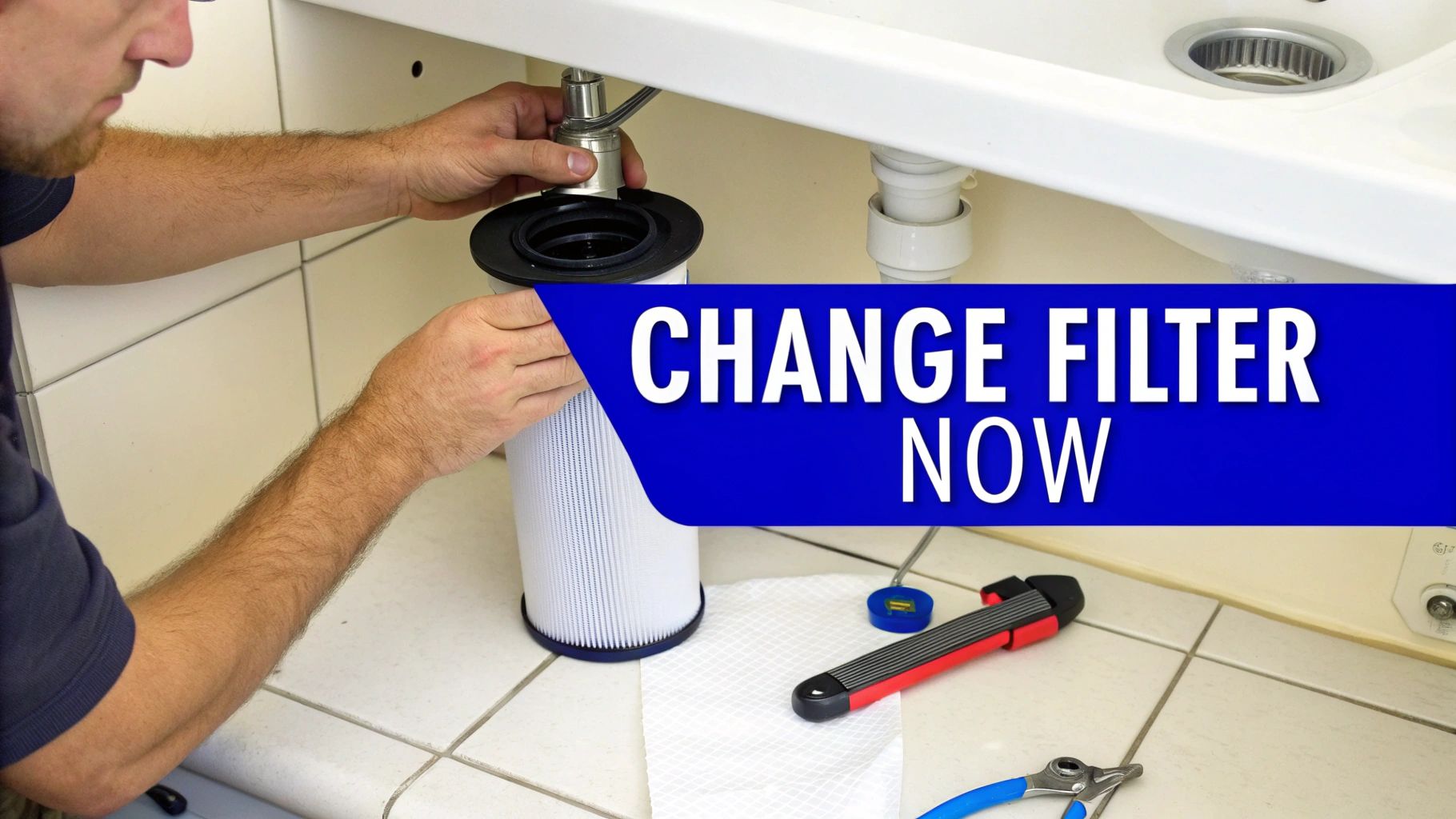
Changing a filter cartridge might sound a bit technical, but for most under-sink or countertop systems, it's a straightforward job you can easily do yourself. While the exact steps will vary a bit depending on your model, the general process is pretty simple.
Here’s a basic step-by-step guide:
- Turn Off the Water Supply: Find the small shut-off valve on the cold water line that connects to your filter and turn it off completely.
- Release the Pressure: Open the filter tap to let any remaining water drain out. This gets rid of the pressure inside the system.
- Unscrew the Housing: Use the special wrench that came with your filter system to carefully unscrew the canister that holds the cartridge.
- Swap the Cartridges: Take out the old filter. Give the inside of the housing a quick clean with a little soap and water, then pop the new cartridge in.
- Reassemble and Check for Leaks: Screw the housing back on until it’s snug, but don’t go overboard with tightening it. Slowly turn the water supply back on and watch carefully for any drips.
For a more detailed walkthrough, you can find helpful tips on our guide to filter cleaning and charcoal removal. To keep your system running smoothly, grabbing some replacement filter 6-packs is a great way to stay stocked up and prepared.
Here in Australia, top companies often recommend replacing filters every 12 months to maintain peak performance. This routine is crucial, because a saturated charcoal filter not only stops working but can potentially re-contaminate your water.
How Charcoal Filters Serve Homes and Businesses
The humble activated charcoal filter has become a staple in Aussie kitchens, but its value stretches far beyond the family home. This simple yet incredibly effective technology is a trusted workhorse in a massive range of settings, proving its versatility whether you’re serving a family of four or an office of forty. From new suburban estates to bustling city high-rises, the need for clean, safe, and great-tasting water is universal.
In the residential world, the ongoing boom in new housing construction across Australia has directly fuelled the demand for dependable water purification. New homeowners are increasingly asking for comprehensive solutions right from the start, viewing pure water not as an afterthought, but as a fundamental part of a modern, healthy home. For those wanting the gold standard, a whole-house water filtration system ensures every single tap delivers purified water.
The decision to install a high-quality water filter is no longer just about improving taste. It reflects a fundamental desire for control over water quality, ensuring peace of mind for families in every glass they drink.
This isn't just a feeling; the numbers back it up. The Australian water purifier market, which includes activated charcoal filters for water, is on a steady upward climb. It's projected to expand at a compound annual growth rate of about 6.8% between 2025 and 2034. You can dig into more data on this growth over at Expert Market Research AU.
Essential for Australian Businesses
The commercial world places just as much trust in charcoal filtration, if not more. Here, the stakes are often higher, with employee wellbeing, customer satisfaction, and strict health regulations all on the line. For countless businesses, a reliable supply of purified water is simply non-negotiable.
Just think about the modern workplace. Office water coolers are more than just a place for a chat—they’re vital for keeping staff hydrated, healthy, and focused. Businesses depend on robust filtration to deliver fresh, appealing water that actually encourages people to drink more throughout the day.
This need is even more pronounced in other industries:
- Cafes and Restaurants: Their reputation hinges on quality. Filtered water is crucial to ensure the taste of their coffee, tea, and food is never ruined by the chemical flavour of chlorine.
- Healthcare Facilities: Clinics, dental practices, and hospitals must meet incredibly strict health and safety standards, making high-performance water filtration an absolute must-have.
- Fitness Centres and Gyms: They provide filtered water to keep clients safely hydrated during workouts, reinforcing their core promise of health and wellness.
At the end of the day, the principle is the same. Whether it's for your family or your team, activated charcoal filtration provides a dependable, scalable, and cost-effective way to deliver clean, fantastic-tasting water right where you need it most.
Your Path to Cleaner and Healthier Water
So, let's pull it all together. By now, you've got a solid grasp of how adsorption works, you've seen why so many Aussies are making the switch, and you know what to look for when choosing and maintaining the right system. Bringing a charcoal filter for water into your home isn't just another appliance upgrade; it’s a genuine investment in your family's health and our planet.
When you make this choice, you’re doing so much more than just improving the taste of your water. You're taking a real, practical step towards reducing your exposure to common nasties like chlorine, actively cutting down on single-use plastic bottles, and making sure your family gets pure, delicious hydration every single day.
The peace of mind you get from knowing every glass of water from your tap is clean, safe, and healthy is something you can't put a price on. It’s a small change that brings big, lasting benefits.
The next step is yours to take. Think about your household’s daily water needs and have a look at the options that fit your lifestyle. You’ll be surprised just how easy it is to enjoy that crisp, clean taste of properly filtered water. Pure, healthy hydration is easily within reach, giving you and your family a better way to drink.
Of course. Here is the rewritten section, crafted to sound like an experienced human expert and match the provided examples.
Your Top Questions About Charcoal Water Filters, Answered
Even with all the benefits laid out, you might still have a few lingering questions before you're ready to make the switch. That's completely normal.
Let's walk through some of the most common queries we get from Aussie households. We want you to feel totally confident that you're making the right choice for your family.
Do Charcoal Filters Remove Fluoride?
This is a big one, and a really important question for many families. The short answer is no, your standard activated charcoal filter won't remove fluoride.
Here's why: the magic of activated carbon is in its ability to trap large organic compounds – the stuff that causes funky tastes and smells, like chlorine. But minerals with a weak ionic charge, like fluoride, calcium, and magnesium, are too small to get caught in the filter's pores. They simply pass straight through with the water. For many people, this is actually a plus, as it means all those beneficial minerals stay right where you want them – in your glass.
How Often Should I Change My Filter?
Keeping your filter fresh is non-negotiable for clean water. While the exact timing will depend on your specific system and how much water your household churns through, a good rule of thumb is to replace the cartridge every 6 to 12 months.
Your filter's manufacturer guide is always the best source of truth, but you can also trust your senses. Keep an eye out for these tell-tale signs that it's time for a change:
- Your water flow from the tap starts to feel sluggish or weak.
- That distinct chlorine taste or smell starts creeping back in.
- You've hit the filter's rated capacity (e.g., it's processed its limit of 2,000 litres).
A filter's job is to trap contaminants. Failing to replace it on time means it can no longer do its job effectively, and you risk drinking the very impurities you wanted to remove.
Are Charcoal Water Filters an Eco-Friendly Choice?
Absolutely, and it's one of the best reasons to get a filter system. When you step back and compare it to the endless cycle of buying single-use plastic bottles, the positive impact is massive.
Filtering your own tap water dramatically slashes your household's plastic waste. It also helps cut down on the huge carbon footprint that comes from manufacturing and transporting all that bottled water. While the filter cartridges themselves need replacing, their environmental footprint is tiny compared to the thousands of plastic bottles a single family can go through in a year.
Ready to enjoy pure, great-tasting water right from your tap? Explore the full range of filtration solutions at Awesome Water® and find the perfect system for your home or office.