

Thinking about installing a whole house water filter? It’s a fantastic upgrade, but the first question on everyone's mind is always: "What's it going to cost?"
In Australia, the average whole house water filtration system cost, including professional installation, typically lands somewhere between $1,000 and $4,000. Of course, a basic setup will sit at the lower end of that range, while more advanced, multi-stage systems with all the bells and whistles—like UV purification—will naturally push the price higher.
Understanding the True Investment in Clean Water
Putting in a whole house water filtration system is a serious upgrade for your home. It’s a commitment to ensuring every single tap—from the kitchen to the bathroom shower—delivers cleaner, safer water. But what does that investment really look like? The initial price you see on the box is just one piece of the puzzle.
To build a realistic budget, you need to look at the complete picture. The Australian water purifier market has been growing fast, now valued at over AUD 316.28 million. This tells us that more and more homeowners are waking up to the importance of water quality. The system itself usually costs between $1,000 and $4,000, with simple models starting around the $1,000 mark and complex ones easily topping $3,000 before you even factor in getting it installed.
Cost Breakdown at a Glance
So you can forecast your expenses properly, it helps to break down the total cost into a few key areas. Each one plays a big part in the final price you'll pay.
Here’s a quick look at the main costs you'll need to account for when planning for a whole house water filtration system.
| Expense Category | Typical Price Range (AUD) |
|---|---|
| System Purchase Price | $1,000 – $4,000+ |
| Professional Installation | $300 – $800+ |
| Ongoing Maintenance | $150 – $500+ per year |
This table gives you a ballpark idea, but remember that these figures can shift based on the complexity of the system and your specific home setup.
A whole house water filter isn't just a product; it's an infrastructure upgrade for your home's health. Viewing it this way helps justify the upfront cost by focusing on the long-term value it delivers every day.
To put this investment into perspective, it's helpful to compare it with other common home improvements. For instance, knowing Australia's average kitchen renovation costs can provide a useful benchmark for a project that similarly enhances daily life.
For more guidance on what to look for, our guide on choosing a https://www.awesomewater.com/blogs/awesome-water/whole-house-water-filtration-system can help you navigate the options.
Breaking Down the Price of Filtration Systems
The biggest slice of your initial investment will be the filtration system itself, and this is where the whole house water filtration system cost can vary dramatically. Think of it like buying a car; a basic model gets you from A to B, but a premium model offers advanced safety features, superior performance, and more comfort. Similarly, different filter technologies are engineered to tackle specific water quality issues, and their price reflects their complexity and effectiveness.
Not all water problems are the same. Your home might just need to remove some sediment and chlorine taste, while your neighbour might be dealing with hard water scale and bacterial concerns. Getting your head around the technology behind each system is the key to matching your needs with your budget.
This infographic breaks down the core components influencing your total upfront cost.
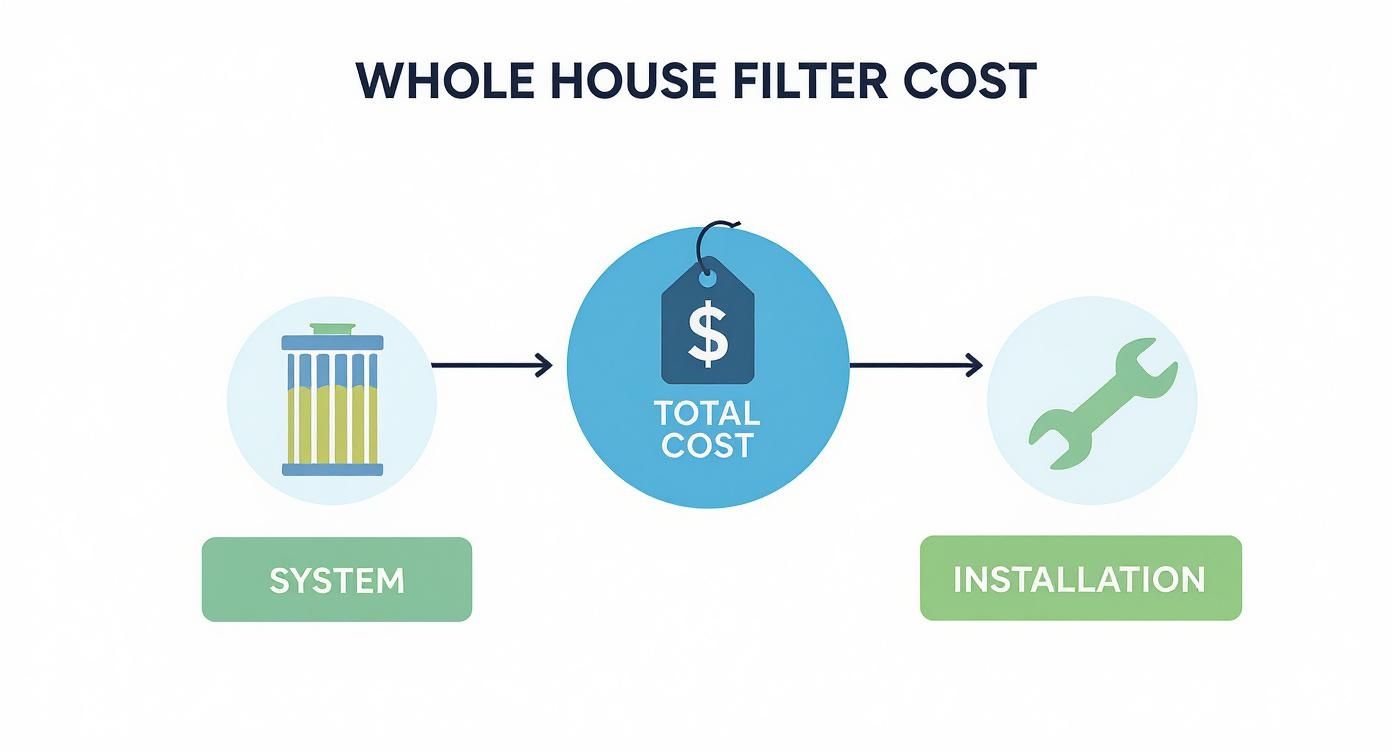
As you can see, the total cost is a combination of the system itself and the labour required for a proper setup, both of which are influenced by the technology you choose.
Entry-Level Solutions: Sediment and Carbon Filters
At the most accessible end of the price spectrum are sediment and basic carbon filters. These are the workhorses of water filtration, targeting the most common and noticeable issues you’re likely to face.
- Sediment Filters: Imagine a simple gatekeeper at your water's main entry point. A sediment filter acts just like this, trapping physical particles like dirt, rust, sand, and silt. While simple, it plays a vital role in protecting your plumbing and appliances from abrasive debris. This is often the first stage in any multi-part system.
- Activated Carbon Filters: These filters are champions at improving the taste and smell of your water. They use activated carbon to adsorb chemicals like chlorine, pesticides, and volatile organic compounds (VOCs). If you're on town water and just want it to taste and smell better, this is where you'll see a huge difference.
A basic one or two-stage system combining these filters is a cost-effective starting point, typically ranging from $800 to $1,500 for the unit itself. It’s an excellent choice for households on town water who simply want to improve general water quality without breaking the bank.
Mid-Range Systems: Multi-Stage and Specialised Filters
As your filtration needs become more complex, the technology—and the cost—steps up. Multi-stage systems are where you get more comprehensive purification by combining several filter types into one streamlined unit.
Think of a multi-stage system as a dedicated team of specialists. The sediment filter removes the large debris, the carbon filter handles chemicals, and a third stage might target specific contaminants like heavy metals or iron, ensuring nothing unwanted gets through.
These systems offer a fantastic, balanced approach, delivering superior protection without the premium price tag of the most advanced options. You can often find a comprehensive whole house filtration bundle that combines these stages effectively. Expect the equipment cost for a quality three-stage system to fall somewhere between $1,500 and $2,500.
Premium Protection: Reverse Osmosis and UV Purifiers
For the highest level of water purity, you’ll be looking at advanced technologies like Reverse Osmosis (RO) and Ultraviolet (UV) purification. These systems represent the top tier in both performance and price, tackling the contaminants that others can’t.
- Reverse Osmosis (RO) Systems: An RO system is like a high-security checkpoint for your water. It uses a semipermeable membrane to force water through at high pressure, removing up to 99% of dissolved solids, including fluoride, heavy metals, salts, and nitrates. Due to their complexity, whole house RO systems are a significant investment, often starting from $3,000 and going much higher.
- UV Purifiers: If your water source (like a bore or rainwater tank) is at risk of microbial contamination, a UV purifier is non-negotiable. It uses ultraviolet light to zap bacteria, viruses, and cysts, making the water biologically safe without adding any chemicals. A UV lamp is typically added to a multi-stage system, adding $500 to $1,000 or more to the total equipment cost.
At the end of the day, choosing the right technology is all about understanding what’s in your water. A simple, affordable system might be all you need, but for specific health concerns or poor water sources, investing in premium protection provides invaluable peace of mind.
Factoring in Professional Installation Costs
Once you've picked out the perfect filtration system, the next major step is getting it installed correctly. It might be tempting to treat a simpler, single-stage unit as a DIY weekend project, but a whole house water filter is a different beast altogether. This is a significant modification to your home's plumbing.
Think of professional installation less as a convenience and more as an investment. It’s your best bet for making sure the system works safely and efficiently. More importantly, it helps you avoid the nightmare of leaks that could lead to thousands in water damage down the track.
The price tag for installation isn't a simple flat fee. It's a variable part of the total whole house water filtration system cost, and it's heavily shaped by how complex the job is and the unique layout of your home’s plumbing. A licensed plumber doesn't just connect a few pipes; they’re trained to find the best location, ensure proper water flow, and make sure everything is up to local building codes.
What Does a Standard Installation Include?
A typical installation quote from a qualified plumber in Australia will cover all the essential tasks needed to get your system up and running smoothly.
This usually involves:
- Site Assessment: The plumber will scout out the best spot to install the unit, which is almost always near your main water shut-off valve where water first enters your home.
- Cutting the Main Line: They'll shut off your water supply and carefully cut into the main water line to integrate the new filtration system.
- System Mounting and Connection: Your filter housing will be securely mounted to a wall, and then new pipes will be connected to the system's inlet and outlet ports.
- Testing for Leaks: After everything is connected, the plumber will turn the water back on and meticulously check every connection for drips to ensure a perfect, watertight seal.
For a straightforward job like this, you can expect labour costs to be on the lower end of the scale. But let's be honest—not every home has a plumbing setup that’s perfectly ready for a filter.
"A flawless installation is the bridge between a high-quality filter and truly clean water. Cutting corners here can undermine the entire investment, leading to poor performance or, worse, significant property damage."
When Installation Costs More
Several common situations can make an installation more complicated, requiring extra time, materials, and expertise from your plumber. These are the factors that can definitely push your installation quote higher.
One of the most frequent hurdles is a lack of space near the main water line. If it’s too cramped, the plumber might need to reroute pipes to make the unit fit. If you're installing a system with a UV purifier or an electronic control valve, you'll need power nearby. That means hiring an electrician to install a new power point, adding another layer of cost. Older homes often have older pipes, and your plumber might recommend upgrading a section to ensure it can handle the new connections securely.
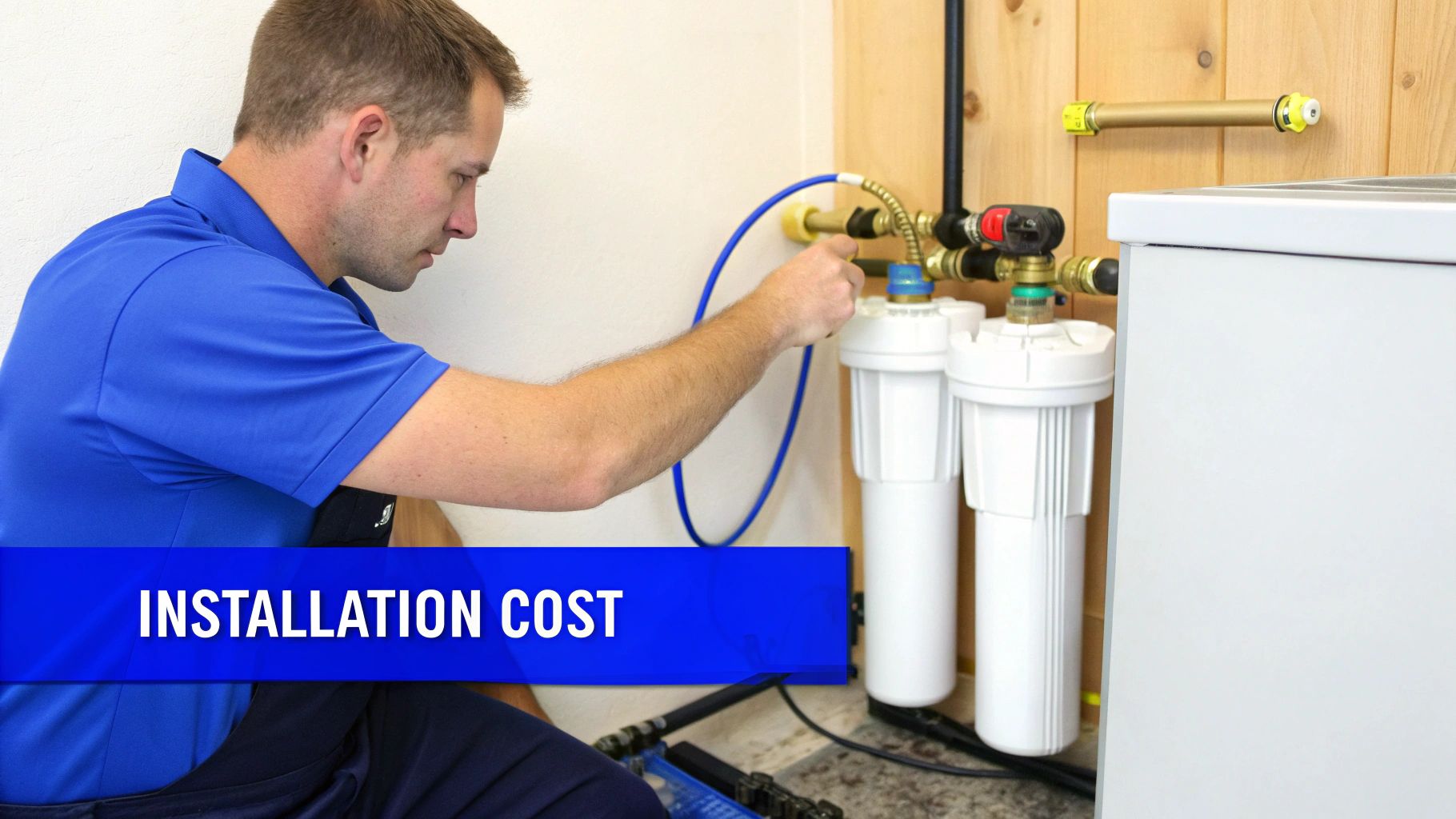
The national average for a complete system, installation included, often lands around $3,202. The plumbing labour itself typically ranges from $300 to $900, but other services can quickly add up.
For instance, comprehensive water testing might be $100–$300, and necessary plumbing upgrades could run you $150–$850. If you need electrical work, that can add another $156–$550 to the final bill.
Why Getting Multiple Quotes is Smart
To make sure you're getting a fair price and top-notch work, it’s always a good idea to get at least three detailed quotes from licensed and insured plumbers. Don't just glance at the final number—look at what each quote actually includes. A slightly higher price might cover better-quality fittings or a more thorough check after installation.
For homeowners in major cities, understanding the local specifics is key. Our guide to water filter installation in Sydney, for example, offers some valuable insights. Doing your homework helps you budget accurately and avoid any nasty surprises, ensuring your path to cleaner water is a smooth one.
Understanding Long-Term Maintenance Expenses
The initial purchase and installation of your whole house water filter are big steps, but the story doesn’t end there. To keep your system running at its best and delivering pure, safe water day after day, you need to think about ongoing maintenance.
Think of it like owning a car. After you drive it off the lot, you still have regular costs for fuel, oil changes, and new tyres to keep it performing reliably. Your water filtration system is no different—it needs regular attention to do its job. These recurring expenses are a crucial part of the total whole house water filtration system cost, and understanding them upfront helps you choose a system that fits your long-term budget without any nasty surprises.
The main ongoing cost is usually filter replacement, but things like UV lamps or water softener salt can also add to your annual expenses.
The Lifespan of a Filter Cartridge
The most common maintenance task you'll handle is replacing the filter cartridges. These are the workhorses of your system, capturing sediment, chlorine, and other contaminants. Over time, they get clogged up and become less effective, which is why swapping them out on schedule is non-negotiable for maintaining water quality.
How often you need to replace them boils down to two main things: your household's water usage and the quality of your incoming water. A family of five will naturally use up filters faster than a single person, and water heavy with sediment will clog cartridges much more quickly.
Here’s a general guide:
- Sediment Pre-filters: These are the first line of defence and usually need replacing every 3 to 6 months. They’re relatively inexpensive, typically costing $20 to $50 per cartridge.
- Carbon Block Filters: These filters tackle chlorine and chemicals. They generally last longer, with a typical lifespan of 6 to 12 months. You can expect to pay between $50 and $150 for a quality replacement.
- Reverse Osmosis (RO) Membranes: As the most advanced part of an RO system, these membranes are also the most durable. They usually only need replacement every 2 to 4 years, but they are a more significant expense, often costing $150 to $300 or more.
Keeping on top of these changes is vital. For expert advice, you can learn more about how to maintain a water filter to prolong its life in our detailed guide.
Factoring in Other Running Costs
Beyond standard filter cartridges, some systems have other components that add to the long-term operational costs. These are often tied to specialised systems designed to tackle specific water issues like bacteria or hardness.
A UV purification system, for example, is a fantastic chemical-free way to neutralise bacteria and viruses. The UV lamp inside the chamber has a finite lifespan of about 9,000 hours, which works out to roughly one year of continuous use. A replacement bulb can cost anywhere from $100 to $200 annually. The system also uses a small but constant amount of electricity to stay powered on.
A whole house water filtration system is an active appliance, not a passive one. Budgeting for its ongoing needs from day one ensures it remains an asset to your home’s health, not a neglected piece of hardware.
Water softeners, which are essential for homes with hard water, have their own kind of upkeep. These systems use salt to remove hardness minerals like calcium and magnesium. You'll need to regularly top up the brine tank with large bags of salt, which can set you back between $150 and $300 per year, depending on your water hardness and usage.
Annual Maintenance Cost Comparison by Filter Type
To give you a clearer picture of what to expect, let's compare the estimated annual running costs for different types of whole house systems in Australia. This breakdown helps show how the complexity of a system directly impacts its long-term cost of ownership.
| System Type | Estimated Annual Maintenance Cost (AUD) | Key Maintenance Task |
|---|---|---|
| Basic Sediment & Carbon System | $150 – $250 | Replacing sediment and carbon cartridges annually. |
| Multi-Stage System (3-Stage) | $200 – $400 | Multiple cartridge replacements on varied schedules. |
| System with UV Purifier | $300 – $500 | Cartridge changes plus annual UV lamp replacement. |
| System with Water Softener | $350 – $600+ | Cartridges, plus regular purchase of softener salt. |
As you can see, a simpler system might have a lower upfront price and cheaper upkeep, but it may not provide the level of purification your home needs. On the flip side, a more advanced setup offers superior protection but comes with higher recurring expenses. Balancing these factors is the key to making a smart, sustainable investment in your home’s water quality.
What Influences Your Final System Price
Ever heard of two neighbours with similar houses getting wildly different quotes for a whole house water filter? It’s a common story, and it’s not a mistake. The reality is, a whole heap of unique variables go into calculating the final whole house water filtration system cost. Getting your head around these factors is the key to understanding any quote you receive.
Think of it like getting your house painted. The final bill isn't just for the paint. It depends on the size of your house, the condition of the walls, and the type of finish you’re after. In the same way, a filtration system quote is a tailored figure that reflects your home’s specific needs.
Your Home and Water Usage Habits
Two of the biggest price drivers are the physical size of your home and how much water your household actually uses. A bigger home with more bathrooms and water-guzzling appliances needs a more powerful system to keep the pressure up.
- Home Size and Flow Rate: A system that works perfectly for a one-bedroom apartment just won't cut it in a four-bedroom family home. Larger homes need systems that can handle more litres per minute, so you don't get a frustrating drop in water pressure when someone flushes the loo while you're in the shower. Higher capacity systems, naturally, cost more.
- Water Consumption: The number of people living under your roof has a direct impact on water usage. A big family will chew through filter cartridges much faster than a couple, which means you might need a more robust system with longer-lasting filters to avoid constant maintenance.
Basically, these factors tell you what "engine size" you need for your filter. A bigger engine costs more upfront, but it’s essential if you need it to handle a heavier load.
The Source and Quality of Your Water
Where your water comes from plays a massive role in the type of filtration you'll need, and that directly influences the cost. Water from the town supply has completely different issues compared to water from a private bore or a rainwater tank.
Municipal or "town" water is already treated, so you're usually just dealing with chlorine, sediment, and maybe fluoride. But water from a private bore? That could be a whole different ball game, with contaminants like heavy metals, iron, or even nasty bacteria. Tackling these requires more specialised—and therefore more expensive—filtration tech, like iron removal filters or UV purifiers.
Your water source dictates the battlefield. Fighting chlorine in town water requires a standard soldier, but tackling bacteria from a bore requires a specialised unit with advanced equipment. The more complex the fight, the higher the cost.
Brand Reputation and System Warranty
Just like buying a new fridge or dishwasher, the brand you choose really matters. Established brands tend to invest more in R&D, use better quality materials, and offer solid customer support, which all gets factored into the price. A lesser-known brand might look like a bargain at first, but it could end up costing you more with a shorter lifespan or unreliable performance.
The warranty is a huge part of this. A longer, more comprehensive warranty is a great sign of the manufacturer's confidence in their product. Sure, a system with a three-year warranty might cost a bit more than one with a one-year warranty, but that extra peace of mind and protection for your investment is priceless.
Your Location in Australia
Finally, believe it or not, your postcode can affect the final price, mainly due to labour costs. What a plumber charges per hour can vary significantly between a major city like Sydney and a more regional town.
This geographical difference doesn’t just affect the initial installation quote; it also impacts any future call-out fees for servicing or repairs. It’s always a smart move to get a few quotes from local, licensed plumbers to get a realistic idea of the going rate in your area.
Once you understand these key drivers, you'll be able to read between the lines of any quote and feel confident you're investing in a system that’s the perfect fit for your home and your budget.
Making a Smart Investment in Your Water Quality
Choosing the right system is all about striking that perfect balance between performance and price. Once you have a clear picture of your water quality and what your household actually needs, you can confidently navigate the whole house water filtration system cost without getting upsold on features you'll never use. The goal here is to make a smart, informed decision that brings you value for years to come.
It all starts with a simple assessment. Before you even look at the high-end systems, figure out what contaminants you genuinely need to remove. For many, a basic sediment and carbon filter is more than enough to improve the taste and smell of town water, potentially saving you thousands compared to a complex setup designed for bore water.
Strategies for a Cost-Effective Purchase
To make sure your investment is a sound one, you need to look beyond the initial sticker price and think about long-term value. It often turns out that a slightly more expensive system with a rock-solid warranty and lower yearly maintenance costs is the more economical choice over its lifespan.
Here are a few practical tips to get the best bang for your buck:
- Always Get Multiple Quotes: Just like any major home improvement, you should get quotes from at least three licensed plumbers. This will give you a realistic idea of fair installation pricing in your area.
- Prioritise a Strong Warranty: A lengthy warranty is basically the manufacturer's vote of confidence in their own product. It’s your safety net against unexpected repair bills and secures your investment.
- Consider DIY for Simpler Systems: If you've got solid plumbing skills, installing a basic one or two-stage system yourself can be a great way to save on labour. But for multi-stage or more complex units, it’s always best to call in a professional.
Viewing Your System as a Long-Term Asset
Beyond the initial cost, it’s crucial to think about the long-term benefits. You can measure the value of your purchase much like calculating your return on investment for other big expenses. The return here isn't just financial; it's measured in better health, fantastic-tasting water, and protecting your home's plumbing and appliances from scale and sediment damage.
Investing in water quality is a direct investment in your family's health and well-being. The peace of mind that comes from knowing your water is free from harmful contaminants is an invaluable return that lasts for years.
Ultimately, the right system is one that solves your specific problems without being overly complicated. By focusing on your main water concerns—whether that's chlorine, sediment, or more persistent nasties like PFAS and microplastics—you can pick a filter that delivers real, tangible benefits.
For a deeper dive into tackling specific contaminants, you can learn how to remove PFAS, microplastics, and fluoride with whole house water filtration. This targeted approach ensures every dollar you spend goes directly toward cleaner, safer water for your entire home.
Got Questions? We’ve Got Answers.
Thinking about a whole house water filtration system is a big step, and it’s natural to have questions. Let's tackle some of the most common queries we hear from Aussie homeowners who are considering this fantastic upgrade for their home.
How Much Should a Whole House Water Filter Cost in Australia?
So, what's the damage? Realistically, you can expect the total whole house water filtration system cost in Australia to land somewhere between $1,000 and $4,000. That ballpark figure includes both the system itself and the cost of getting it professionally installed.
On the lower end, a basic one or two-stage system designed to knock out sediment and chlorine will usually set you back $1,000 to $1,800. If you're looking for something more robust, a comprehensive multi-stage system will be in the $1,800 to $3,000 range. For the top-tier setups that include UV purifiers or water softeners, you could be looking at over $4,000.
Is a Whole House Water Filter Worth the Investment?
Absolutely. It’s easy to get caught up on the upfront cost, but this is one of those investments that pays you back in spades. Think of it as an upgrade for your family's health and your home's plumbing.
- Health and Safety on Tap: It gets rid of a huge range of contaminants, giving you safer, cleaner water for drinking, cooking, and even showering.
- Protect Your Appliances: By filtering out all that grit, sediment, and scale-building minerals, it helps your dishwasher, hot water system, and washing machine live a longer, happier life.
- Amazing Taste and Smell: Say goodbye to that chemical-chlorine smell from the tap. Your water will just taste like... well, clean water.
- Ditch the Plastic Bottles: With an endless supply of purified water, you can finally stop buying bottled water for good.
Investing in a whole house system is about more than just water quality; it’s about peace of mind. Knowing that every tap in your home delivers clean, safe water is a benefit that you and your family will appreciate every single day.
Can I Install a Whole House Water Filter Myself?
This one really depends on your comfort level with plumbing and the kind of system you've bought. A simple single-stage system? A confident DIYer with the right tools and a bit of know-how can often tackle that and save a few hundred dollars on labour.
But—and this is a big but—if you're dealing with a multi-stage system, anything needing electrical work (like a UV purifier), or if your home's plumbing is on the older or more complicated side, call in the pros. A licensed plumber will make sure the job is done right, meets all the local codes, and won’t spring a leak down the track. A botched DIY job can wipe out your initial savings in a heartbeat.
Ready to enjoy pure, great-tasting water from every tap? Explore the range of high-performance filtration solutions from Awesome Water® and find the perfect system for your home today. Visit us at https://www.awesomewater.com to get started.