
A rainwater filtration system is a clever setup that catches the runoff from your roof, cleans it up, and stores it so you can use it around the house. It's more than just a tank; it's a series of filters and often a purification step that turns rain into a clean, independent water source. Essentially, it transforms your roof into your own private water supply.
Why Invest in a Rainwater Filtration System
Thinking about installing a rainwater filtration system? It's more than just a green choice—it's a smart, practical move toward water independence and saving money. Here in Australia, with water restrictions and ever-increasing utility bills being a constant worry, having your own water source brings real peace of mind. You're creating a buffer against the unpredictability of the town supply.
Homeowners who make the switch quickly discover the perks go way beyond just watering the garden. A properly designed system delivers beautiful, soft water that's free of the chlorine and other chemicals you often get from the tap. This is much better for your appliances, your skin, and your family's health. You can learn more about how switching to filtered water saves money and helps the planet.
Gaining Water Independence and Security
True water independence means you're not completely at the mercy of the grid. When a drought hits or there's an unexpected interruption to the mains supply, a full rainwater tank is an absolute lifesaver. This isn't just about convenience; it's about making sure your household keeps running smoothly, no matter what's happening outside. Modern filtration makes this a safe and reliable option for any home.
"A rainwater harvesting system offers more than just free water; it provides security. Knowing you have a reserve of clean water gives you a level of self-reliance that is increasingly important in today's changing climate."
A Sustainable and Economical Choice
Rainwater harvesting is a big deal across Australia, and for good reason. Around 26% of Aussie homes now have a rainwater tank. All up, we're collecting an estimated 274 billion litres a year, which takes a massive strain off our public water systems.
This trend is driven by a growing awareness of just how precious water is, and it's often supported by government incentives that make it an even smarter investment. With modern filtration and UV treatments, this harvested water is perfectly safe to drink. It's a proactive approach that doesn't just cut down your water bills—it also boosts your property's value and sustainability credentials.
Decoding the Components of Your Filtration System
A complete rainwater filtration system might sound a bit technical, but it’s really just a team of different parts working together. Each component has a specific job, and when they all do their part, they turn that unpredictable roof runoff into a clean, reliable water source for your home. It’s best to think of it as a multi-stage process where each step gets the water ready for the next.
The journey actually starts before the water even hits your tank. Simple but crucial things like gutter guards are your first line of defence, blocking leaves, twigs, and other big bits of debris from getting into your pipes in the first place.
After that, a first-flush diverter is an absolute must-have for quality water. This clever device discards the initial gush of rainwater that washes off your roof—the bit that's carrying all the bird droppings, dust, and accumulated grime. This stops the most contaminated water from ever making it into your storage tank.
The Core Filtration Stages
Once the water is safely in the tank and you’re ready to use it, the real purification work begins. This is where the dedicated filters come in to tackle all the smaller, often invisible, contaminants. For most setups, you'll have two key players working in sequence.
First up is the sediment filter. Its only job is to trap physical particles—think sand, silt, rust, and dirt. These filters are rated in microns, and the smaller the number, the finer the particle it can catch. For rainwater, starting with a sediment filter rated between 5 to 20 microns is a fantastic choice. It does a great job of cleaning up the water and protecting the more sensitive filters further down the line.
Next, the water passes through an activated carbon filter. This is the secret to getting that fresh, odour-free taste. Carbon is brilliant at adsorbing dissolved organic compounds, chemicals like chlorine (if you ever top up your tank with town water), and even pesticides. To really get into the nitty-gritty of how they work, check out our detailed guide on the benefits of a carbon water filter.
When planning your system, remember that the pipes connecting everything are just as important. For a solid overview, this guide on understanding the different types of pipes in your home is incredibly helpful.
To make it clearer, here's a quick breakdown of the essential components and what they do for your water.
Key Components in a Rainwater Filtration System
| Component | Primary Function | Impact on Water Quality |
|---|---|---|
| Gutter Guards | Blocks large debris like leaves and twigs from entering the system. | Prevents clogs and keeps organic matter out of the tank, reducing bacterial growth. |
| First-Flush Diverter | Discards the initial, most contaminated rainwater from the roof. | Significantly reduces pollutants like dust, pollen, and animal droppings in your tank. |
| Sediment Filter | Traps physical particles such as sand, silt, rust, and dirt. | Protects downstream filters and appliances, and clarifies the water. |
| Activated Carbon Filter | Adsorbs dissolved chemicals, pesticides, and organic compounds. | Removes unpleasant tastes and odours, resulting in fresh, clean-tasting water. |
| UV Steriliser | Neutralises microorganisms like bacteria, viruses, and protozoa. | Makes water microbiologically safe for drinking without using chemicals. |
As you can see, each piece plays a vital role in the journey from raindrop to drinking glass.
The Final Polish for Potable Water
If you’re planning to use the rainwater for drinking, cooking, or showering, there’s one final step you absolutely can't skip. It's all about making sure the water is microbiologically safe, because physical filters can’t always stop what you can’t see.
An ultraviolet (UV) steriliser is the gold standard for that final stage of rainwater treatment. It uses UV light to disrupt the DNA of bacteria, viruses, and protozoa like Giardia, making them completely harmless without adding a single chemical to your water.
This infographic helps visualise how all these components come together to deliver the key benefits of a rainwater system: independence, savings, and sustainability.
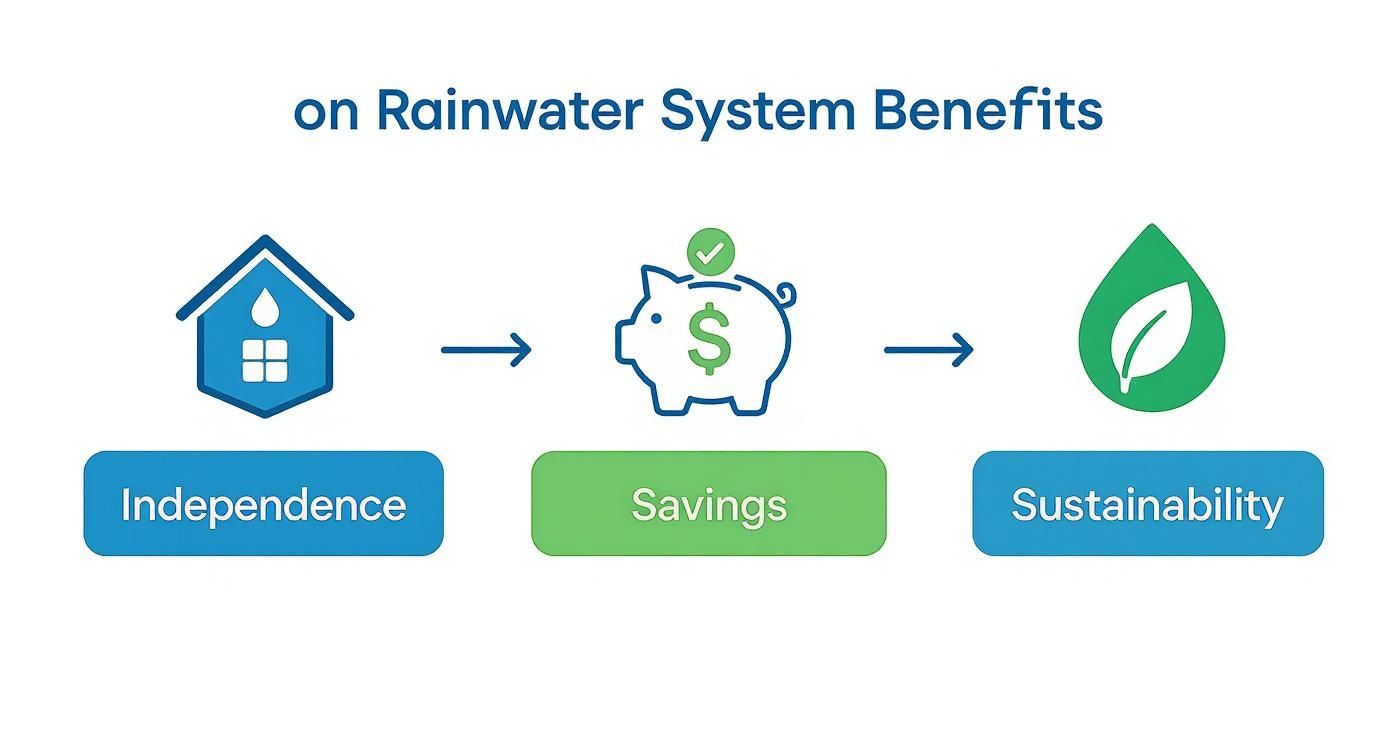
By combining good pre-filtration, sediment and carbon filters, and a final UV sterilisation, you create a robust, multi-barrier system. The result? Safe, high-quality water for your entire household, straight from the sky.
How to Choose the Right Filtration System
Picking the ideal rainwater filtration system isn’t about finding a single “best” product. It’s about finding the right one for your home. A setup that’s perfect for a big rural property could be total overkill for a suburban backyard tank.
The trick is to start with a really clear picture of what you want to achieve and what your environment looks like.
First up, what are you actually using the water for? Is it just for the garden and washing the car? Or do you want a full-blown whole-of-house solution, giving you safe, drinkable water from every tap? This one question is the biggest driver of your entire setup.
For non-drinking uses like irrigation, a basic sediment filter to catch leaves and grit might be all you need. But if you’re planning to drink it, cook with it, or shower in it, you absolutely need a multi-barrier approach. This means combining sediment filters, carbon filters, and—critically—a UV steriliser to make sure the water is microbiologically safe.
Assessing Your Home and Environment
Your property’s unique quirks play a massive part in what you’ll need. Start by looking up—at your roof. The material it’s made from can introduce different types of contaminants. An older, painted roof might shed particles into your tank, whereas a brand new Colorbond roof will be much cleaner from the get-go.
Your immediate surroundings are just as important. Are you in a bushy area with heaps of overhanging trees and bird droppings? If so, you’ll need a robust pre-filtration system, like quality gutter guards and a first-flush diverter. These handle the heavy organic load before the water even hits your main filters.
A common mistake I see is people underestimating their local environment. A home near a busy road or an industrial area will get a lot more airborne pollutants settling on the roof. When it rains, all that washes straight into your tank, making an activated carbon filter essential for grabbing chemical contaminants.
Sustainability is one of the best things about rainwater harvesting, as it takes the pressure off our municipal water supplies. This is especially vital here in Australia, where agriculture uses a huge chunk of our water. A well-designed system prevents contamination from birds and rodents, ensuring your harvested water is both safe and genuinely sustainable.
Comparing Popular System Setups
Once you’ve got a handle on your needs, you can start looking at different system types. For most homes, the choice comes down to two common configurations: cartridge-based systems or integrated combination units.
- Multi-Stage Cartridge Systems: These are great because they’re so flexible. You can mix and match different filter cartridges—say, a 20-micron sediment filter followed by a 5-micron carbon block—to build a solution that’s just right for you. They’re also generally cheaper to buy upfront.
- UV Combination Units: These all-in-one systems bundle sediment filters, a carbon filter, and a UV steriliser into a single, tidy package. They’re a complete solution for potable water and are designed to work together seamlessly, which takes the guesswork out of it.
Getting the size right is also crucial. An undersized unit just can’t keep up with your household’s water use, which leads to frustratingly low water pressure and filters that clog up way too fast. To make sure you’re picking a system with enough grunt, a tool like a pond filter calculator can give you a good idea of the capacity you need for your flow rate.
For a deeper dive, our guide on choosing the right water filtration system for your home or business has even more insights to help you get it right the first time.
Your Practical Installation Guide
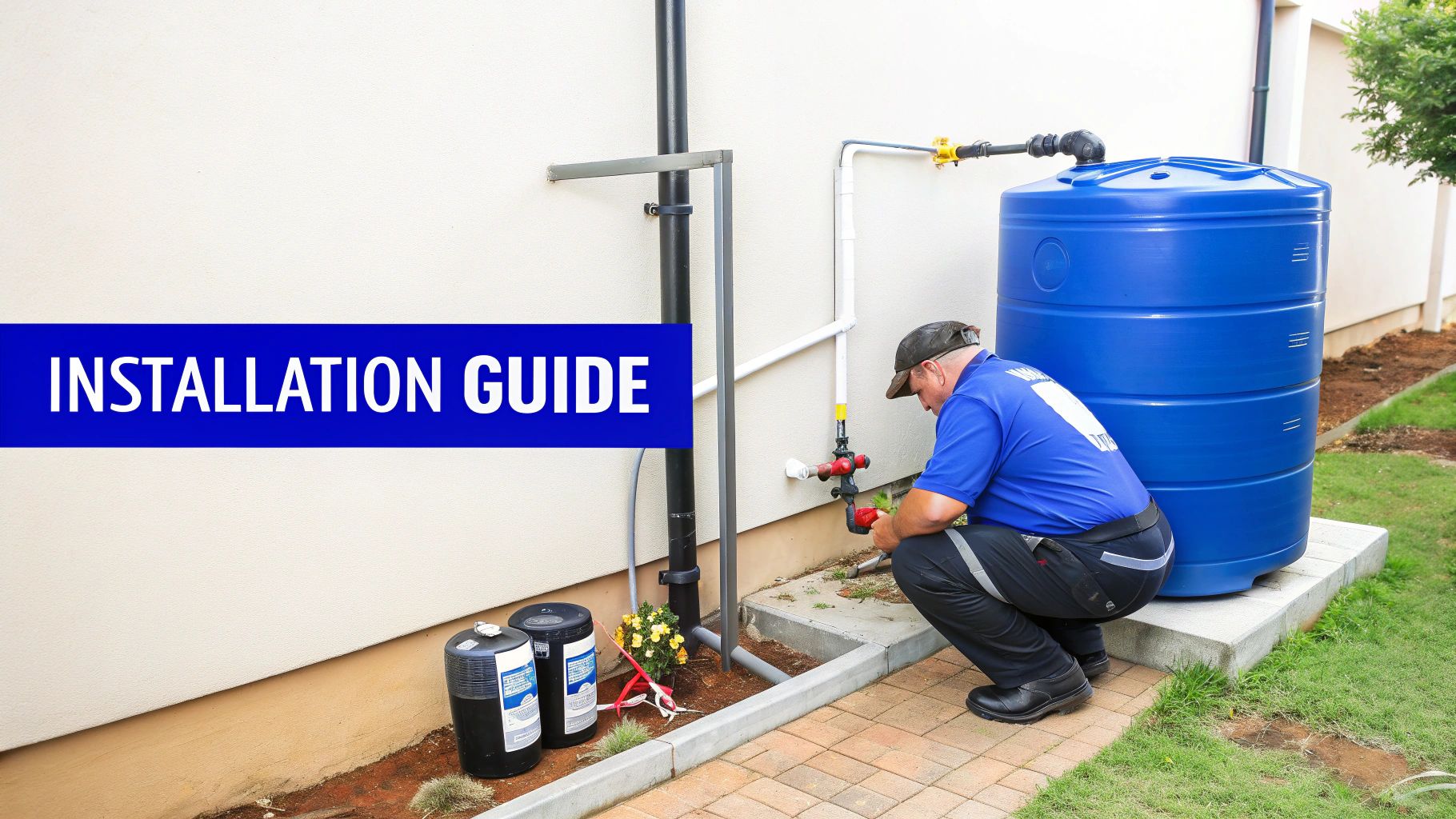
Alright, you've got your new rainwater filtration system. Now for the exciting part: getting it hooked up and running. Whether you're a seasoned DIYer or you'd rather leave it to a pro, knowing how the installation works is the key to a setup that's leak-free and built to last. A little bit of planning now goes a long way.
First up, you need to pick the right spot. You’re looking for a location that's out of direct sunlight and shielded from the weather, but still easy to get to when it's time to change the filters. Be honest with yourself—if you have to squeeze into some dark, awkward corner every six months, you’re probably going to put off that crucial maintenance.
The system needs to be installed after your water pump but before the plumbing splits off to the rest of the house. This makes sure every tap gets filtered water. It's also vital to mount it securely to a solid wall or frame. This stops vibrations from the pump rattling the unit and causing problems down the track.
Gathering Your Tools and Parts
For anyone tackling this themselves, having the right gear is half the battle. You don't need a full-blown workshop, but a few essential items will make the job much cleaner and more secure.
Before you even think about cutting a single pipe, lay everything out. Double-check that all the parts and fittings are there. There's nothing worse than getting halfway through, only to discover you're missing one tiny but crucial piece.
Here’s a quick checklist of the basics you'll likely need:
- Pipe Cutter: Ensures you get clean, square cuts on your pipes.
- Thread Seal Tape: Absolutely essential for creating watertight seals on every threaded connection.
- Pipe Wrenches or Spanners: You'll need two of these—one to hold the fitting steady and another to tighten it up.
- Mounting Hardware: The right screws and plugs for whatever surface you're mounting to.
- Pressure Gauges: This is a pro tip. Installing gauges before and after the filter housing is the easiest way to tell when your filters are clogged and due for a change.
Hiring a Professional Plumber
While you can definitely install these systems yourself, there are some very good reasons to call in a licensed plumber. A pro will get the job done right the first time and, more importantly, make sure everything is up to Australian plumbing codes and regulations. This is especially important if you're using the rainwater for drinking.
A good plumber can also give you solid advice on the best location and setup for your specific property, which could save you from some expensive headaches later on. If you're leaning this way, it's worth reading up on why a professional plumber is preferred for installing home water filters.
When you're getting quotes, don't be afraid to ask some questions to find someone with the right experience.
Key Questions for Your Plumber:
- Have you installed a whole-house rainwater filtration system before?
- Are you familiar with the specific brand and model I've bought?
- Can you install pressure gauges and an isolation bypass loop to make maintenance easier?
- Does your quote cover all the fittings, labour, and testing?
Getting clear answers will help you find an installer who knows their stuff and will set your system up for peak performance. It’s all about getting that peace of mind.
Keeping Your System Running Smoothly
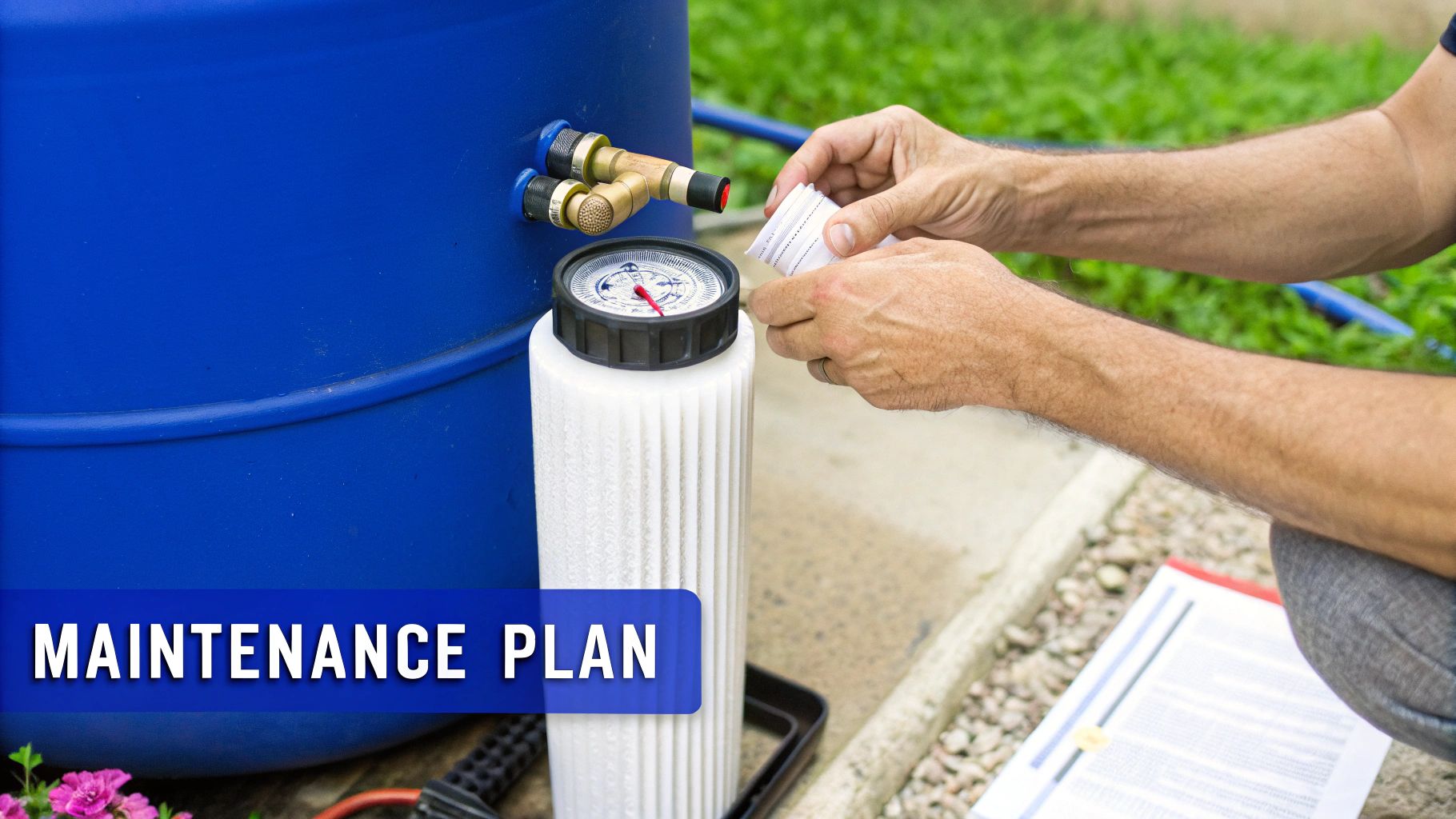
Your rainwater filtration system works hard around the clock, and just like any important investment, it needs a little TLC to keep performing at its best. If you let maintenance slide, you're not just risking the system's lifespan; you could end up with poor water flow, strange tastes, or worse, water that isn't as safe as you think.
A proactive approach is surprisingly simple and it’s the key to getting clean, reliable water for years to come.
Think of maintenance as a quick health check for your system, not a massive chore. A weekly glance at your pressure gauges can tell you almost everything you need to know. See a big pressure drop after the filters? That's a dead giveaway that they're getting clogged and it’s time to take a look.
This simple habit is your first line of defence, allowing you to catch small issues before they turn into big problems for your household water supply.
Your Essential Maintenance Schedule
Guesswork is the enemy of good maintenance. A straightforward schedule makes everything manageable and keeps your rainwater filtration system in peak condition without feeling like a burden.
Here’s a practical breakdown you can follow:
- Weekly Check-in: Just eyeball your pressure gauges. If the reading is stable, you’re good to go. A sudden drop is your cue to investigate the filters.
- Monthly Clean-out: Take a few minutes to clean your pre-filter screen or first-flush diverter. This is where all the larger debris gets trapped, so keeping it clear is vital for good flow.
- Annual Replacements: This part is non-negotiable for water safety. Your UV lamp must be swapped out every 12 months. Even if the light is still on, its germ-killing power fades over time. Sediment and carbon filters will generally need replacing every 6-12 months, depending on your water usage and how much sediment it's catching.
A well-maintained system is an efficient one. By regularly cleaning pre-filters and replacing cartridges on schedule, you don't just guarantee water quality—you also protect your pump from unnecessary strain, saving you from a much bigger repair bill down the track.
The Rise of Smart Maintenance
Thankfully, technology is making it even easier to stay on top of maintenance. Here in Australia, the rainwater harvesting market is getting a serious boost from smart systems that use sensors and automated controls to keep an eye on performance.
For instance, major national programs like AquaWatch Australia are using real-time data to monitor water quality on a massive scale. The same tech is now finding its way into residential systems, helping homeowners use water more efficiently and stay ahead of maintenance tasks. You can learn more about these advancements in the Australian rainwater harvesting market.
For more detailed, hands-on tips, have a look at our guide on how to maintain a water filter to prolong its life. Sticking to a simple routine is the single best thing you can do to protect your investment and enjoy all the benefits of clean rainwater.
Common Questions About Rainwater Filtration
Even with the best plan laid out, it's completely normal to have a few last-minute questions before you dive in and commit to a rainwater filtration system. We get these all the time from homeowners, so let's tackle the practical, day-to-day concerns that often pop up right at the end.
Getting clear answers will help you feel 100% confident you're making the right move.
How Often Should I Replace My Rainwater Filters?
This is easily the most common question we hear, and the honest-to-goodness answer is: it really depends. The life of your filters is tied directly to two things: the quality of the water going into them and how much water your family actually uses.
For example, a home surrounded by leafy gum trees is going to see its filters clog up a lot faster than one in a clear, suburban block.
But for a typical family home in Australia, you can use this as a solid guide:
- Sediment Filters: These are your system's front-line soldiers. Plan on changing them every 3-6 months.
- Carbon Filters: These guys have a bit more staying power, generally lasting between 6-12 months.
- UV Lamps: This is the one you absolutely cannot stretch. A UV lamp must be replaced every 12 months. Its power to zap microbes fades over time, even if the bulb still looks like it's working perfectly.
Your best friend here is the pressure gauge on your system. A noticeable drop in water pressure is the clearest sign your filters are getting clogged. Don't wait until the flow is just a trickle—that’s the signal it’s time for a change.
Can I Make Rainwater Drinkable With Just One Filter?
In a word: no. To get harvested rainwater to a truly safe, potable (drinkable) standard, a single filter just won't cut it. The gold standard for health and safety, without question, is a multi-barrier system. If you rely on just one simple sediment filter, you’re leaving your family exposed to microscopic nasties you can't see, taste, or smell.
A proper setup for drinking water always involves a sequence of components, where each one has a specific job to do. You'll need a fine sediment filter (down to about 1-5 microns) to catch the tiny physical particles, immediately followed by an activated carbon filter to sort out any weird tastes, odours, or chemical residues.
The final, non-negotiable step in the chain is a UV steriliser. This is what makes the water microbiologically safe, as it neutralises harmful bacteria, viruses, and protozoa that a physical filter, no matter how fine, simply cannot stop.
Is a First-Flush Diverter Really Necessary?
Absolutely. A first-flush diverter is a clever and relatively simple device that directs the first few litres of runoff from your roof away from your tank. Why does that matter? Because that initial gush of water is always the dirtiest, carrying a concentrated slurry of everything that's settled on your roof—dust, pollen, bird droppings, and atmospheric grime.
While it might not be a legal requirement in all areas, it’s something every filtration expert will tell you is a must-have. By stopping that first dirty flush from ever entering your tank, you’re getting some huge wins. It dramatically lifts the quality of your stored water, massively reduces the sludge that builds up at the bottom of the tank, and makes your entire filtration system's job much, much easier.
Honestly, this one simple addition will pay for itself by extending the life of your filter cartridges, saving you time and money down the track.
Ready to enjoy clean, safe water straight from your own roof? Awesome Water® offers a complete range of whole-house filtration systems designed for Australian conditions. Find the perfect solution for your home and start your journey to water independence today at https://www.awesomewater.com.