

Figuring out the cost of a home water filtration system can feel a bit like buying a car. You’ve got your basic, no-frills models that get the job done, and then you’ve got your high-performance machines with all the bells and whistles. The price tag, naturally, will be worlds apart.
In Australia, you could be looking at anything from under $100 for a simple water jug to well over $8,000 for a top-of-the-line whole-house unit. But that initial sticker price? It's just the beginning of the story.
Decoding Your Total Water Filtration Investment
To get the real picture of what you’ll be spending, you need to look at the entire journey, not just the starting line. It’s easy to focus on the upfront cost, but the true investment is made up of three key parts. We’ll break these down throughout this guide so you know exactly what to expect.
-
The Upfront Purchase: This is the cost of the system itself. A simple carbon filter is one thing; a multi-stage reverse osmosis system is another beast entirely. The technology you choose is the biggest factor here.
-
Getting It Installed: If you're going for an under-sink or whole-house system, you'll likely need a professional plumber. This isn’t something you want to DIY unless you’re an expert—a small leak can cause a lot of damage. Installation can easily add a few hundred dollars or more to your initial outlay.
-
Keeping It Running: This is the one people often forget. Filters don’t last forever. To keep your water pure and the system working effectively, you’ll need to replace cartridges, membranes, and other bits and pieces regularly. These ongoing costs are a crucial part of your long-term budget.
For something comprehensive like a whole-house system, the initial hit to the wallet can be significant. Recent Aussie estimates put the average cost for professional installation at around $3,202. But that’s just an average—it can swing from as low as $1,630 to over $8,400, all depending on the complexity of the unit and the quirks of your home's plumbing. You can find more detailed installation figures here to get a feel for the full range.
By breaking down these three key areas, you can create a clear, no-nonsense financial roadmap. This approach helps you budget accurately and choose a system that fits both your water quality goals and your wallet, ensuring no surprise expenses down the track.
Typical Upfront Costs for Water Filtration Systems
To give you a clearer starting point, we've put together a quick overview of what you can expect to pay for the different types of systems on the market. This table covers the typical initial purchase and installation costs you'll find in Australia.
| Filtration System Type | Typical Upfront Cost (AUD) | Best For |
|---|---|---|
| Water Filter Jugs | $50 – $150 | Individuals or small households needing basic taste and odour improvement for drinking water. |
| Benchtop Systems | $100 – $500 | Renters or small families looking for an easy-to-install solution for drinking and cooking water. |
| Under-Sink Systems | $300 – $2,000+ | Homeowners who want a dedicated filtered tap in the kitchen without cluttering the countertop. |
| Whole-House Systems | $1,500 – $8,000+ | Homeowners who want comprehensive filtration for every tap and appliance in the house. |
Keep in mind, these are just ballpark figures. The final cost will always depend on the brand, the specific technology used, and whether you need to call in a professional to get it set up.
Comparing Water Filter Types and Prices
Figuring out the world of water filters is a lot like shopping for a new appliance. A simple toaster is great for your morning crumpet, but a fancy convection oven gives you a whole lot more options. In the same way, the right water filter for your home comes down to what you really need, the quality of your local water, and what you’re looking to spend. The home water filtration systems cost can swing pretty wildly between different setups.
Let’s walk through the most common types you’ll find in Australian homes, from the simple, targeted filters to the big guns that treat every drop of water in your house.
Under-Sink Water Filters
Think of under-sink filters as the specialists. They’re tucked away neatly inside your kitchen cabinet and hook directly into your cold water line, giving you purified water from a separate, dedicated tap. It’s a fantastic middle-ground solution—more powerful than a basic filter jug, but without the full commitment of a whole-house unit.
- Best For: Homeowners and long-term renters who want top-notch filtered water for drinking and cooking without adding clutter to the countertop.
- What They Remove: These are typically champs at knocking out chlorine, sediment, lead, pesticides, and nasty smells, making your water taste dramatically better.
- Typical Purchase Cost: You can expect to pay anywhere from $300 to over $2,000 for a decent under-sink system, depending on how many filtration stages it has and its overall complexity.
Whole-House Water Filtration Systems
If an under-sink filter is a specialist, a whole-house system is the ultimate all-rounder. It’s installed right where the main water line enters your home, meaning it treats every single drop of water you use—from the kitchen sink and the shower to your washing machine. This is the go-to option for total peace of mind.
A look at the costs shows a clear range. Basic units designed for sediment and chlorine start at around $1,000. Mid-range systems, which usually fall between $1,500 and $2,500, will often have extra stages to tackle tougher contaminants like pesticides and PFAS. At the top end, you can see prices exceeding $3,000 for systems that include advanced tech like UV purification, which is essential for tank water.
Advanced Reverse Osmosis (RO) Systems
Reverse Osmosis (RO) systems are pretty much the gold standard in home water purification. Usually installed under the sink, they use a special semi-permeable membrane to strip out up to 99% of all contaminants, including things like fluoride, heavy metals, salts, and even microplastics.
An RO system works like an incredibly fine sieve. It forces water through a membrane with pores so tiny that only pure H₂O molecules can get through, leaving all the nasty stuff behind. The result is exceptionally pure water.
- Best For: Health-conscious families, anyone on tank water, or those who simply want the absolute highest level of contaminant removal possible.
- What They Remove: Just about everything. We’re talking dissolved solids, fluoride, arsenic, nitrates, and even viruses.
- Typical Purchase Cost: Given their advanced multi-stage filtration process, RO systems generally sit in the $500 to $2,500 range.
The diagram below breaks down how the total cost of any system is split between the initial purchase, the installation, and the ongoing maintenance.
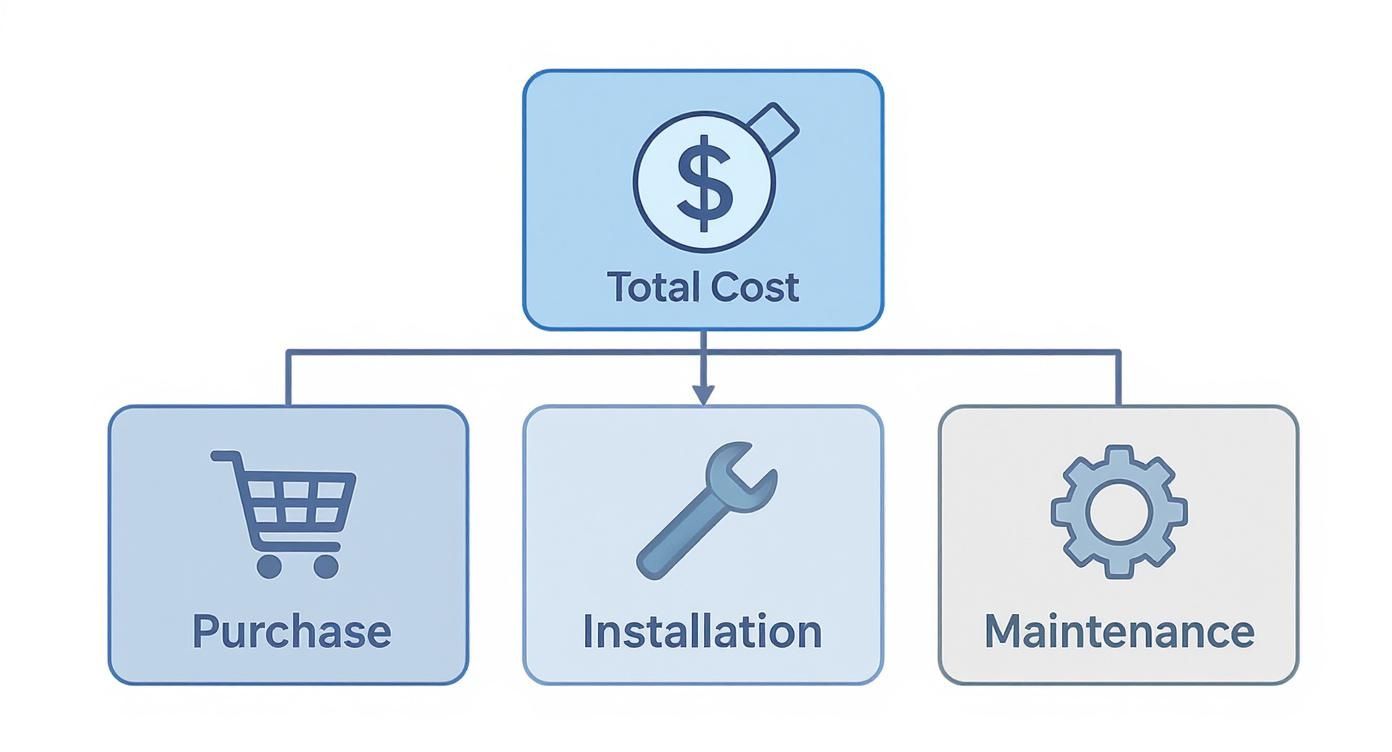
This really drives home the point that the sticker price is just one part of the financial puzzle. If you want a more detailed guide on matching these filter types to your home, you might find our article on choosing the right water filtration system for your home or business helpful.
Understanding Professional Installation Costs
When you're looking at a shiny new water filter, the price on the box is really just the starting point of the total home water filtration systems cost. For the more serious setups like whole-house systems or under-sink reverse osmosis (RO) units, getting a professional in isn't just a good idea—it's pretty much essential.
Think of it like buying a complex new wall oven. Sure, you could try to wire it up yourself, but calling a licensed electrician means it gets done safely, works correctly, and doesn't instantly void the warranty. It's the exact same deal here. A licensed plumber makes sure your filter is hooked up without any leaks, runs at its best, and keeps its warranty intact.
What Drives Installation Labour Costs
The cost for a plumber can swing quite a bit across Australia, usually landing somewhere between $200 to over $600 for a standard job. A few key things will determine where your final bill ends up.
Your location is a big one; labour rates in major cities are often different to those in regional areas. The complexity of the filter system itself is another major factor. A simple under-sink carbon filter is a much quicker job than a multi-stage whole-house unit that has to be plumbed directly into your main water line.
And finally, the state of your home's existing plumbing can throw a spanner in the works. Older houses with quirky, non-standard pipes might need some extra fiddling, which adds to the labour time and, you guessed it, the cost. You can get a better feel for local pricing by checking out this guide on water filter installation in Sydney, which gives a great breakdown for that area.
Uncovering Potential Extra Charges
On top of the standard labour rate, a few other tasks can pop up and add to your installation bill. It’s always best to chat about these possibilities with your plumber upfront to avoid any nasty surprises.
- Pipe Modifications: If your pipes don't quite line up with the new filter system, your plumber might need to cut, extend, or re-route them.
- Drilling Countertops: Putting in a dedicated tap for an under-sink system usually means drilling a new hole in your benchtop. This gets particularly tricky (and more expensive) with materials like granite or quartz.
- Installing a Dedicated Tap: The price of the new tap itself and the time it takes to connect it will be added to the final cost.
- Accessibility Issues: If your main water line is tucked away in a hard-to-reach spot, like a cramped crawl space, expect the labour costs to climb.
To get a solid estimate for professional installation, it pays to follow some essential tips for finding the right plumber who can give you a reliable quote and top-notch service. Getting a detailed, itemised quote before any work begins is the absolute best way to see the full financial picture.
Budgeting for Long-Term Maintenance Costs
A water filter is a long-term relationship, not a one-time purchase. While the initial setup is a big part of the home water filtration systems cost, it's the ongoing maintenance that really tells the story of what you'll spend over the years. Thinking about this from day one is the key to making a smart financial choice.
It’s a bit like buying a printer. The machine itself might seem affordable, but the real cost comes from replacing those ink cartridges. Water filters work the same way; the filter media is the consumable part that needs regular replacement to keep your water clean and your system running at its best.
The Lifespan of Your Filters
The frequency and cost of filter replacements vary dramatically between different types of systems. A simple carbon filter in a benchtop unit might need changing every six months, while a high-end reverse osmosis membrane could last for two to five years.
This is where a low upfront cost can sometimes be misleading. A cheaper system might need frequent, inexpensive filter changes that really add up, potentially costing you more in the long run than a pricier system with long-lasting filters.
The true cost isn't just what you pay today, but what you'll pay over the next five to ten years. Always factor in the price and lifespan of replacement filters before making a final decision.
For example, a basic sediment filter might only cost $30, but if it needs changing every three months, that's $120 per year. In contrast, a specialised whole-house carbon block filter could cost $200 but last for a full twelve months. Proper upkeep is essential, and our guide on how to maintain a water filter to prolong its life offers practical tips for getting the most out of your system.
Annual Maintenance Cost Comparison
To help you get a real sense of these ongoing expenses, let's compare the typical running costs for different systems. This table shows just how quickly those small costs can accumulate.
| System Type | Filter Replacement Frequency | Estimated Annual Cost (AUD) |
|---|---|---|
| Water Filter Jug | Every 1-3 months | $80 – $200 |
| Benchtop System | Every 6-12 months | $70 – $150 |
| Under-Sink System | Every 6-12 months (pre/post filters) | $100 – $300 |
| Reverse Osmosis | 6-12 months (pre/post filters) & 2-5 years (membrane) | $150 – $400 |
| Whole-House System | 3-12 months (depending on stages) | $200 – $600+ |
As you can see, the annual bill for keeping your water pure can range from under a hundred dollars to several hundred, so it pays to know what you’re signing up for.
Beyond the Filters
While filter cartridges are the main expense, there are other small maintenance tasks that add to the overall running cost. For instance, many systems, especially RO units, require periodic sanitisation to prevent bacteria from building up in the storage tank and lines. This might be a simple DIY job with a sanitising kit, or something you hire a professional for every couple of years.
By creating a realistic long-term budget that includes these recurring costs, you can avoid any nasty surprises down the track. This ensures your investment continues to provide safe, clean water for your family for years to come.
Why More Australians Are Investing in Water Filters
When you look past the technical specs and installation costs, there's a real story unfolding in homes across Australia. The rising interest in water filtration isn't just another home improvement trend. It’s a conscious decision families are making for peace of mind, better health, and water that just plain tastes better.
Let's be clear: Australia has some of the safest municipal water supplies in the world. But the water that leaves the treatment plant isn't always what pours out of your kitchen tap. On its journey through kilometres of ageing pipes, it can pick up sediment and other unwanted extras. And for many, the chemical taste and smell of chlorine used for disinfection is a major turn-off.
A Growing Awareness of Water Quality
People are more clued-in about water quality than ever before. You hear more conversations about "forever chemicals" like PFAS, and this has prompted homeowners to look for an extra line of defence against things that standard municipal treatment might not fully catch.
This isn't just a feeling; the market data backs it up. The Australian water purifier market is valued at around AUD 316 million and it's still growing. Reverse Osmosis (RO) systems are a big part of this boom because they're so effective at removing a huge range of contaminants. The market is tipped to grow at about 7.9% annually through 2032.
It shows that for many families, the home water filtration systems cost is seen less as an expense and more as a smart investment in their household's wellbeing. It's about taking back control over something they consume every single day.
More Than Just Drinking Water
The push for filtered water goes way beyond just a better-tasting drink. People are seeing it as a way to upgrade their entire home environment.
- Protecting Appliances: Hard water and limescale are killers for coffee machines, kettles, and dishwashers. Filtered water helps them last longer.
- Healthier Skin and Hair: Taking chlorine out of your shower water can make a huge difference, leading to softer skin and less brittle hair. It's a game-changer for anyone with sensitive skin or eczema.
- Better Cooking: When you think about it, water is an ingredient. Using purified water can genuinely improve the taste and look of everything from your morning coffee to a pot of pasta.
For a growing number of Australian families, installing a water filter isn't a luxury anymore. It's become a practical, essential step toward a healthier and more enjoyable home.
Ultimately, the reason is personal. It’s the confidence you get from knowing the water your kids are guzzling down is as clean and pure as possible. If you want to dive deeper into the specifics, we've put together an article on the top 10 reasons to filter your tap water.
Common Questions About Water Filter Costs
Thinking about the cost of a home water filter system? You're not alone. It’s a common starting point, and it’s smart to ask the right questions. After all, this isn't just another appliance purchase; it's a real investment in your family's health and your home.
Let's walk through the questions we hear most often. My goal is to give you clear, practical answers so you can budget with confidence and find the perfect fit for your home.
Is a Filtration System a Worthwhile Investment for My Family?
Absolutely. While the initial home water filtration systems cost might make you pause, the long-term benefits are huge. The best way to think about it is as a proactive investment in your family’s wellbeing. When you're removing common contaminants like chlorine, heavy metals, and sediment, you’re making sure every single glass of water is cleaner and safer.
But it goes beyond just health. A good system is also a guardian for your expensive appliances. Things like washing machines, dishwashers, and hot water systems really suffer from limescale buildup and sediment. This leads to pricey repairs and, eventually, needing to replace them way too soon. Filtered water helps them last longer, saving you a lot of money and hassle down the road.
How Do I Choose Between Cheaper and More Expensive Systems?
This is the big one: do you go for a simple, single-tap filter or a full-blown whole-house system? The answer really comes down to matching the solution to your specific problem.
If your main goal is simply to improve the taste of your drinking water, an affordable benchtop or under-sink filter is a brilliant, cost-effective choice. It gets the job done right where you need it most.
However, if you're looking to protect your appliances, get healthier skin and hair from better shower water, and have complete peace of mind at every tap, then a whole-house system is the way to go. It's a bigger investment upfront, sure, but it delivers a complete solution that a smaller filter just can't compete with.
Your choice ultimately depends on your primary goals. Are you trying to solve a specific issue, like a bad taste in the kitchen, or are you looking to upgrade the water quality throughout your entire home?
Are There Ways to Save Money on Installation?
It can be tempting to try a DIY installation to save a few dollars, especially with under-sink or whole-house systems. Honestly, this can be a costly mistake. An improper installation can easily lead to leaks, water damage, and even voiding your warranty.
The most reliable way to save money without cutting corners is to get a few quotes from different licensed plumbers. You'd be surprised how much they can vary.
Also, don't be afraid to ask the plumber if they can offer a package deal for supplying and installing the unit. Sometimes they get access to trade pricing on the systems, and those savings can offset some of their labour costs. Always go with a qualified professional—it ensures the job is done right the first time.
Can a Water Filter Increase My Home's Resale Value?
While it probably won't add thousands to your asking price like a brand-new kitchen might, a high-quality whole-house filtration system is a seriously attractive feature for potential buyers. It sends a clear signal that the home has been looked after and positions it as a healthier place to live.
In a competitive property market, little things that boost health and lifestyle can make your home stand out. It becomes a tangible selling point, showing that you’ve invested in the quality and longevity of the home’s infrastructure. For more detailed answers to specific queries, you can explore our full list of frequently asked questions.
Ready to enjoy clean, great-tasting water from every tap? Awesome Water® offers a range of high-performance filtration solutions for every Australian home. Explore our systems and find the perfect fit for your family at https://www.awesomewater.com.