

A carbon water filter is your best bet for a simple, affordable way to dramatically improve the taste, odour, and safety of your tap water. It uses a special type of carbon to grab onto common impurities like chlorine, chemicals, and organic compounds, leaving you with cleaner, fresher-smelling water right from your kitchen tap.
Why Carbon Filters Are Your First Step to Better Water

If you've ever poured a glass of water and caught a whiff of a swimming pool, you're not imagining things. That faint chemical smell is a common experience in many Australian homes, and it’s usually from the chlorine used to treat our municipal water supplies. While it’s essential for keeping our water safe, it can definitely leave behind an unpleasant aftertaste.
This is exactly where a carbon water filter comes in. Think of it as a microscopic sponge with a magnetic personality. Instead of soaking up water, it has a natural attraction to contaminants. As water flows through the filter, this 'sponge' snags and holds onto those unwanted impurities, allowing only the clean, pure water to pass through into your glass.
Addressing Common Water Concerns
These days, people are more aware than ever of what might be lurking in their tap water beyond just chlorine. It’s completely valid to have concerns about things we can’t see, like volatile organic compounds (VOCs) or even tiny traces of pesticides. A quality carbon filter is designed to target precisely these kinds of contaminants, giving your family an extra layer of defence.
This growing desire for cleaner water has fuelled a huge demand for reliable purification systems across the country. In fact, Australia’s water purifier market was valued at around USD 557 million in 2023 and is expected to skyrocket to USD 1,435.71 million by 2031. It’s clear that Aussies are investing in their health.
The benefits of installing a carbon water filter are immediate and genuinely improve your day-to-day life:
- Improved Taste and Odour: It gets rid of the chlorine and other organic compounds that are the main culprits behind bad tastes and smells.
- Enhanced Water Safety: By filtering out potentially harmful contaminants, you get greater peace of mind with every sip.
- Cost-Effective Solution: Filtering your own water at home is far cheaper in the long run than constantly buying single-use plastic bottles.
A Practical and Accessible Upgrade
Bringing a carbon filter into your home doesn't have to be a big, complicated job. There are options for every lifestyle, from simple countertop units to more permanent setups. For anyone wanting a seamless, built-in solution, you can discover more about the benefits of under-sink filtration systems that deliver purified water directly from your main kitchen tap.
At the end of the day, a carbon water filter has one simple goal: to make a real difference in your daily life by making your water taste better, smell fresher, and be safer for your whole household. It’s an easy and powerful first step towards better hydration.
The Science Behind How Carbon Filters Work
To really get what a carbon water filter is doing, we need to peek inside and see the clever science at play. It’s not magic, but a process called adsorption, and it’s the secret sauce that turns your regular tap water into something clean, fresh, and genuinely enjoyable to drink.
Think of your filter like a massive nightclub with a super-strict bouncer. The activated carbon inside is that bouncer, and it only lets pure water molecules past the velvet rope. As tap water flows by, unwanted guests like chlorine and pesticides are grabbed and held at the door, never making it into the club.
The Power of Adsorption
Now, you might be thinking of absorption, but adsorption is a totally different beast. Absorption is like a sponge soaking up water, where the liquid becomes part of the sponge's structure. Adsorption, on the other hand, is all about sticking to the surface. Contaminants literally cling to the outside of the carbon, like tiny magnets on a fridge.
This is possible because activated carbon is specially treated to create an incredibly porous structure, riddled with millions of microscopic nooks and crannies. This gives it a mind-boggling internal surface area.
To give you an idea, just one gram of activated carbon can have a surface area equivalent to a football field. It's this enormous, microscopic landscape that provides countless spots for impurities to get trapped.
As water flows through the carbon water filter, these contaminants are pulled towards the carbon's surface and get stuck, effectively yanking them out of the water you end up drinking.
Creating the Perfect Contaminant Trap
So, how is this amazing material made? It all starts with carbon-rich stuff like coconut shells, wood, or coal. These materials are fired up to scorching temperatures in a low-oxygen chamber, a process known as pyrolysis.
This first step burns off impurities and gets the carbon ready for the main event: "activation." It’s then blasted with steam or hot air, which etches away at the carbon's internal surfaces. This is the crucial step that creates that huge network of pores, dramatically increasing the surface area and turning it into a filtration powerhouse.
The image below gives you a microscopic look at the porous structure of activated carbon, showing off the huge surface area where all the action happens.
This honeycomb-like structure is exactly what allows a small amount of carbon to trap such a massive volume of contaminants.
What Carbon Filters Excel at Removing
A carbon filter is a specialist. It’s not a jack-of-all-trades; it targets a specific range of unwanted substances with incredible efficiency. Its main game is tackling organic compounds and chemicals that mess with the taste and smell of your water.
Here’s a quick rundown of what a carbon water filter is best at grabbing:
- Chlorine: This is the big one. If your water tastes or smells like a swimming pool, a carbon filter is your best friend. They are exceptionally good at removing that chemical signature.
- Volatile Organic Compounds (VOCs): This is a broad category of industrial chemicals and solvents that can sometimes creep into water supplies.
- Pesticides and Herbicides: Carbon is great at adsorbing many of the common chemicals used in agriculture.
- Taste and Odour Compounds: It gets rid of those earthy, musty smells that can come from organic matter in reservoirs.
What Carbon Filters Leave Behind
Just as important as what a carbon filter removes is what it doesn’t. One of the biggest wins for this type of filtration is its selectivity. It doesn't just strip your water bare.
Healthy, beneficial minerals like calcium, magnesium, and potassium have zero attraction to the carbon's surface. They sail right on through the filter, meaning you get beautifully purified water without losing these essential minerals.
It’s crucial to know its limits, though. Standard activated carbon filters aren't designed to remove everything. For instance, they aren’t very effective against dissolved inorganic compounds like fluoride. If fluoride is a specific concern for you, you’ll need a more specialised system. Our guide on how to remove fluoride from water dives into the best methods for targeting it.
Carbon filters also won't remove most heavy metals, nitrates, or microbiological threats like bacteria and viruses. This is why carbon filtration is perfect for municipally treated tap water that’s already considered biologically safe. By understanding both its strengths and limitations, it's easy to see why it’s such a popular and effective choice for making everyday drinking water so much better.
When you start looking into carbon water filters, it can feel a bit like you're on a car lot. They all promise to get the job done, but the models, features, and performance can be worlds apart. The truth is, not all carbon filters are created equal, and knowing the difference is key to picking the right one for your home.
The biggest distinction boils down to how the carbon itself is packaged and put to work. You'll mainly come across two major players: Granular Activated Carbon (GAC) and Carbon Block filters. Each has a unique design that dictates its effectiveness, lifespan, and where it works best—from a simple pitcher on your kitchen counter to a full-blown system under the sink.
This diagram helps visualise the core idea behind how carbon filtration actually works through adsorption.
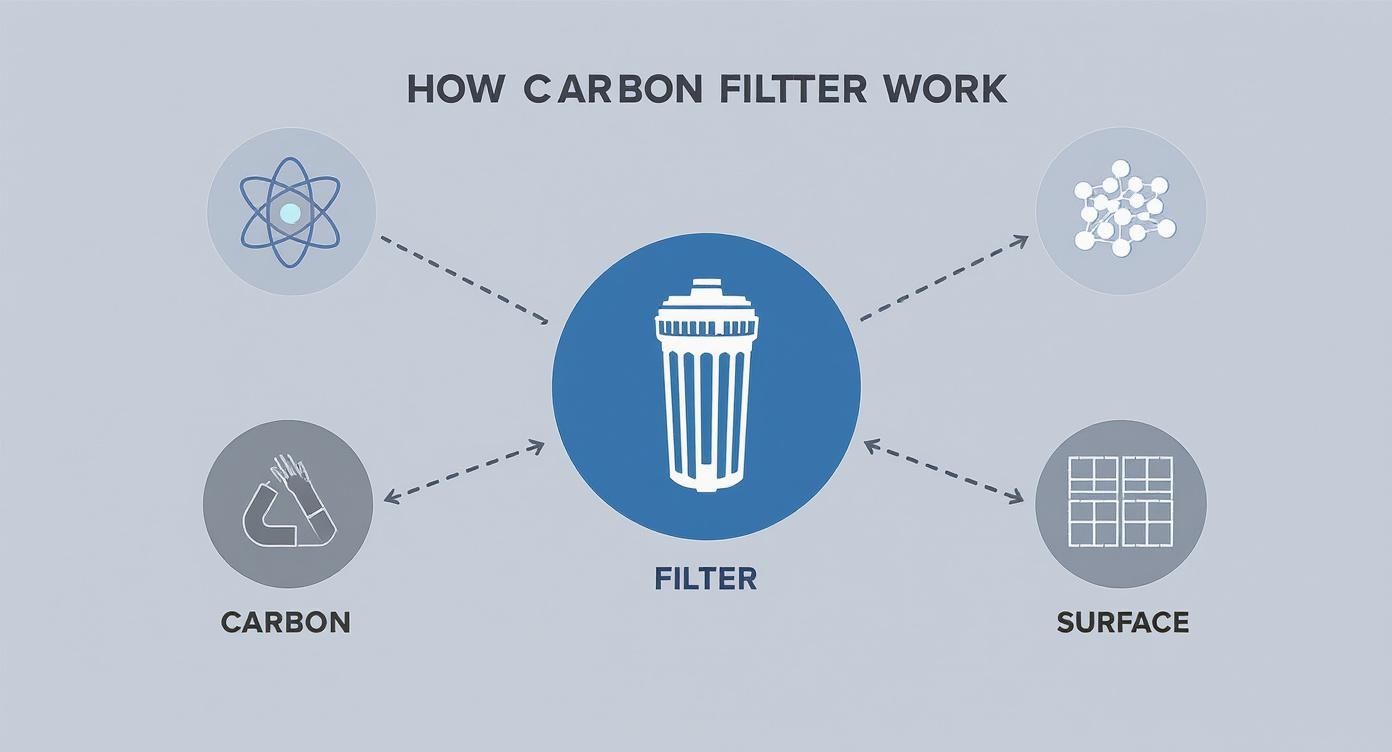
As you can see, the filter’s magic lies in the activated carbon's massive surface area, which acts like a powerful magnet for contaminants in your water.
Granular Activated Carbon (GAC) Filters
Picture a Granular Activated Carbon (GAC) filter as a container loosely filled with tiny charcoal-like granules. When water flows through, it winds its way around these loose pieces, giving impurities plenty of chances to make contact with the carbon's surface and get trapped.
Because the granules are loose, water can pass through pretty quickly. This makes GAC filters a go-to choice for things where a fast flow rate matters, like in water jugs and some fridge filters. But there's a catch with this design.
Sometimes, water finds the easiest path through the granules and carves out a little channel. This is known as "channelling," and it means some water might zip through without getting enough contact time with the carbon, letting some contaminants sneak by. Even so, GAC filters are fantastic for improving the general taste and smell of water, doing a great job of tackling chlorine.
Carbon Block Filters
Now, imagine taking those same carbon granules, crushing them into a super-fine powder, and then compressing it all into a solid, dense block. That's a Carbon Block filter in a nutshell. This solid structure creates a much more complex maze that water is forced to navigate.
Right away, this design completely gets rid of channelling. Every single drop of water has to work its way through the carbon, ensuring thorough and consistent filtration. Because the block is so dense, it also doubles as a physical sieve, catching sediment and particles down to a tiny size, often less than one micron.
A carbon block's dense structure means it generally has a higher contaminant removal rate and a more predictable performance over its lifespan compared to a GAC filter. This makes it a preferred choice for under-sink and whole-house systems where higher performance is expected.
Specialised Catalytic Carbon Filters
For homes wrestling with more stubborn contaminants, a third type of carbon water filter comes into play: Catalytic Carbon. This is essentially activated carbon that’s been given a special treatment to alter its surface, turning it into a catalyst for specific chemical reactions.
Its primary mission is to take down chloramine, a disinfectant that some water suppliers use. Chloramine is much tougher to remove than regular chlorine, and standard carbon filters really struggle with it. Catalytic carbon, however, is engineered specifically to break it down, making it the right tool for a very specific, and tough, job.
Comparing GAC and Carbon Block Filters
To make the choice a bit clearer, it helps to see the two most common filter types side-by-side. Each has its strengths and is designed for different situations.
This table breaks down the key differences between Granular Activated Carbon (GAC) and Carbon Block filters, helping you see at a glance which one might be the better fit for your water needs.
| Feature | Granular Activated Carbon (GAC) | Carbon Block |
|---|---|---|
| Structure | Loose carbon granules in a container. | Fine carbon powder compressed into a solid block. |
| Water Flow | Faster flow rate, less pressure drop. | Slower flow rate due to dense structure. |
| Filtration | Good for taste and odour; susceptible to channelling. | More comprehensive and consistent; removes finer sediment. |
| Best For | Water pitchers, refrigerator filters, point-of-use coolers. | Under-sink systems, whole-house filters, premium applications. |
Ultimately, choosing between these types depends entirely on your needs. For basic taste improvement in a portable format, a GAC filter is a great start. For superior, reliable filtration directly from your tap, a carbon block system offers that next level of performance and peace of mind.
The Everyday Benefits of Using a Carbon Filter
Let's move past the cool science for a moment and talk about what a carbon water filter actually does for you day-to-day. The real value is in the small, positive changes it brings to your life. These aren't just theories—they're real benefits you can taste, feel, and even see in your bank balance. It's about turning something as basic as water into a source of genuine health and enjoyment.
The first thing you'll notice is the incredible improvement in taste and smell. That "swimming pool" odour you sometimes get from tap water? That's chlorine. Carbon filters are brilliant at getting rid of it, leaving you with nothing but crisp, clean-tasting water.
A Healthier Glass of Water
While Australian tap water is treated to high safety standards, a quality carbon filter acts as an extra line of defence. It’s built to target and reduce a whole range of contaminants that might find their way into the water supply, giving you that extra peace of mind with every glass.
These filters are especially good at grabbing onto:
- Volatile Organic Compounds (VOCs): These are chemicals that can come from all sorts of industrial and commercial products. A carbon filter seriously cuts down your exposure.
- Pesticides and Herbicides: Sometimes, trace amounts of chemicals from agriculture can end up in our water sources. Carbon’s incredibly porous structure is perfect for trapping these nasties.
- Chlorine By-Products: When chlorine mixes with organic matter in the water, it can create disinfection by-products. Carbon filters help minimise these, too.
By tackling these impurities, you're not just getting better-tasting water—you're making a genuinely healthier choice for yourself and your family. It makes staying hydrated simple and appealing, which helps everyone from the kids to the adults drink enough water throughout the day.
Financial and Environmental Wins
The perks of filtering your water at home go way beyond your kitchen tap. When you ditch single-use plastic bottles for a reusable one filled with filtered water, you’re making a powerful positive impact on your wallet and the planet.
Think about the cost. A family buying bottled water regularly can easily spend a small fortune each year. With a carbon water filter, your only ongoing expense is replacing the cartridge every now and then, which costs a tiny fraction of what you'd spend on bottled water. It’s a simple switch that adds up to big savings over time.
Shifting to filtered tap water isn’t just a smart financial move; it’s a meaningful step towards a more sustainable lifestyle. It directly reduces plastic waste, lightens the load on recycling systems, and lowers your household's carbon footprint.
This growing eco-consciousness is a huge deal in Australia right now. More and more, sustainability is shaping how people shop. In fact, the national filtration market is projected to grow at a steady CAGR of 5.70% between 2025 and 2033. This growth is driven by a demand for greener options, and activated carbon filters are a perfect fit—they offer an energy-efficient way to get pure water while cutting down on waste. You can learn more about the sustainability trends in the Australian filtration market.
This perfect mix of health, savings, and sustainability makes a carbon filter a brilliant addition to any home. For more on this, read our guide on how water filters are beneficial for the environment. It really connects the dots between a simple upgrade at home and a healthier planet for everyone.
How to Choose the Right Carbon Filter for Your Home
Picking the right carbon water filter can feel like a big deal, but it really doesn't have to be. Let's break it down into a few simple steps. The goal is to find a system that fits your home's needs, your daily routine, and your budget perfectly. It’s all about matching the right technology to your specific water worries.
First things first, what are you trying to fix? Are you just looking to get rid of that swimming-pool chlorine taste from your tap water? Or are you more worried about other potential chemical nasties? Nailing down your main goal right from the start will instantly narrow down your choices and point you in the right direction.
Assess Your Household's Water Usage
Before you dive into looking at specific models, take a quick moment to think about how much water your household actually uses. A single person in a small flat has completely different needs to a bustling family of five. This is a critical first step that will help you choose the right size and type of filter.
Think about which of these sounds most like you:
- For Individuals or Renters: A simple water pitcher or a benchtop dispenser is often the perfect place to start. They’re affordable, don't need any installation, and do a fantastic job of filtering water for drinking and cooking.
- For Small Families: An under-sink carbon filter is a brilliant upgrade. It hooks directly into your kitchen tap, giving you a constant stream of purified water without cluttering up your bench space.
- For Large Households: If you’re dreaming of filtered water from every single tap—showers and laundry included—then a whole-house system is the ultimate solution. It treats all the water the moment it enters your home.
This practical approach stops you from overspending on a system that's way too big, or getting frustrated with one that just can't keep up.
Decode the Technical Specifications
Okay, so you’ve got a system type in mind. Now it's time to get into the details. Product labels can look like they’re full of confusing numbers and acronyms, but there are a few key specs that will tell you almost everything you need to know about a filter's performance.
One of the most important is the micron rating. This number tells you how small the particles are that the filter can catch. A smaller micron rating means finer filtration. For example, a filter rated at 0.5 microns can trap much tinier contaminants than one rated at 5 microns.
Another crucial thing to look for is certification. You want filters that have been tested and certified against NSF/ANSI standards. These are independent certifications that prove a filter actually does what it claims to do, giving you peace of mind that it’s effectively removing things like chlorine or VOCs. For a deeper dive into what different filtration stages can do, check out our guide on the 8 stages of an Awesome Water filter.
Balancing the initial cost with the long-term running costs is key. A cheap system might look good at first, but if the replacement filters are expensive or need changing all the time, it could end up costing you more in the long run.
Finally, think about your lifestyle. The Australian water purification market is quickly adapting to our dynamic pace of life. There's a growing trend towards portable and bottle-based purifiers that use activated carbon—perfect for renters, students, and anyone who needs a flexible, on-the-go solution for clean water without being tied down to a permanent installation.
Keeping Your Filter in Top Shape for Lasting Performance
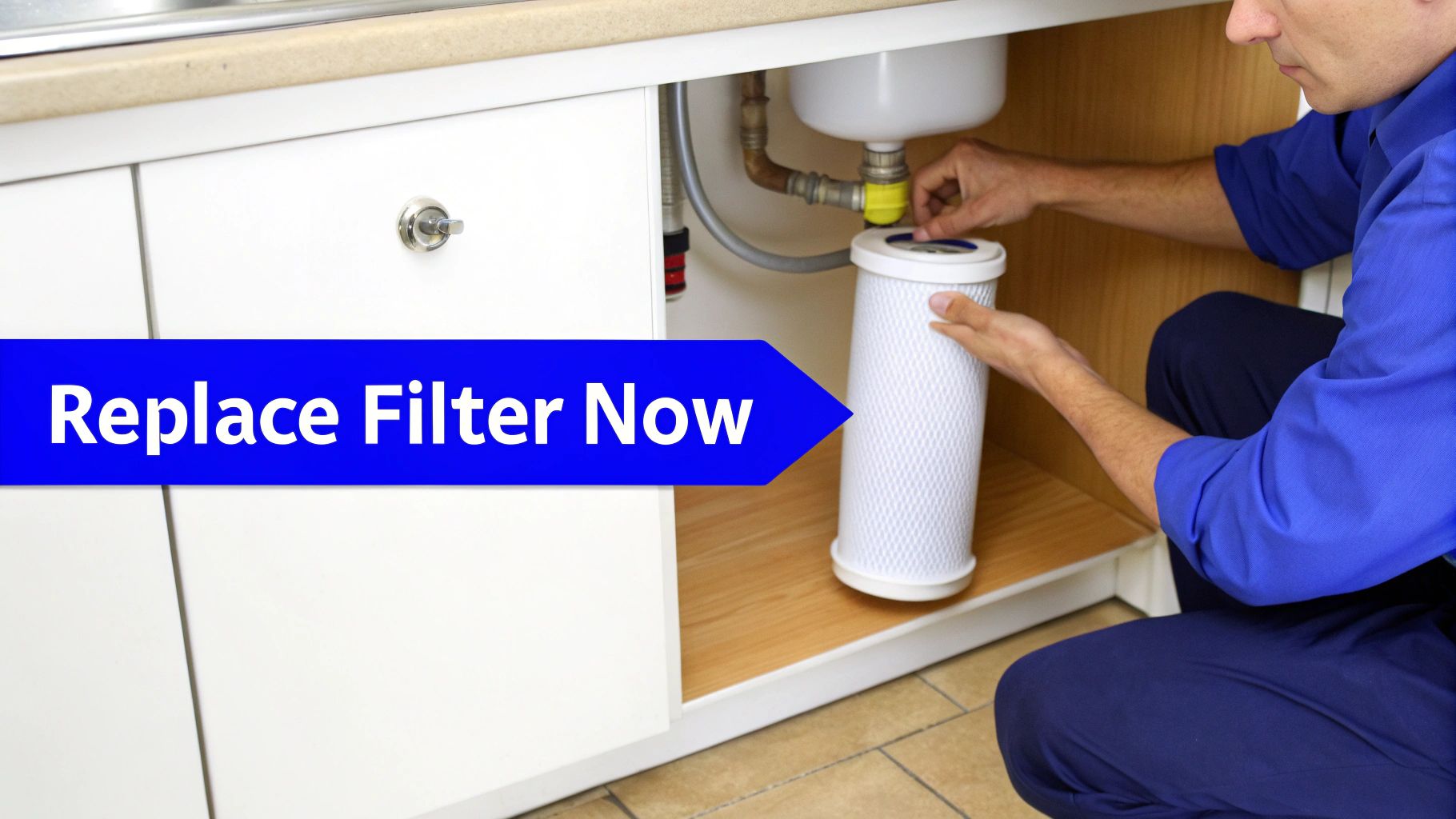
A carbon water filter is a brilliant bit of tech, but it’s not a “set and forget” appliance. To keep enjoying that fresh, clean water, regular maintenance is an absolute must. Think of your filter cartridge like a dedicated sponge—it can only soak up and hold onto so many impurities before it’s completely full.
Once saturated, it simply can't do its job anymore. If you keep using an old, maxed-out filter, contaminants like chlorine might start slipping back into your water. Worse, a clogged filter can sometimes become a breeding ground for bacteria, defeating the whole purpose of having a purifier in the first place.
When Is It Time for a Change?
Sticking to a replacement schedule is the easiest way to guarantee great performance and protect your family’s health. While every system is different, a good rule of thumb is to change most filters every six to twelve months.
But your water quality and how much you use it play a huge part. You don't always have to rely on the calendar—your filter will often give you clear signals that it’s nearing the end of its life.
Look out for these tell-tale signs:
- A Drop in Water Pressure: If water starts flowing more slowly from your tap, it’s a classic sign the filter is clogged with particles and needs swapping out.
- Bad Tastes or Odours Return: This is the most obvious clue. That familiar chlorine taste or musty smell starts to creep back into your water.
- Cloudy Water or Ice: If your water or ice cubes start looking murky, the filter is no longer trapping that fine sediment effectively.
Neglecting filter changes doesn't just compromise your water quality; it can also put unnecessary strain on your appliance. A blocked filter forces the system to work harder, which can lead to poor performance or even leaks down the track.
Simple Steps for Proper Upkeep
Following a simple maintenance routine protects your investment and ensures you always get the best possible performance. A great first step is to set a reminder in your calendar based on the manufacturer's guidelines for your specific carbon water filter. For more hands-on advice, our guide on filter cleaning and charcoal removal offers some extra helpful tips.
Keeping a spare cartridge on hand is also a smart move. That way, you can swap it out immediately when needed, ensuring there’s never a gap in your supply of pure, great-tasting water. It’s a small task that pays huge dividends in water quality and peace of mind.
Got Questions About Carbon Water Filters? We’ve Got Answers.
Even after you get the hang of how carbon filters work, a few practical questions almost always pop up. Let's run through some of the most common ones we hear to clear up any confusion and make sure you’re getting the best from your filter.
Do Carbon Filters Strip Out Healthy Minerals?
This is probably the biggest myth out there—that filters take out everything, including the good stuff. Thankfully, when it comes to activated carbon, that’s just not how it works.
A standard carbon water filter is clever about what it grabs. Its real power is in adsorption, a process that targets organic compounds and chemicals like chlorine. It has zero chemical interest in dissolved mineral salts, which means all those beneficial minerals like calcium and magnesium sail right on through. You’re left with cleaner, purer-tasting water without sacrificing its healthy mineral content.
How Often Should I Change My Filter?
There’s no single answer here, as the ideal replacement schedule comes down to three things: the type of filter you have, the quality of your local water, and how much water your household gets through. A simple water jug filter might need a swap every two to three months, whereas a beefier under-sink system could last anywhere from six to twelve months.
Always start with the manufacturer's guidelines for your specific model—they’re your best guide. But also, trust your senses. If you notice the water flow slowing down or that familiar chlorine taste creeping back in, it’s a sure sign a change is due.
Can I Rely on a Carbon Filter During a Boil Water Advisory?
No, and this is a critical safety point to remember. A standard carbon water filter is simply not built to deal with microbiological nasties like bacteria or viruses. While it’s fantastic at removing chemicals and making your water taste and smell great, it doesn’t biologically purify it.
If your local health authorities issue a boil water advisory, you absolutely must follow their instructions and boil your water to kill any harmful microorganisms. In these situations, a carbon filter alone won’t make your water safe to drink.
Ready to taste the difference a high-quality filter can make? Awesome Water® offers a range of top-performing filtration solutions to give your family cleaner, safer, and genuinely awesome-tasting water. Explore our collection and find the perfect filter for your home today.